
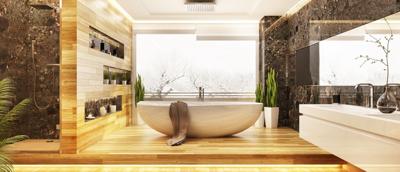

Luxury wellness at home is redefining high-end living in 2026. What once required a five-star resort is now being thoughtfully designed into everyday spaces, from spa-inspired bathrooms to smart wellness technology that improves sleep, recovery, and daily comfort.
Learning how to create a luxury wellness space at home is less about excess and more about intentional design that supports how you want to feel every day. The shift is subtle but powerful. Homes are no longer just places to live. They are becoming places to restore.
How to Create a Luxury Wellness Space at Home in 2026
The most sophisticated homes are no longer defined by size alone, but by how effectively they support well-being. Creating a luxury wellness space at home starts with prioritizing comfort, calm, and functionality over purely visual upgrades.
According to the Global Wellness Institute’s 2025 Global Wellness Economy Monitor, the wellness economy has reached record levels, with personal wellness spaces leading one of the fastest-growing categories. This reflects a larger shift toward investing in environments that actively improve daily life.
Spa-Inspired Bathroom Ideas That Transform Daily Routines
The modern luxury bathroom has evolved into something far more intentional. It is no longer just a place to get ready, but a place to reset. Spa-inspired bathroom ideas now include steam showers, deep soaking tubs, heated floors, and layered lighting designed to create a calming environment.
Our feature on spa bathroom trends highlights how these upgrades are becoming standard in high-end homes. There is also a practical benefit. The Cleveland Clinic notes that heat exposure may help with relaxation, circulation, and muscle recovery, making these spaces as functional as they are beautiful.
Infrared Sauna and Cold Plunge Benefits at Home
If one trend is defining luxury wellness design right now, it is contrast therapy. Infrared saunas and cold plunges are increasingly being integrated into homes, offering a balance of heat and cold that supports recovery and mental clarity.
The infrared sauna and cold plunge benefits at home go beyond luxury, supporting circulation, relaxation, and post-exercise recovery. The Cleveland Clinic reports that infrared saunas may promote relaxation and muscle relief, while Mayo Clinic Press notes that cold exposure is commonly used for recovery, even as research continues to evolve. It is a combination that feels equal parts discipline and reward.
Smart Wellness Technology for Better Sleep and Recovery
Smart home upgrades can easily cross into unnecessary territory, but wellness technology is one area where the right choices make a noticeable difference. Lighting, air quality, and sound all directly impact how a home feels on a daily basis.
Smart wellness technology for better sleep includes circadian lighting systems, high-performance air purification, and streamlined control systems that simplify routines. The Sleep Foundation explains that environment plays a critical role in sleep quality, reinforcing the importance of thoughtful design. This aligns with our coverage of the best technology to invest in for your home, where function and comfort intersect.
How to Design an Outdoor Wellness Space for Relaxation and Recovery
Wellness does not end indoors. Outdoor environments are becoming an essential extension of the home, offering space for movement, relaxation, and recovery in a more natural setting.
Designing an outdoor wellness space can include plunge pools, hydrotherapy spas, shaded lounge areas, and quiet zones that encourage disconnection from daily stress. Our article on luxury outdoor pool and spa design ideas shows how these elements are being integrated into modern homes with both style and purpose.
Affordable Ways to Create a Wellness Space Without a Full Renovation
Luxury wellness at home does not require a complete redesign or an unlimited budget. In many cases, smaller, intentional upgrades can create the most noticeable improvements in how a space feels.
Improving lighting, upgrading shower systems, enhancing air quality, and creating a more calming environment can all contribute to a stronger sense of well-being. The difference is not always in scale, but in how thoughtfully a space is designed to support daily life.
Post a comment as Guest
Report
Watch this discussion.
(0) comments
We welcome your comments
Log In
Post a comment as Guest
Keep it Clean. Please avoid obscene, vulgar, lewd, racist or sexually-oriented language.
PLEASE TURN OFF YOUR CAPS LOCK.
Don't Threaten. Threats of harming another person will not be tolerated.
Be Truthful. Don't knowingly lie about anyone or anything.
Be Nice. No racism, sexism or any sort of -ism that is degrading to another person.
Be Proactive. Use the 'Report' link on each comment to let us know of abusive posts.
Share with Us. We'd love to hear eyewitness accounts, the history behind an article.