
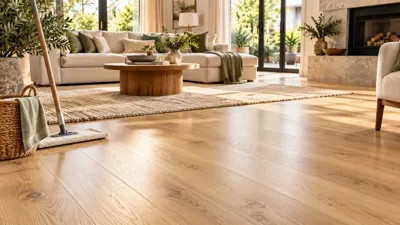

Laminate flooring earns its place in busy homes: it can deliver the look of wood without demanding the same maintenance routine. But a floor that looks tough can still be surprisingly sensitive to the wrong cleaning method. Too much water, a harsh cleaner or an aggressive vacuum brush can turn a quick tidy-up into an expensive mistake.
The good news is that caring for laminate is generally simple. The trick is to remove grit before it scratches, use as little moisture as the flooring manufacturer allows and resist the temptation to polish away problems that polishing cannot fix.
First, Know What Kind of Laminate You Have
Not all laminate flooring has identical care requirements. Some newer products have water-resistant joints and specific wet-cleaning allowances; others require much stricter moisture control. Even the phrase “waterproof laminate” should not be taken as permission to leave standing water or use a steam cleaner.
If possible, locate the brand, product line and warranty instructions from your installer, receipt or leftover flooring carton. Those directions take priority over any universal cleaning tip. For example, Shaw Floors advises against wet mopping and steam cleaning its laminate, while Pergo permits carefully controlled damp mopping for specified products. Some Pergo lines allow steam cleaning only under particular conditions. Never assume those exceptions apply to another floor.
The Everyday Routine That Does Most of the Work
The most useful laminate-cleaning tools are also the least dramatic: a soft-bristle broom, a clean microfiber dust mop and a vacuum with a hard-floor attachment. Remove grit, crumbs and dust regularly, particularly around entrances, kitchens and pet feeding areas. Switch off the vacuum’s rotating beater bar unless the manufacturer expressly approves it for the surface.
A weekly dry clean is a reasonable starting point for many households, but busy entrances may need attention every day. Coastal homes may also track in sand, which acts like fine abrasive grit under shoes and furniture. An effective entry mat and a no-shoes habit can prevent more wear than an elaborate cleaning kit.
How to Mop Without Leaving Streaks
Start by vacuuming or sweeping thoroughly. If your flooring instructions allow damp cleaning, use a clean microfiber mop that is only lightly moistened, not dripping. Apply a laminate-compatible cleaner exactly as directed, preferably to the mop pad rather than saturating the floor. Work in manageable sections and follow the direction of the planks. Use a fresh pad when the first becomes dirty.
If you notice a film or streaks, stop adding cleaner. Excess product, dirty mop pads and over-wetting are common causes. Follow the manufacturer's directions for removing residue, then buff gently with a clean, dry microfiber cloth. Never attempt to restore shine with furniture polish, wax or oil-based treatments unless specifically approved for your flooring.
For laminate products whose care guide prohibits damp mopping, stick with the manufacturer's designated cleaner and application method instead.
What to Do When Something Spills
Speed matters more than scrubbing. Blot liquids immediately with an absorbent cloth, then clean the spot using the approved method and dry it. Pay special attention to plank seams and edges, where moisture may enter. Water-resistant claims are product-specific and do not eliminate the need to clean up spills promptly.
For food marks and everyday smudges, begin with a microfiber cloth and the recommended laminate cleaner. Sticky residue may soften with gentle, brief contact from a slightly damp cloth if permitted by the care guide. Avoid soaking or scraping aggressively.
Removing Tough Stains Without Ruining the Finish
Different stains call for different approaches. For hardened candle wax or chewing gum, Shaw recommends chilling the material and gently lifting it with a plastic scraper, taking care not to scratch the surface. For ink, paint or similar stubborn marks, some manufacturers permit a small amount of acetone on a clean cloth. That is not a universal recommendation: check the exact flooring instructions, test discreetly if permitted and never pour solvent onto the planks.
Avoid steel wool, abrasive pads and harsh bleach- or ammonia-based products. If a mark remains after an approved spot treatment, it is better to contact the manufacturer than to keep escalating the chemicals.
Should You Use Vinegar, Steam or a Robot Mop?
Homemade vinegar mixtures are popular online, but they are not automatically safe for every finish and can conflict with warranty instructions. Likewise, a steam mop may look efficient while driving heat and moisture toward vulnerable seams. Unless your exact floor's care guide explicitly permits steam and describes the required settings, leave the steam cleaner in the closet.
Robot vacuums can be convenient for dry debris if their wheels, brushes and operating instructions are suitable for laminate. Robot mops require greater caution: check both the machine's water-delivery system and the flooring manufacturer's requirements before using one. Convenience should not come at the cost of swelling edges or a voided warranty.
The Small Habits That Keep Laminate Looking Newer
Put felt or manufacturer-approved protectors beneath furniture legs, lift heavy pieces rather than dragging them and use appropriate chair mats where office chairs roll repeatedly. Replace gritty or worn pads before they become a source of scratches. Keep pets' nails trimmed, and choose rugs and rug pads compatible with the floor's finish.
Maintain indoor temperature and humidity within your flooring manufacturer's recommended range. Changes in moisture can affect wood-based laminate cores, even when the surface looks undisturbed. In a sunny room, window coverings may also help reduce uneven fading over time.
When Cleaning Cannot Fix the Problem
Persistent cloudy patches may be residue, but raised seams, swollen edges, peeling layers and soft or buckled areas are different problems. These can signal moisture damage rather than dirt. Do not try to flatten swollen planks with extra water or heat. Photograph the affected area, look for a leak or moisture source and consult your installer or manufacturer about repair or replacement.
Laminate floors are designed to be lived on, not fussed over. A gentle routine, a few well-chosen tools and respect for the product's moisture limits will do more for their appearance than any miracle-cleaning hack.
Related Articles You May Enjoy From FINE Magazine
(0) comments
We welcome your comments
Log In
Post a comment as Guest
Keep it Clean. Please avoid obscene, vulgar, lewd, racist or sexually-oriented language.
PLEASE TURN OFF YOUR CAPS LOCK.
Don't Threaten. Threats of harming another person will not be tolerated.
Be Truthful. Don't knowingly lie about anyone or anything.
Be Nice. No racism, sexism or any sort of -ism that is degrading to another person.
Be Proactive. Use the 'Report' link on each comment to let us know of abusive posts.
Share with Us. We'd love to hear eyewitness accounts, the history behind an article.