
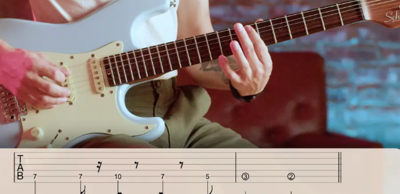

Learning to play guitar brings joy to many. For newcomers, reading traditional sheet music may feel overwhelming. Guitar tablature offers an accessible alternative, making music approachable for beginners. By presenting notes visually, tablature helps learners start playing quickly and confidently. Understanding its basics can set any aspiring guitarist on the right path.
What Is Guitar Tablature?
Guitar tablature, which most people refer to as “tab,” uses lines and numbers to help you understand where your fingers go on the fretboard. The horizontal lines represent the strings, and the numbers are frets. It makes the translation of music to the guitar much easier. Players can hone their technique and timing rather than reading music. So, what is guitar tablature? This simple notation helps beginners start playing quickly.
Reading Tablature Format
Six lines in a tab each match a guitar string. The bottom line represents the thickest string, and the top line matches the thinnest. Numbers appear on these lines, telling which fret to press on each string. For example, a “3” on the bottom line means pressing the third fret on the lowest string. Reading from left to right, players follow the sequence of notes.
Tabs with Notes and Chords per Bar
Tabs can display both individual notes and chords. One number on a line means play one note. If multiple numbers pile on top of one another, players strum those strings in unison, and it makes a chord. This visual reminder makes it easy to identify chord shapes. Beginner guitarists often utilize this simple approach to familiarize themselves with strumming patterns.
Symbols and Notations in Tabs
Apart from numbers, tabs use symbols to show techniques such as slides, hammer-ons, or pull-offs. For instance, a “/” may indicate sliding to another note, while “h” could stand for a hammer-on. Understanding these signs helps learners add expression and style to their playing. Over time, familiarity with these markings leads to more confident performances.
Rhythm and Timing in Tablature
It shows you which notes to play, but timing is often vague with tabs. For beginners, listen to recordings of the song to get an idea of the rhythm. Tabs sometimes contain stems or notes values above the numbers, providing a crude indication of timing. It helps you develop a proficient ears for rhythm so that the music sounds correct. The metronome can also help maintain a steady tempo when practicing.
Common Mistakes to Avoid
When you are a new player, the order of strings versus fret numbers may confuse you. In other words, we match them carefully with strings to avoid potential confusion. Bypassing technique symbols can make the music sound bland. Investing some time to scrutinize each and every element of the tab gives a more realistic outcome. This makes it easy to avoid making the same mistakes twice and able to quickly review each section before attempting to play through it.
Benefits of Using Tablature
Guitar tabs are a fast way to learn your favorite songs. Tabs make it easier to place notes, so early players spend less time figuring them out and more time practicing. This technique promotes regular playing while steadily building confidence. Various genres of tabs are available online, supporting a wide range of musical tastes.
Limitations of Tablature
Although tabs make playing accessible, they may lack details about rhythm or dynamics. Some arrangements can miss subtle nuances present in traditional sheet music. Learning to interpret both tabs and standard notation can provide a more complete understanding of music. Balancing both skills brings versatility to any guitarist’s abilities.
Tips for Effective Practice
Regular tab practice develops muscle memory and improves precision. Learning the song in sections can make it less overwhelming. It allows you to see where you need to work on things. Listening back while playing along to recordings teaches you about the timing and feel of expression. Getting input from stronger players can hone technique and expression even more.
One of the essentials for anyone learning is guitar tablature. It allows learners to build skills at their pace by translating music into straightforward instructions. Learning to read and interpret tabs will unlock scores of songs for you. The ability to learn and develop is possible for everyone, and with enough time practicing, you can go from simple notes to intricate songs while having fun along the way.
Post a comment as Guest
Report
Watch this discussion.
(0) comments
We welcome your comments
Log In
Post a comment as Guest
Keep it Clean. Please avoid obscene, vulgar, lewd, racist or sexually-oriented language.
PLEASE TURN OFF YOUR CAPS LOCK.
Don't Threaten. Threats of harming another person will not be tolerated.
Be Truthful. Don't knowingly lie about anyone or anything.
Be Nice. No racism, sexism or any sort of -ism that is degrading to another person.
Be Proactive. Use the 'Report' link on each comment to let us know of abusive posts.
Share with Us. We'd love to hear eyewitness accounts, the history behind an article.