
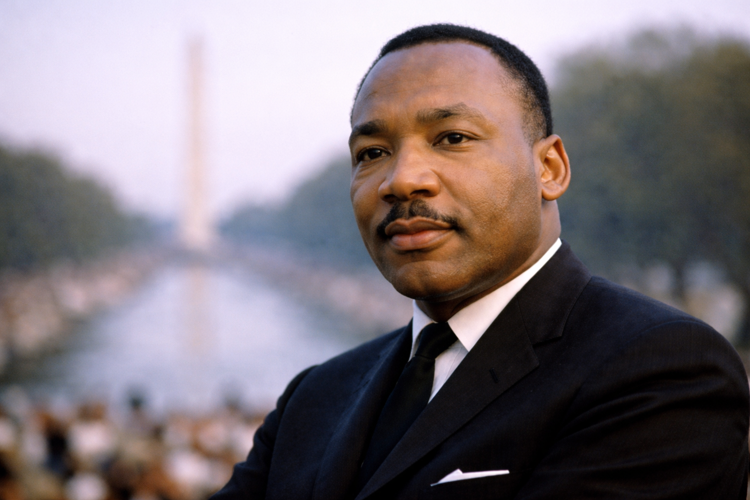


When Dr. Martin Luther King Jr. stood at the Lincoln Memorial in 1963, he did not speak about quarterly targets, corporate acronyms, or ideological categories. His dream was simpler and far more ambitious. He imagined a country where individuals could live without artificial ceilings, where character mattered more than ancestry, and where opportunity flowed not to a select few but to anyone prepared to pursue it. More than sixty years later, the question persists. What does that dream mean in a modern society that is both vastly improved and still imperfect?
The Heart Of The Dream Was Fairness
At its core, King’s dream was about fairness under the law and in daily life. He believed in a nation where individuals were judged not by superficial markers but by who they were and what they contributed. The idea was not to erase differences but to render them irrelevant in the realm of opportunity. In King’s view, equality was both a moral imperative and a practical foundation for national progress.
This framework was appealing because it avoided moral tribalism. It asked for equal treatment rather than preferential treatment, for shared dignity rather than fractured identity, and for opportunity rooted in merit rather than fate. These concepts resonated in 1963 and continue to resonate today, precisely because they rest on universal principles that cross political, racial, and socioeconomic lines.
The Landscape Has Changed In Meaningful Ways
Nobody living in 1963 could have predicted how dramatically the United States would change in the decades that followed. Legal segregation fell. Voting rights expanded. Universities, corporations, and public institutions diversified in ways that would have been unimaginable a generation earlier. Political, business, academic, and cultural leadership now include individuals from backgrounds historically excluded from power. These facts do not suggest perfection, but they demonstrate undeniable progress.
Opportunity, while still uneven, is no longer systematically denied to entire groups. Interracial marriages, integrated neighborhoods, global workforces, and multicultural classrooms are now part of ordinary American life. That normalcy would have been considered utopian in King’s time. It is easy to forget that progress is often most visible in what no longer shocks us.
Work Remains In The Quiet Details
While the country has moved away from the explicit inequalities of Jim Crow, subtler forms of disparity remain. Economic mobility varies by region. Education quality still follows ZIP codes more than ambition. Not all Americans have equal access to networks, mentorship, or capital, and those barriers though less visible than signage on drinking fountains still influence the arc of opportunity.
The king's dream does not demand that the nation achieve perfection. It demands that it continue moving toward fairness. His legacy suggests that societies are healthiest when individuals have pathways upward, when ambition is rewarded, and when talent is not constrained by prejudice or circumstance.
The modern work of equality takes place in quieter ways than marches and speeches. It takes place in hiring decisions, school funding, mentorship, lending practices, and the culture of institutions. It does not rely solely on legislation, but on choices made by ordinary people with influence over their immediate environments.
Diversity Without Division

One of the challenges of modern discourse is that conversations about diversity can drift toward polarization. Some champion it as a moral obligation, others critique it as manipulation, and many simply disengage. King’s dream offers a different lens, one that emphasizes diversity as a reflection of shared participation rather than forced representation.
In his vision, diversity naturally emerges when barriers fall. It comes from opening doors, raising expectations, and expanding access not from sorting individuals into categories or measuring them by checklists. Equality in this framework is not about reducing everyone to sameness, but about allowing differences to coexist without determining someone’s destiny.
The American Promise Still Appeals To Strivers
Despite its flaws, the United States remains one of the few countries where upward mobility stories are not only possible but common. Immigrants continue to arrive in pursuit of educational opportunities, professional growth, religious freedom, and entrepreneurship. Their aspirations validate King’s belief that the dream of equal opportunity can attract talent and ambition from across the world.
This phenomenon also reveals something else. King’s dream was not only about racial justice within America. It was about strengthening the promise of a nation that could serve as a global example of fairness and human potential. That notion may feel idealistic, yet it remains surprisingly intact.
Why The Dream Still Belongs To Everyone
Some legacies age into nostalgia. King’s has not. It retains urgency because it belongs to individuals across identity lines. For Black Americans, it represents generational progress. For immigrant families, it represents access to mobility. For business leaders, it represents a workforce judged by excellence. For educators, it represents classrooms where talent can reveal itself. For children, it represents a future not predetermined by background.
King’s dream remains powerful because it invites participation rather than division. It encourages a society where individuals are not reduced to statistics or stereotypes but elevated according to their contributions. It rejects the fatalism of inherited status and the cynicism of rigid identity. It is ultimately an argument for agency, something citizens across ideologies quietly agree on, even when they disagree about methods.
The Work Is Not Finished But The Tools Exist
The United States of 2026 is imperfect, but it is not static. Laws protect civil rights. Institutions diversify naturally as barriers fall. Economic mobility remains possible. Educational access expands through technology. Cross-cultural friendships and families are commonplace. These are quiet victories that reflect King’s influence.
The unfinished work ahead is less about revolution and more about refinement. It is about strengthening pathways rather than politicizing them. It is about ensuring fairness rather than manufacturing outcomes. It is about preserving the promise of a country where individuals rise through merit, character, and contribution.
In that sense, King’s dream is not merely a historical speech. It remains an ongoing invitation—simple, powerful, and refreshingly unmarred by ideology—to create a society where everyone can pursue their potential without prejudice. It asks for nothing more radical than equal treatment. And nothing less.
Post a comment as Guest
Report
Watch this discussion.
(0) comments
We welcome your comments
Log In
Post a comment as Guest
Keep it Clean. Please avoid obscene, vulgar, lewd, racist or sexually-oriented language.
PLEASE TURN OFF YOUR CAPS LOCK.
Don't Threaten. Threats of harming another person will not be tolerated.
Be Truthful. Don't knowingly lie about anyone or anything.
Be Nice. No racism, sexism or any sort of -ism that is degrading to another person.
Be Proactive. Use the 'Report' link on each comment to let us know of abusive posts.
Share with Us. We'd love to hear eyewitness accounts, the history behind an article.