
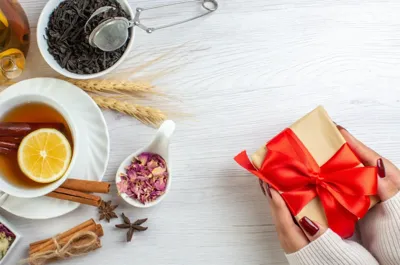

Most gift packaging does its job once. It is admired, opened and set aside.
A tea gift box is different. It is opened every morning, sometimes several times a day, for weeks. It sits on a kitchen counter or a living room shelf between uses. By the time the tea is finished, the recipient has handled the box more than almost any other gift packaging they own.
That changes what good design means. A premium tea box is judged less on the first opening and more on the fiftieth. The hinged flip-top box is the format built for that.
What a hinged flip-top box is
A flip-top box is a one-piece rigid box. The lid is attached to the base along its back edge by a hinge, so it opens like a jewelry case rather than lifting off.
Many versions add a magnetic closure hidden under the wrap paper at the front edge. The lid swings open easily and closes with a soft, secure snap.
Why it suits tea
The lid never goes missing. With a lift-off lid, every cup of tea starts with finding somewhere to put the lid down. An attached lid removes that small friction from a daily ritual.
It stays closed on the shelf. A magnetic closure keeps the lid shut between uses, which keeps dust out and keeps the box looking tidy on display.
It looks like an object, not packaging. A well-made flip-top box sits comfortably among books, ceramics and kitchenware. That is why so many end up kept long after the tea is gone.
It frames the tea when opened. The raised lid acts as a backdrop, and the contents are presented forward, toward the person reaching in.
The box presents the tea. It does not preserve it.
Tea is sensitive to air, light, moisture and strong odors. A paper-wrapped box, however beautiful, is not a barrier against air or humidity.
Freshness is the job of the inner packaging: sealed tins, caddies or lined pouches. The box shields them from light and knocks and makes the whole set a gift. Design the two together, and never rely on the outer box to keep tea fresh.
Because tea absorbs smells, it is also worth asking your packaging maker about odor from glues, coatings and inks, especially if loose leaf will be stored in the box for weeks.
Insert layouts that work
The insert decides how the box feels to use every day. Three layouts cover most premium tea gifts:
- Single caddy: one tin held upright in a fitted recess, easy to lift out and drop back in.
- Sampler: a row of compartments for individual sachets or small tins, each labeled so the recipient can find a favorite.
- Tea and accessory: a tin alongside a slot for an infuser, spoon or tasting card.
Whatever the layout, make the insert removable. Once the tea is finished, a flip-top box with the insert taken out becomes storage for anything, and the brand stays in the home.
Finishes that live well in a home
A tea box is handled constantly, often in a kitchen. The finish needs to cope with that.
- Textured and uncoated specialty papers hide fingerprints and small marks well.
- Soft-touch coatings feel luxurious at first but can show wear with daily handling.
- High-gloss finishes show scratches quickly.
Quiet branding also helps the box earn its place. A debossed mark or a small foil detail sits more easily in a living space than a large printed logo.
The hinge takes the strain
On a flip-top box, the hinge is usually the wrap paper folding along the joint between lid and base. In a box opened daily, that fold works harder than any other part.
Ask how the hinge is built and whether it can be reinforced. It is the difference between a box that looks new after a month and one that starts to split along the back.
Keep the materials simple
Tea buyers tend to care about sourcing and sustainability. The packaging should support that story.
Paper-wrapped board with a paper or molded pulp insert is a strong choice. Plastic trays and mixed materials are harder to recycle and harder to justify to a thoughtful customer.
Brief the maker with the real tins
When briefing makers of hinged flip-top boxes, send the actual tins, caddies or pouches rather than their listed dimensions. Tins vary slightly, and the insert must hold the real thing without rattling or jamming.
Then live with the sample for a week. Keep it on the counter. Open it every morning. Check the hinge, the closure and the finish at the end of the week. That is how the recipient will use it.
A checklist before you approve
- Does the inner packaging keep the tea fresh on its own?
- Does the magnetic closure hold the lid shut on a shelf?
- Is the hinge built for daily opening?
- Does the insert hold each tin firmly, and can it be removed?
- Will the finish hide the marks of everyday handling?
- Have you checked for odor from the packaging materials?
A tea gift is a small daily ritual that someone else chose for you. The box it comes in should make that ritual easier, and still be worth keeping when the last cup is poured.
Post a comment as Guest
Report
Watch this discussion.
(0) comments
We welcome your comments
Log In
Post a comment as Guest
Keep it Clean. Please avoid obscene, vulgar, lewd, racist or sexually-oriented language.
PLEASE TURN OFF YOUR CAPS LOCK.
Don't Threaten. Threats of harming another person will not be tolerated.
Be Truthful. Don't knowingly lie about anyone or anything.
Be Nice. No racism, sexism or any sort of -ism that is degrading to another person.
Be Proactive. Use the 'Report' link on each comment to let us know of abusive posts.
Share with Us. We'd love to hear eyewitness accounts, the history behind an article.