
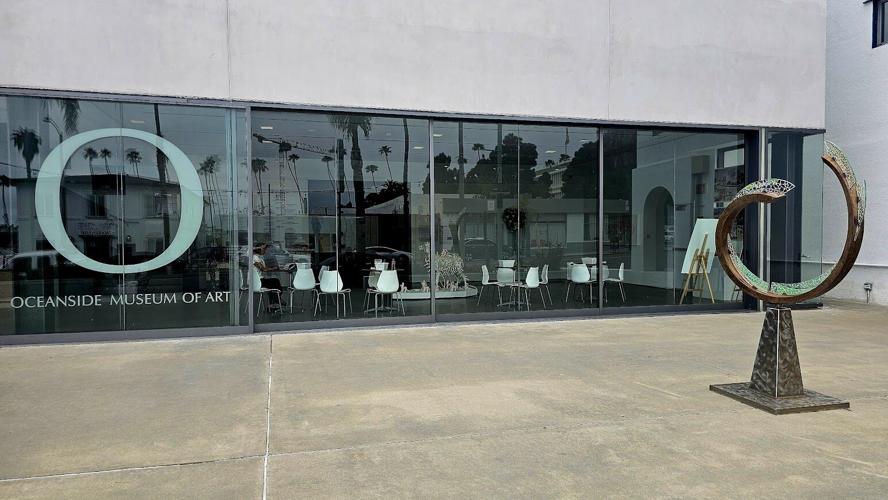


There are museums that feel designed to impress you from a polite distance, and then there are museums that seem to invite you in before you have even made it through the front door. Oceanside Museum of Art, better known as OMA, belongs firmly in the second category.
Set in the heart of downtown Oceanside, just minutes from the beach, restaurants, hotels, and the city’s increasingly energetic cultural district, OMA has the rare quality of feeling both intimate and ambitious. It is not trying to be a grand marble palace of whispered reverence. It is something more interesting for North County: a living, evolving museum devoted to the art and stories of Southern California artists.
That mission matters. Southern California has always had a complicated relationship with beauty. We have beaches, desert light, freeway sprawl, military history, surf culture, borderland influence, architecture, reinvention, and the occasional person trying to park an SUV like it is a small yacht. OMA understands that regional art is not small art. It is layered, restless, personal, and often far more revealing than the neatly packaged version of California sold on postcards.
A Museum Built Around Southern California Artists
OMA’s story began as a community-driven effort. The organization grew from humble beginnings in 1997 into a cultural destination that has presented hundreds of exhibitions focused on Southern California artists and the region’s creative identity. In its own 25-year retrospective, OMA noted that it had presented more than 288 exhibitions exploring the stories of Southern California artists, reflecting the museum’s long-standing role as both a platform and a connector for the region’s creative community.
That origin is still visible in the museum’s personality. OMA feels serious about art without becoming stiff about it. The spaces are approachable, the programming is active, and the exhibitions tend to reward close looking rather than quick photo-taking. It is the kind of place where you can arrive expecting to “stop by” and suddenly realize you have been standing in front of the same work for ten minutes, having a private argument with your own interpretation. That is usually a sign the museum is doing something right.
The Current Exhibitions Are Quiet, Bold, Strange, and Beautiful
OMA’s current exhibition lineup shows exactly why the museum has become such an important cultural anchor. The 2026 exhibitions include Kate Tova: A Place to Rest (My Tired Mind), David Adey: Sacrificial Bodies, Brothers in Arts: James Hubbell and Bert Hubbell, Aaron Kramer: Sense of Wonder, and Matrix Multiplied: Hybrid Approaches to Printmaking.
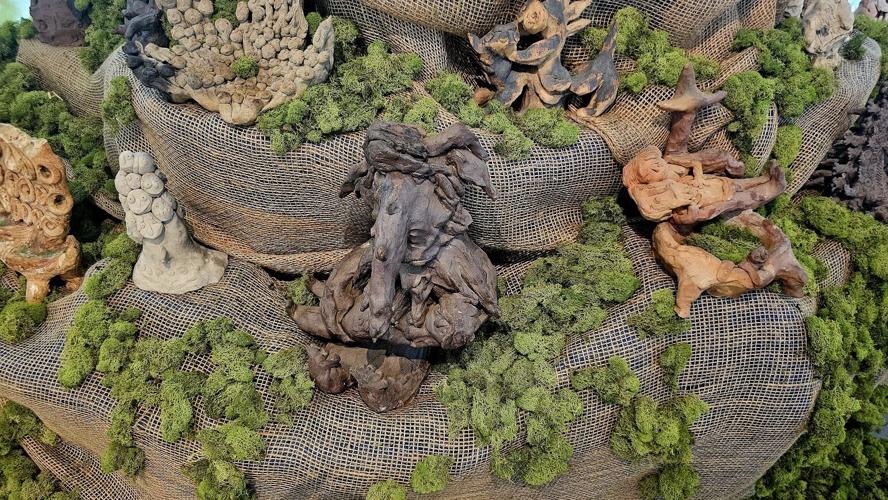
Together, they give visitors a broad view of how contemporary artists work across material, memory, experimentation, craft, technology, and regional identity. More importantly, they show how a museum of this size can still feel surprisingly expansive. OMA is not presenting one safe version of art. It is offering tenderness, provocation, spirituality, mechanics, printmaking, movement, and rest, sometimes all within the same visit.
Kate Tova Turns Rest Into Something You Can Physically Enter

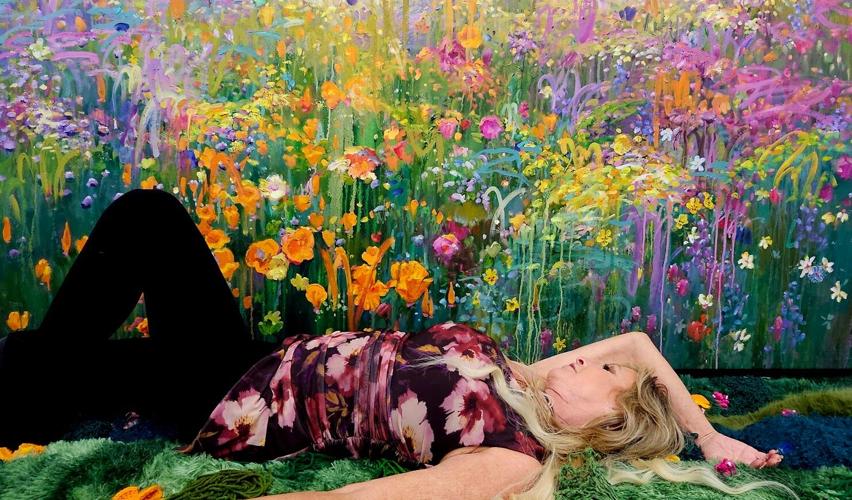
Kate Tova: A Place to Rest (My Tired Mind), on view May 2 through September 27, 2026, may be one of the most emotionally recognizable exhibitions for anyone who has ever answered one too many emails while pretending to be fine. The exhibition centers on collective exhaustion, burnout, and the human need for rest. Tova’s paintings imagine wildflower fields as inner sanctuaries, turning landscape into a metaphor for a mind finally allowed to stop performing.
What makes the exhibition especially powerful is that Tova does not treat rest as a vague wellness idea, the kind usually sold with a scented candle and a very expensive throw blanket. She makes it physical. Her signature piece, A Place to Rest, invites the museumgoer to actually lay down and become part of the art. Instead of simply standing in front of the work and intellectually approving of the concept of rest, visitors are asked to surrender to it. The body enters the conversation. The museum floor becomes part of the experience. Suddenly, stillness is not something being discussed. It is something being practiced.
That matters because Tova’s work is not just about being tired after a long week. It is about the deeper, quieter exhaustion that comes from living in a culture where productivity is often treated as proof of worth. Tova began this series while recovering from burnout herself, confronting inherited beliefs about labor, guilt, and the complicated permission many people need before they allow themselves to pause.
The interactive resting element gives the exhibition its emotional center. It is quietly radical to walk into a museum and be invited not to move faster, learn harder, post something clever, or prove that you “got it,” but to simply lie down. In that moment, the visitor stops being a spectator and becomes part of the work’s argument. Rest is not decorative. Rest is not laziness. Rest is not the little prize waiting at the end of endless achievement. Rest is part of being human.
That is why A Place to Rest (My Tired Mind) lingers. It gives museumgoers something many people rarely grant themselves: permission to stop. For a few minutes, surrounded by Tova’s flowers, the body can be still, the mind can loosen its grip, and the museum becomes not just a place to look at art, but a place to recover inside it.
David Adey Examines the Body in the Age of Image Culture

Nearby, David Adey: Sacrificial Bodies moves in a sharper, more provocative direction. On view April 25 through November 1, 2026, the exhibition is the first comprehensive mid-career survey of San Diego artist David Adey, tracing more than 25 years of work exploring the human body in an age of image culture, technology, identity, fragmentation, and spectacle.
Adey’s work is not art that simply sits there looking pretty. It looks back. It asks what happens to the body when it is photographed, consumed, edited, judged, multiplied, and turned into a surface. That question feels especially current in a culture where nearly everyone now lives with some version of a public image, whether they want one or not.
There is tension in Adey’s work between beauty and unease, control and vulnerability, physical presence and digital distortion. It is precise, but not cold. It is conceptual, but still rooted in the body. In a museum visit that also includes Tova’s invitation to rest and Kramer’s invitation to touch, Adey’s exhibition adds another essential layer: the invitation to look more carefully at what we think we are seeing.
Brothers in Arts Connects Family, Distance, and Spiritual Imagination

Brothers in Arts: James Hubbell and Bert Hubbell, on view April 11 through September 6, 2026, offers a deeply personal and poetic counterpoint. Curated by Brennan Hubbell and presented by the Ilan-Lael Foundation, the exhibition brings together the work of two brothers whose creative lives unfolded on opposite sides of the Pacific.
James Hubbell was rooted in San Diego County’s landscape, Mexico’s influence, and the Pacific. Bert Hubbell spent more than 50 years near Mt. Fuji, shaped by Japanese culture, Shinto, Animism, and Native American art. The result is a story of family, distance, spiritual imagination, and art as a lifelong language.
What makes the exhibition compelling is the sense of parallel searching. The brothers were not making identical work, and they were not living identical lives. Yet both seemed drawn to art as a way of understanding nature, spirit, place, and belonging. Their work feels handmade in the deepest sense of the word, not just physically crafted, but shaped by devotion, observation, and time.
In a fast-moving world, there is something grounding about that. The Hubbell exhibition asks viewers to slow down and consider how artists carry place inside them, even when they live far apart. It also reminds us that family influence is rarely simple. It can be direct, distant, spiritual, architectural, emotional, and mysterious all at once.
Aaron Kramer Brings Wonder Back to the Museum Floor

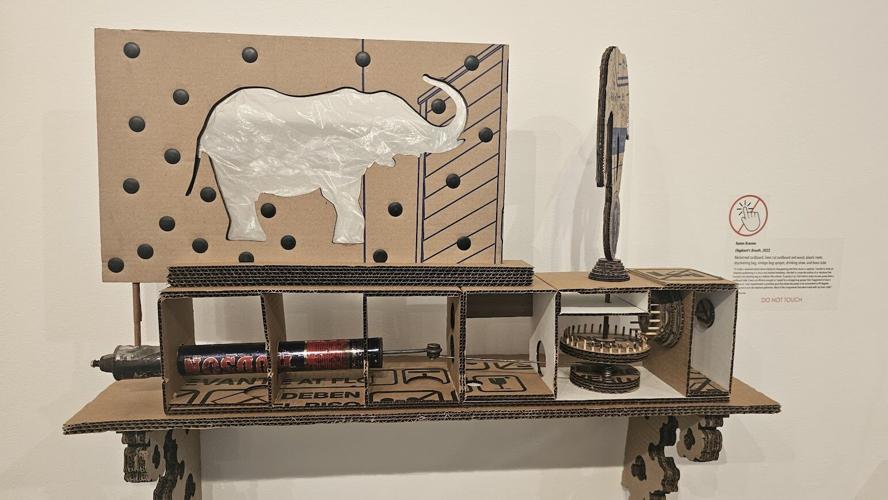
Aaron Kramer: Sense of Wonder, on view March 7 through August 23, 2026, brings a completely different kind of energy into the museum. Kramer is not the sort of artist who wants viewers to stand stiffly with their hands folded, nodding politely as if they understand everything. His work is rooted in tinkering, salvaged materials, mechanical play, and the irresistible human urge to touch the thing that moves.
OMA presents Sense of Wonder as a celebration of kinetic sculpture, experimentation, and hands-on discovery. That hands-on spirit is essential to understanding Kramer’s work. These are not passive objects asking to be admired from a distance. His sculptures, automata, and drawing machines invite the viewer to think with the body as much as the eyes.
A crank, a lever, a wheel, a small mechanical surprise: each element reminds visitors that art can be physical, playful, and delightfully imperfect. In Kramer’s world, beauty is not only in the finished object. It is in the bending, building, adjusting, testing, failing, fixing, and trying again. Anyone who has ever assembled a piece of furniture with too much confidence and too few instructions will recognize the emotional range of making something move.
The museum’s related programming makes that philosophy even clearer. OMA’s Art for All workshop with Kramer invites visitors to build their own cardboard automata, while a separate artist workshop focuses on designing small kinetic sculptures with metal components and hand tools. In both cases, the lesson is not simply about making an object. It is about understanding motion, material, and creativity through direct physical interaction.
Kramer wants people to participate, not just observe. He turns the museum experience into something closer to a studio, a workshop, and a childhood garage project that somehow grew up and earned wall text. His work reminds us that curiosity is not childish; it is one of the most sophisticated tools we have. Sense of Wonder gives adults permission to be fascinated again by gears, motion, balance, surprise, and the small magic of making something happen with your own hands.
Printmaking Gets a Contemporary Remix
OMA’s lineup also includes Matrix Multiplied: Hybrid Approaches to Printmaking, on view February 21 through August 2, 2026. Printmaking can sometimes sound, to the uninitiated, like one of those art terms people pretend to understand while secretly hoping no one asks a follow-up question. But this exhibition makes the medium feel immediate, flexible, and very much alive.
The exhibition explores how artists use printmaking beyond traditional boundaries, combining process, repetition, layering, experimentation, and hybrid techniques. It is a reminder that printmaking is not just about producing multiples. It is about pressure, transfer, surface, pattern, texture, and the decisions that happen between hand, tool, and material.
Placed alongside OMA’s other exhibitions, Matrix Multiplied deepens the museum’s larger conversation about process. Tova asks us to rest inside the work. Adey asks us to examine the body and image. The Hubbells ask us to consider place and spirit. Kramer asks us to activate curiosity through motion and touch. Printmaking asks us to think about how images are made, repeated, transformed, and reimagined.
The Expansion Will Change OMA’s Footprint

OMA is not only looking back at its history. It is actively building its future.
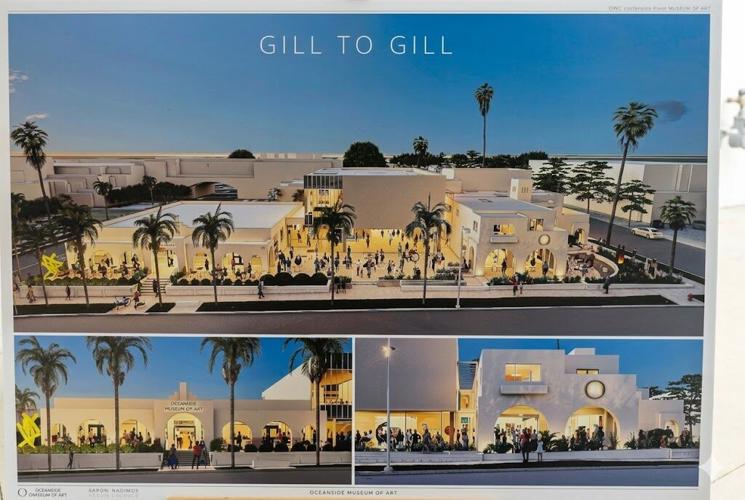
The museum has announced a major expansion campaign that would grow its downtown presence and increase access to the arts. Construction is anticipated to begin in early 2027, with a projected public dedication in spring 2028. The museum describes the expansion as a chance to strengthen its role as a cultural cornerstone while offering more space for exhibitions, education, community gathering, and the preservation of regional art.
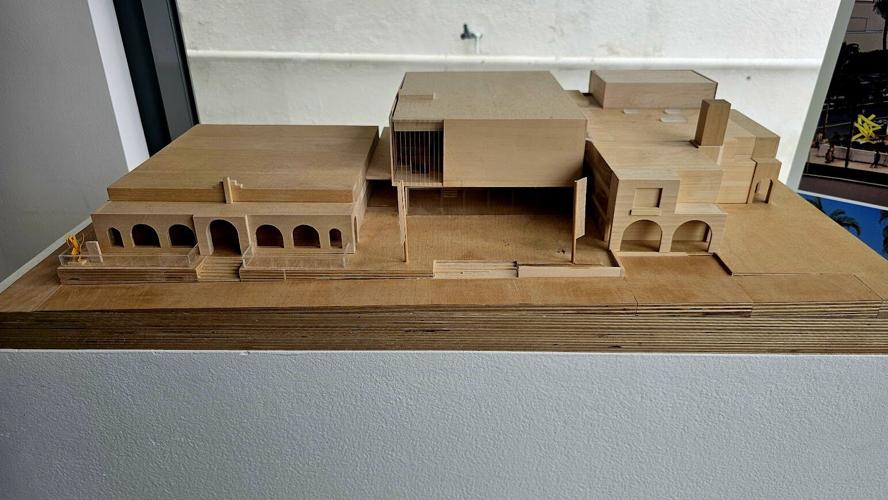
The plans are significant. OMA’s expansion would allow the museum to occupy a full city block in downtown Oceanside, with the project adapting and restoring two historic local landmarks: the former City Hall, built in 1934, and Fire Station No. 1, built in 1929. The planned indoor-outdoor campus is expected to include two new galleries, a sculpture garden, a café, expanded exhibition and event space, a dedicated arts education center, and larger storage to help preserve more of the region’s art history.
OMA has also launched the public phase of a $10 million capital campaign. The campaign began quietly in March 2024 and has already drawn major support from donors, state funding, city support, foundations, and individual contributions.
That kind of expansion is not just about square footage. It is about confidence. It signals that Oceanside is no longer asking whether it deserves a serious cultural institution. It has one. Now the museum is preparing for the next version of itself.
Why It Matters for Oceanside
For Oceanside, OMA’s expansion is more than a museum project. It is part of the city’s larger cultural coming-of-age. Oceanside has always had the bones of a compelling coastal city: the pier, the harbor, the beach, the surf history, the walkable downtown, the military presence, the old-school locals, the new restaurants, and the steady arrival of people who suddenly realize North County has been cool for a very long time.
But museums help a city tell a deeper story about itself. They slow people down. They ask visitors and residents to look past the obvious postcard pleasures and consider what a place makes, remembers, questions, and values. OMA does that especially well because it does not treat Southern California as a backdrop. It treats it as the subject.
The expansion also preserves historic architecture while making room for future artists, students, visitors, and public programs. OMA currently engages tens of thousands of visitors annually through changing exhibitions, events, and community-based programs, while maintaining a permanent collection focused on Southern California artists.
For a city in motion, that matters. Development can bring energy, restaurants, hotels, shops, and people who suddenly have very strong opinions about where to get coffee. But culture gives a city memory. It gives the growth a soul. OMA’s expansion has the potential to help anchor downtown Oceanside not only as a place to visit, but as a place to understand.
A Museum Worth Returning To

What makes Oceanside Museum of Art compelling is not any single exhibition, although the current lineup gives visitors plenty to absorb. It is the sense that OMA is actively participating in the life of its city. It is preserving history, elevating regional artists, creating space for education, and giving Oceanside a cultural institution with both depth and personality.
That combination is rare. It is also exactly what makes OMA worth visiting more than once. The exhibitions rotate. The city changes. The museum is expanding. And somewhere inside, there is likely a painting, sculpture, print, object, or installation waiting to catch you off guard in the best possible way.
For a coastal city often defined by sunshine, surf, and sea air, OMA offers something equally valuable: a place to think, feel, look, and remember that beauty is not always decorative. Sometimes it is challenging. Sometimes it is restorative. Sometimes it invites you to turn a crank. Sometimes it asks you to lie down in a field of painted flowers and become part of the art.
Sometimes, if the museum is doing its job, it sends you back into the world slightly more awake than when you arrived.
Post a comment as Guest
Report
Watch this discussion.
(0) comments
We welcome your comments
Log In
Post a comment as Guest
Keep it Clean. Please avoid obscene, vulgar, lewd, racist or sexually-oriented language.
PLEASE TURN OFF YOUR CAPS LOCK.
Don't Threaten. Threats of harming another person will not be tolerated.
Be Truthful. Don't knowingly lie about anyone or anything.
Be Nice. No racism, sexism or any sort of -ism that is degrading to another person.
Be Proactive. Use the 'Report' link on each comment to let us know of abusive posts.
Share with Us. We'd love to hear eyewitness accounts, the history behind an article.