
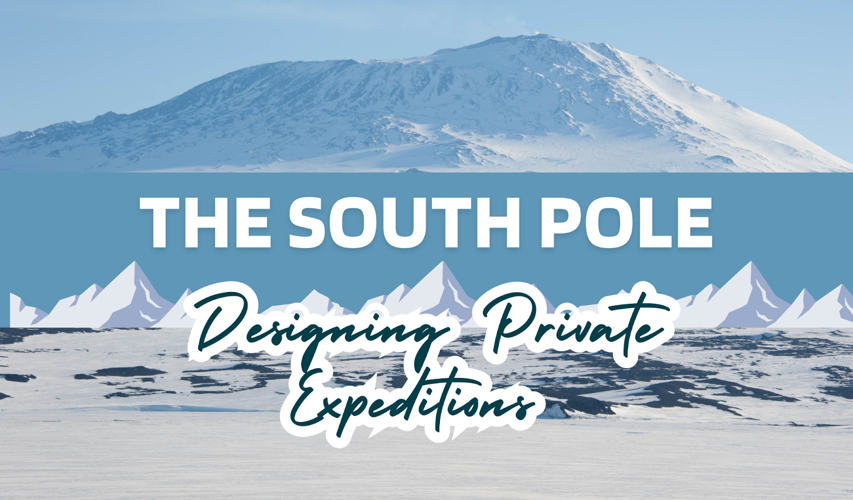
If you’ve ever looked at a globe and traced every line of longitude to a single point, you already understand the pull of 90° South.

As private travel pushes deeper into extreme environments, the geographic South Pole remains one of the few destinations where a “luxury” budget still cannot buy certainty. Aircraft may not land for days. Medical evacuation can be weather-limited. And permitting can fail if environmental planning is treated as an afterthought.
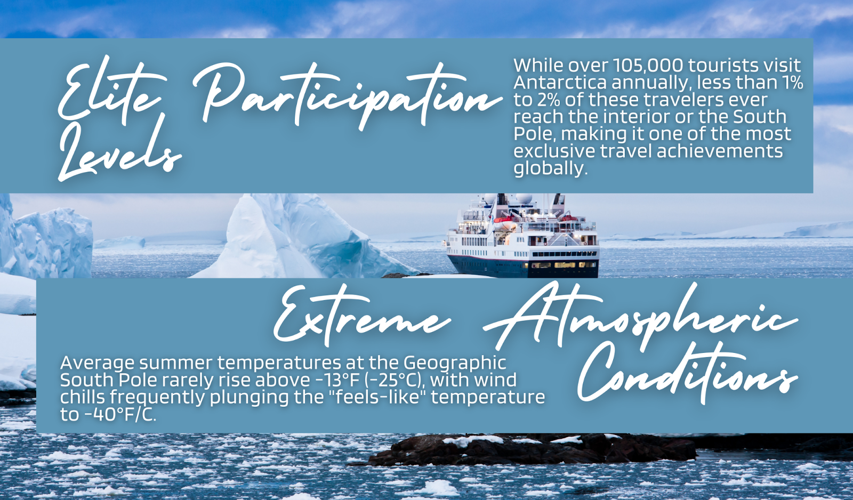
Those constraints are tightening, not easing. The International Association of Antarctica Tour Operators (IAATO) reported 118,491 total visitors (vessel + deep field) in the 2024–25 season, a figure that sits alongside ongoing guideline updates and operator protocols aimed at managing cumulative impact and operational risk.
In that environment, a private South Pole expedition has started to look less like an itinerary and more like an engineered operation.
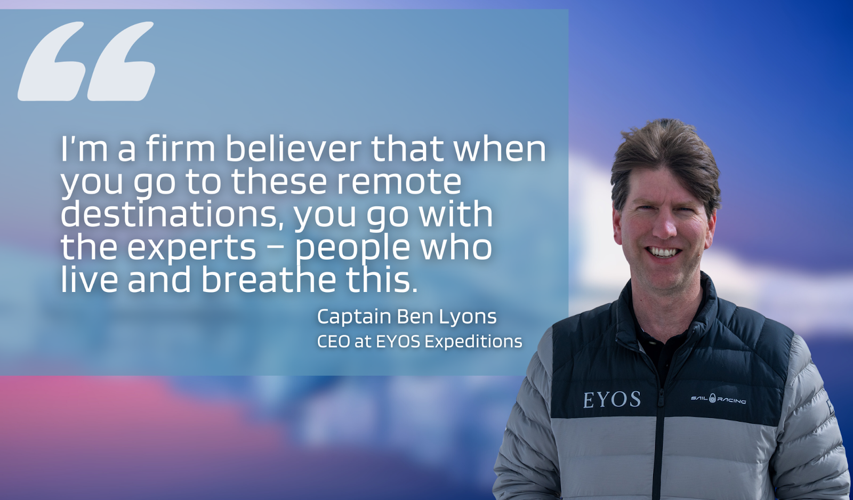
Companies such as EYOS Expeditions are part of a broader shift toward bespoke “deep field” programs that pair flexible planning with expedition leadership especially for travelers seeking interior Antarctica and 90°S access. In such private South Pole expeditions, itineraries are deliberately designed around contingencies, because at the South Pole, the schedule follows the weather, not the other way around.
This is the behind-the-scenes story of how a private South Pole expedition is designed from timing and routing to aircraft, camp architecture, safety redundancies, and the decision-making that keeps everything moving when the continent decides it won’t.
What “South Pole” actually means on the ground
Two poles exist within walking distance of each other:
Geographic South Pole (90°S): the precise coordinate, marked by an annual pole marker.
Ceremonial Pole: the photogenic striped pole with flags (near the station).
Key environment facts planners design around
Elevation: Amundsen–Scott South Pole Station sits at ~2,835 m (9,301 ft).
Ice drift: the station drifts ~10 m (33 ft) per year due to ice movement, which is why the geographic marker is reset.
Why that matters: altitude effects, extreme cold, and deep-field remoteness shape every decision such as fitness, gear, comms, insurance, and contingency time.
Why the South Pole demands “design,” not just planning
The South Pole sits on Antarctica’s high interior plateau, far from coastal access points and far beyond the ship-based itineraries most people associate with Antarctica. That interior environment is brutally cold and highly exposed, with temperatures that remain well below freezing even in the austral summer (the short season when most operations are possible).
The South pole interior is typically accessed by aircraft and staged through operational hubs that can support deep-field travel.
That’s why private expeditions are planned backwards from constraints: the flight capability, the weather windows, the camp architecture, and the safety redundancies that make forward progress possible.
What “private” changes (and what it doesn’t)
“Private” doesn’t mean Antarctica suddenly becomes easy. It means the expedition can be tuned to a smaller group’s pace and comfort, with more control over the experience and typically a higher level of built-in redundancy.
In practice, private expedition design often prioritizes:
More tailored pacing: additional time at key moments (like the Pole itself), rather than a quick touchdown and departure.
Higher comfort standards: upgraded sleep systems, heated tents where feasible, more curated food logistics, and stronger comms.
Stronger contingency buffers: extra time and capacity to wait out weather, reroute, or hold safely.
Some highly specialized operators offer the ability to overnight at the South Pole in a dedicated tented setup designed for the conditions.
What doesn’t change: the environment still dictates the final call. Weather, visibility, winds, and operational constraints can delay or alter plans no matter how high-end the expedition is.
Step 1: Designing the timing around the Antarctic summer
The first design decision is the travel window.
Deep-field Antarctica runs on a seasonal clock, when there’s sufficient light, workable temperatures (by Antarctic standards), and operational capacity for flights.
Aviation-based logistics providers commonly run passenger operations to Antarctica during the core summer stretch (often November through January for intercontinental flights), when the air bridge is most reliable.
Step 2: The route architecture; gateway, staging, then the Pole
Most private South Pole itineraries are designed in layers:
A global gateway city (commonly in South America for many aviation-based interior operations)
A staging camp in Antarctica (a logistical base where gear is issued, aircraft operations begin, and weather is monitored)
Interior flights toward the Pole (often via ski-equipped aircraft)
A South Pole visit or overnight camp (depending on itinerary design and permissions)

In the interior, aviation isn’t just transportation; it’s the backbone of the whole system. Even within Antarctica, distances are so large that operations can involve air travel and fuel caching to extend range and maintain safe margins.
The design goal is simple: build a route that can succeed even when Plan A fails, because in Antarctica, it often will.
Step 3: Aircraft and yacht cargo; where the expedition is truly won or lost
If the guest-facing story is about reaching 90° South, the operator-facing story is about weight, fuel, weather, and redundancy. A private South Pole expedition must account for:
Payload limits: Every extra comfort item competes with fuel, safety gear, and essential cargo.
Fuel strategy: Range planning often requires precise fuel management and (in some contexts) cached fuel logistics to support deep-field flying.
Flight cadence: Intercontinental operations may run approximately weekly during peak season, with additional cargo flights as needed.
Weather gates: Visibility and wind conditions can shut down flights quickly, and decisions must prioritize safe margins.
This is where “private expeditions” can add meaningful advantage: a smaller group can reduce payload pressure and simplify logistics, making it easier to protect buffer days and avoid overloading the system.
Step 4: Camp design: turning a harsh landscape into a livable base
A private South Pole expedition is only as comfortable as its camp system. Camp design isn’t about glamour; it’s about reducing failure points that can spiral in extreme cold.
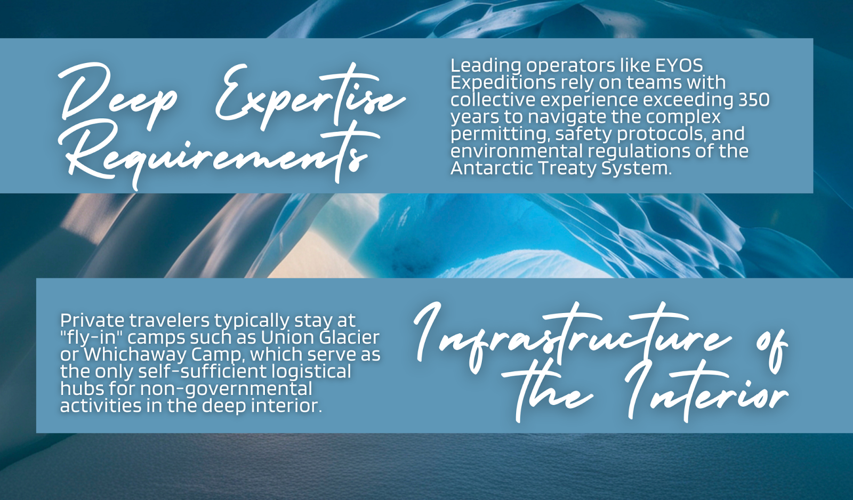
At interior staging bases, accommodations are often purpose-built polar tents engineered to handle wind, cold, and long occupancy.
For example, some established Antarctic camps describe dual-occupancy tent systems designed specifically for Antarctic conditions, with structures that allow guests to stand and move comfortably; small details that matter when you’re wearing layers and managing cold exposure.
At the Pole itself, overnight experiences may use heated, double-walled tents and structured sleeping systems (cots, insulation, and layering protocols) designed for the environment.
Good polar camp design typically includes:
Shelter zoning: separating sleeping, dining, and operations so moisture and heat are managed.
Reliable sleeping systems: insulation strategy is everything; warmth is built from the ground up.
Power and comms: some camps increasingly integrate renewable systems where feasible, paired with trained field staff and robust support plans.
A routine that prevents mistakes: because fatigue and cold can make tiny errors expensive.
Step 5: Safety engineering: why redundancy is the real luxury
In marketing, “luxury” often means comfort. In Antarctica, it means margin.
Safety design for a private South Pole expedition strictly includes:
Medical screening and risk assessment before anyone touches the ice
Comms architecture: multiple ways to communicate, not just one
Weather and decision protocols: clear thresholds for turning back or holding
Training and field staff capability: experienced polar personnel aren’t optional; they’re the expedition
Even the “boring” parts like waste systems and equipment decontamination are part of the safety story, because they protect both the environment and operational integrity.
Industry bodies like IAATO have developed and contributed to operational guidelines intended to minimize impacts and support responsible tourism practices.
Step 6: The weather factor: designing for delays, not pretending they won’t happen

The defining skill in polar expedition design is not bravado. It’s patience.
Whiteouts, winds, and low visibility can stall movement fast. This is why well-designed itineraries treat buffer days as a core feature, not a “nice-to-have.” If your schedule can’t absorb delays, it’s not a South Pole plan; it’s a wish. A good private expedition design answers two questions upfront:
Where do we wait safely if the weather locks us down?
How do we preserve fuel, food, warmth, and morale while we wait?
That’s where camp livability becomes more than comfort; it becomes operational resilience.
Step 7: “Leave no trace” isn’t a slogan; it’s a logistics system
Antarctica’s environmental rules and norms shape expedition design in very practical ways: how camps are set up, what’s brought in, what’s removed, how equipment is cleaned, and how impacts are minimized.
IAATO materials and guidance emphasize member commitment to protecting Antarctica and minimizing cumulative impacts, with guidelines and procedures that are updated over time.
For a private South Pole expedition, this translates into:
Strict waste management systems
Controlled camp footprints
Careful equipment handling and decontamination
Disciplined routines for everything from food to fuel
For veteran polar operators, stewardship is part of the design brief, not an add-on. EYOS Expeditions co-founder Tim Soper describes the intent as turning inspiration into responsibility for travelers:
“We encourage them to get inspired and engaged and hope that they learn to care for the place they choose to visit. We want to channel tourism into effective action – and we want to do more of that! The goal is to turn visitors into real ambassadors that care that little bit more when they get back.”

In the field, that philosophy becomes operational: how staff coach guest routines in sensitive environments, and how “leave no trace” is enforced through systems with fuel handling, and daily discipline.
What guests remember (and what they never see)
From a guest’s perspective, a private South Pole expedition can feel surprisingly calm: the steady rhythm of layers, the crunch of snow underfoot, the clean geometry of tents against a white horizon, and the extraordinary moment of standing at the bottom of the world.
What they rarely see is the invisible architecture that made that calm possible:
Flight windows monitored hour by hour
Cargo weights recalculated and prioritized
Shelter systems maintained like life support
Decision points revisited constantly as weather evolves
This is the paradox of a truly well-designed expedition: it looks effortless, because so much effort went into removing friction before it ever had a chance to appear.
For readers pricing the broader Antarctica landscape first, this breakdown of Antarctica travel costs offers a useful baseline before you compare interior logistics.
FAQs: Private South Pole expeditions, answered
How long does a private South Pole expedition take?
It varies by route and design, but itineraries are typically built with staging time in Antarctica plus buffer days for weather delays. Operations are commonly concentrated in the austral summer travel window. If you’re planning high-demand, seasonal experiences, it’s worth thinking like a luxury travel strategist; here’s a helpful guide on the best month to book luxury travel.
Can you really stay overnight at the South Pole?
Some expedition designs include a South Pole overnight in a dedicated tented camp system intended to provide comfort and security in extreme conditions.
Why do expeditions need buffer days?
Because flight operations and movement in Antarctica are weather-dependent, and delays are normal; not exceptional. Deep-field logistics are built to absorb that reality safely.
What makes “private” different from standard South Pole trips?
Private designs often prioritize smaller groups, more customized pacing, and higher redundancy, especially around camp comfort, contingencies, and time-on-location.
The last frontier, by design
Reaching the South Pole is still one of travel’s purest milestones, but the modern achievement isn’t only about endurance. It’s about systems thinking: aviation logistics, camp engineering, safety redundancies, and environmental discipline, all aligned inside a short seasonal window.
A private South Pole expedition is the rare journey where the “behind the scenes” is the story because in Antarctica, the scene itself exists only if the design holds.
Post a comment as Guest
Report
Watch this discussion.
(0) comments
We welcome your comments
Log In
Post a comment as Guest
Keep it Clean. Please avoid obscene, vulgar, lewd, racist or sexually-oriented language.
PLEASE TURN OFF YOUR CAPS LOCK.
Don't Threaten. Threats of harming another person will not be tolerated.
Be Truthful. Don't knowingly lie about anyone or anything.
Be Nice. No racism, sexism or any sort of -ism that is degrading to another person.
Be Proactive. Use the 'Report' link on each comment to let us know of abusive posts.
Share with Us. We'd love to hear eyewitness accounts, the history behind an article.