
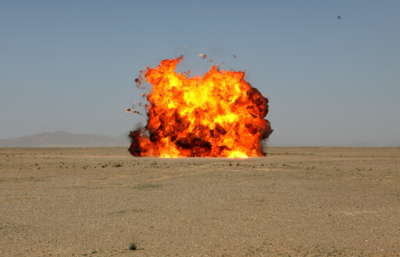

A gunshot fired in an open field produces a sharp crack that dissipates quickly into the surrounding air. Fire that same weapon inside a concrete parking garage and the report becomes a sustained roar that assaults the ears from every direction. The physical event remains identical, but the acoustic experience transforms entirely based on environmental context. Understanding how spaces shape sound propagation matters for anyone working with audio—whether recording foley, designing game soundscapes, or capturing realistic field recordings. The environment isn't just a backdrop for sound; it actively participates in creating what we hear.
The Fundamental Difference Between Open and Enclosed Spaces
Outdoor environments allow sound to radiate freely in all directions with minimal obstruction. Sound pressure decreases predictably with distance following the inverse square law—doubling the distance from a source reduces intensity by roughly 6 decibels. This straightforward relationship creates the characteristic quality of outdoor sounds: distinct attacks that fade cleanly without competing reflections. Weather conditions, terrain, and atmospheric absorption affect propagation, but the absence of reflective boundaries means you predominantly hear direct sound from the source itself.
Indoor spaces trap sound energy within reflective boundaries, creating complex patterns of reflections that persist long after the initial sound occurs. Every surface reflects a portion of the sound back into the room, and these reflections arrive at listening positions from multiple directions at slightly different times. The result is reverberation—a dense accumulation of reflections that colors the original sound and extends its duration. A sharp impulse like a handclap or gunshot triggers an acoustic response unique to that particular space, revealing its dimensions, materials, and geometric properties through its reverberant signature.
The transition between these environments creates its own acoustic signature. Sound escaping from interior spaces through openings like doors or windows carries information about both the interior reverberation and the outdoor propagation. This explains why different gun sounds recorded in varied locations convey such distinct character—the environmental acoustics become inseparable from the source sound itself. A weapon fired inside a building but heard from outside produces a muffled, reverberant quality markedly different from either pure indoor or outdoor recordings.
How Room Size and Shape Color Sound
Small rooms create dense, rapid reflections that arrive so quickly they fuse with the direct sound, coloring its tone rather than being perceived as distinct echoes. The time gap between direct sound and first reflections might be just a few milliseconds, and subsequent reflections pile up in complex patterns determined by room dimensions. Parallel walls create flutter echoes at specific frequencies related to the distance between surfaces. This modal behavior means small rooms emphasize certain frequencies while suppressing others, giving each space a characteristic tonal signature that affects everything recorded within it.
Large spaces like warehouses, concert halls, or cathedrals produce longer gaps before initial reflections arrive, creating a sense of spaciousness and distance. The first reflections come from distant walls and ceilings, arriving tens or hundreds of milliseconds after the direct sound. These late reflections remain perceptually separate from the source, creating the impression of size and volume. The reverb time—how long sound takes to decay by 60 decibels—can extend to several seconds in large spaces with hard surfaces, sustaining sound long after the source stops producing it.
Irregular geometry disrupts predictable reflection patterns, creating more diffuse reverberation that sounds smoother and more natural than the harsh echoes in rectangular rooms. Curved surfaces, angled walls, and architectural complexity scatter reflections in multiple directions rather than creating strong, focused echoes. This diffusion explains why purpose-built acoustic spaces incorporate non-parallel walls, curved surfaces, and geometric variety. For sound recording or reproduction, diffuse reverberation generally proves more pleasant than the distinct echoes and modal resonances of simple rectangular rooms.
Surface Materials and Absorption
Hard surfaces like concrete, tile, glass, and painted drywall reflect most sound energy across the frequency spectrum, creating bright, reverberant acoustic conditions. These materials barely absorb acoustic energy, so sound bounces repeatedly between surfaces with minimal loss. Spaces dominated by hard materials—parking structures, tiled bathrooms, empty gymnasiums—produce the most dramatic reverberant effects. The sustained, metallic quality of sounds in these environments comes from this efficient reflection that preserves high-frequency content through multiple bounces.
Soft, porous materials absorb sound rather than reflecting it, particularly at higher frequencies. Carpeting, acoustic ceiling tiles, upholstered furniture, curtains, and people all convert acoustic energy into tiny amounts of heat through friction within fibrous or porous structures. This absorption shortens reverb time and reduces overall sound level in a space. Rooms with significant absorption sound "dead" or "dry," with minimal reverberation allowing clear perception of direct sound. The same gunshot that roars in a concrete parking garage sounds comparatively subdued in a carpeted, furnished office.
Frequency-dependent absorption creates tonal balance shifts in reverberant sound. Most common absorptive materials work better on high frequencies than low frequencies, meaning bass sound persists longer in typical rooms than treble. This explains why reverb in normal spaces often sounds darker than the original sound—the high frequencies die away first, leaving sustained low-frequency energy. Specialized bass absorption requires thick, dense materials or strategically placed panel resonators that target low-frequency energy specifically.
Outdoor Acoustic Variables
Temperature, humidity, and wind significantly affect outdoor sound propagation in ways that don't occur indoors. Sound travels faster in warm air than cold air, and temperature gradients bend sound waves through refraction. On clear nights when air near the ground cools faster than air above, sound refracts downward and travels farther than expected. During sunny days with warm surface air, sound refracts upward and may not reach distant listeners at ground level. These effects become pronounced over hundreds of meters but remain negligible in most indoor spaces.
Atmospheric absorption increases with frequency and becomes noticeable over longer distances. High-frequency content attenuates more rapidly than low frequencies as sound propagates through air, which is why distant sounds seem duller than nearby ones. Thunder from a close lightning strike contains sharp, crackling high frequencies, while distant thunder consists mostly of low-frequency rumble. This natural filtering contributes to the characteristic quality of outdoor recordings and explains why distant sounds require different frequency treatment than close sounds when creating realistic audio scenes.
Terrain and obstacles create outdoor reflection and diffraction patterns that vary dramatically with location. Buildings, rock formations, forests, and ground surfaces all interact with sound in complex ways. Urban environments with multiple reflective facades create outdoor reverberation distinct from open countryside. Dense vegetation absorbs high frequencies and scatters sound in unpredictable ways. Ground reflections interact with direct sound to create interference patterns that enhance or cancel specific frequencies depending on source height, listener position, and frequency. These variables make outdoor recording more challenging but also more acoustically diverse than controlled indoor spaces.
Practical Implications for Audio Work
Understanding environmental acoustics informs better recording decisions and more convincing sound design. Matching reverb characteristics to implied visual environments prevents the cognitive dissonance that occurs when audio and visual information conflict. A scene set outdoors demands dry, direct sound with minimal reverberation, while indoor scenes require appropriate room tone and reverb that matches the visible space dimensions and materials. Mixing outdoor recordings with heavy artificial reverb sounds immediately artificial, while over-processed indoor recordings lacking natural reflections feel disconnected from physical space.
Field recording benefits from conscious attention to environmental acoustics. Choosing recording locations based on their acoustic properties rather than just visual access yields more useful source material. Recording the same source in multiple environments creates versatile libraries where users can select the acoustic signature that best fits their needs. Even simple impulse recordings—handclaps, balloon pops, or starter pistol blanks—capture room acoustics that can be analyzed and reproduced through convolution reverb for authentic spatial processing.
The acoustic environment ultimately serves as an invisible collaborator in every recording, shaping how sound reaches microphones and listeners. Treating this collaboration intentionally rather than accidentally separates professional results from amateur recordings that ignore environmental context. Whether capturing realistic sound effects or crafting imaginary sonic worlds, understanding how spaces transform sound provides the foundation for convincing, immersive audio experiences.
Post a comment as Guest
Report
Watch this discussion.
(0) comments
We welcome your comments
Log In
Post a comment as Guest
Keep it Clean. Please avoid obscene, vulgar, lewd, racist or sexually-oriented language.
PLEASE TURN OFF YOUR CAPS LOCK.
Don't Threaten. Threats of harming another person will not be tolerated.
Be Truthful. Don't knowingly lie about anyone or anything.
Be Nice. No racism, sexism or any sort of -ism that is degrading to another person.
Be Proactive. Use the 'Report' link on each comment to let us know of abusive posts.
Share with Us. We'd love to hear eyewitness accounts, the history behind an article.