
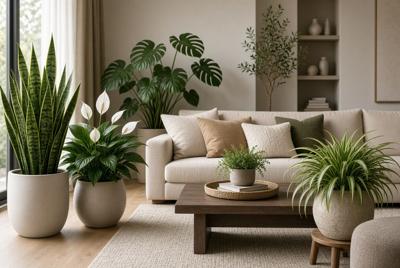

Indoor plants do more than decorate a room. They add life and texture to a space, can modestly improve air quality, and many people find that caring for them reduces stress and improves mood. While no plant is a substitute for proper ventilation or an air purifier, the right greenery can make a home feel fresher and more comfortable.
Here are some of the most reliable indoor plants, along with what they need to succeed.
Snake Plant (Sansevieria)
One of the toughest houseplants available. It tolerates low light, infrequent watering, and neglect better than most. Snake plants release oxygen at night, which makes them a popular bedroom choice. Water only when the soil is completely dry.
Peace Lily
Attractive white blooms and glossy leaves. Peace lilies help filter common indoor pollutants and signal when they need water by drooping. They prefer medium to low light and consistently moist (but not soggy) soil. Note that they are toxic to pets if ingested.
Spider Plant
Fast-growing, forgiving, and pet-safe. Spider plants produce baby plantlets that are easy to propagate. They do well in bright, indirect light and appreciate regular watering. Many people find them uplifting and low-stress to care for.
Aloe Vera
Useful as well as ornamental. The gel inside the leaves can soothe minor burns and skin irritations. Aloe prefers bright light and very well-draining soil. Water sparingly—overwatering is the main way these plants fail.
Rubber Plant
A classic statement plant with large, glossy leaves. Rubber plants tolerate a range of indoor conditions and are relatively low-maintenance once established. They prefer bright, indirect light and moderate watering. Wipe the leaves occasionally to keep them dust-free.
Boston Fern
Lush and full, Boston ferns add soft texture. They excel at adding humidity to dry indoor air, which can help with dry skin and sinuses. They need higher humidity, consistent moisture, and bright indirect light. Bathrooms or kitchens often suit them well.
ZZ Plant
Extremely drought-tolerant and thrives in low light. The ZZ plant stores water in its rhizomes, so it can go weeks between waterings. Ideal for offices or rooms with little natural light.
Care Tips That Matter Most
- Match the plant to the light you actually have. Most of the plants above prefer bright, indirect light rather than direct sun.
- Water less often than you think. Overwatering kills more houseplants than underwatering.
- Use pots with drainage holes and empty saucers after watering.
- Increase humidity for ferns and peace lilies by grouping plants or using a pebble tray.
- Dust leaves occasionally so they can photosynthesize efficiently.
- Fertilize lightly during the growing season (spring and summer) and little to none in winter.
Getting Started
Begin with one or two easy plants such as a snake plant or spider plant. Place them where you’ll see them daily so you remember to check the soil. Once those are thriving, you can expand. A few well-chosen plants usually do more for a room than a large collection that struggles.
Indoor plants are a simple, low-cost way to make a living space feel more alive and pleasant. Choose varieties that match your light and schedule, and they will reward you with steady greenery and a calmer atmosphere.

(0) comments
We welcome your comments
Log In
Post a comment as Guest
Keep it Clean. Please avoid obscene, vulgar, lewd, racist or sexually-oriented language.
PLEASE TURN OFF YOUR CAPS LOCK.
Don't Threaten. Threats of harming another person will not be tolerated.
Be Truthful. Don't knowingly lie about anyone or anything.
Be Nice. No racism, sexism or any sort of -ism that is degrading to another person.
Be Proactive. Use the 'Report' link on each comment to let us know of abusive posts.
Share with Us. We'd love to hear eyewitness accounts, the history behind an article.