
So you've built a beautiful deck, but something looks off. The underside is exposed, showing posts, joists, and whatever else is lurking beneath. That's where deck skirting comes in. It's basically the finishing touch that makes your deck look polished instead of half-done.
Picking the right material matters more than you'd think. Some options need constant attention, while others pretty much take care of themselves. Some fit tight budgets, others cost a pretty penny upfront but save you money down the road. I've seen homeowners rush into the cheapest option, only to regret it a few years later when they're dealing with rot or constant repainting.
In this guide, I'll break down four main material categories: wood, composite, vinyl, and metal. You'll learn what each one brings to the table, what it'll cost you, and which situations they work best for.
Why Your Skirting Material Actually Matters
Here's the thing. Most people think skirting is just cosmetic. But it does way more than hide the ugly stuff underneath.
First off, it protects against moisture and pests. Without proper skirting, rainwater splashes up from the ground, rotting your deck's substructure. Rodents, raccoons, and other critters love crawling under decks to nest. Good skirting keeps them out.
Second, it impacts how long your deck lasts. Quality materials shield the area beneath from harsh weather, which means less damage to your foundation over time.
Then there's curb appeal. A finished deck with clean skirting looks intentional and well-maintained. If you ever sell your home, that matters. Buyers notice these details, and a polished outdoor space can boost your home's value by a solid margin.
Bottom line? The right skirting material protects your investment and makes your property look better. Don't sleep on this decision.
Wood Skirting: Classic Look with Strings Attached
Wood is the OG deck skirting material. It's what most people picture when they think of traditional decks. You've got options like cedar, redwood, or pressure-treated lumber. Each has its own vibe and price point.
Let's start with the good stuff. Wood looks natural and warm. You can stain it any color, paint it to match your house, or leave it raw for a rustic feel. It's also pretty accessible. Most hardware stores stock these materials, and if you're handy, installation isn't rocket science.
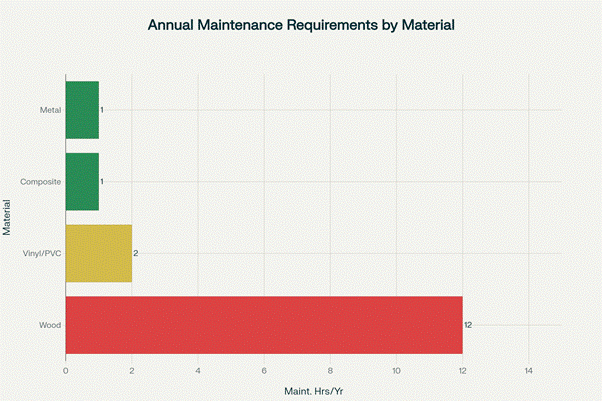
Now the downsides. Wood demands attention. You'll need to seal or stain it every couple of years to prevent fading and water damage. Even with treatment, wood can warp, crack, or rot, especially in humid climates. Insects like termites see untreated wood as an all-you-can-eat buffet.
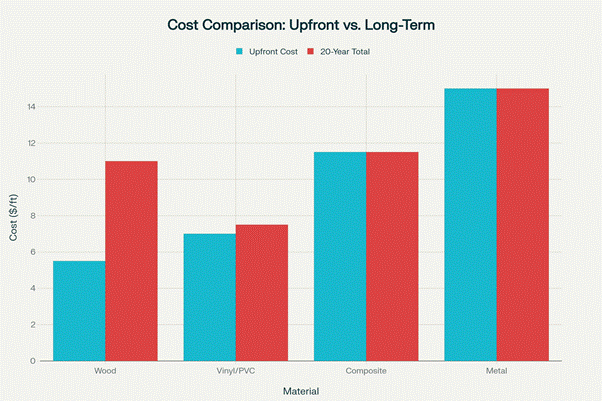
Cost-wise, wood seems cheap at first. You might spend $3 to $8 per linear foot, depending on the type. But add up the maintenance costs over 10 years, painting, sealing, replacing warped boards, and suddenly it's not such a bargain.
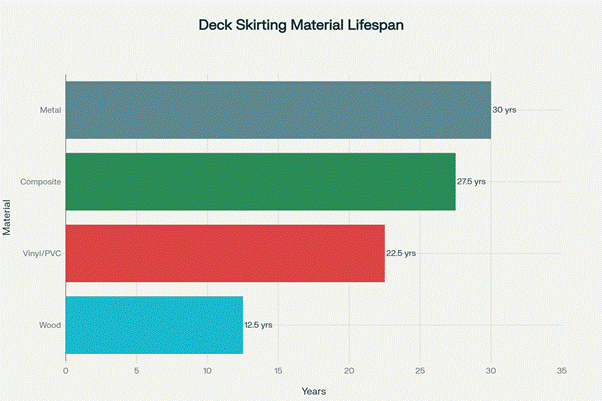
Lifespan? With proper care, you're looking at 10 to 15 years. That's decent, but not amazing compared to other options.
Wood works best if you love the traditional aesthetic and don't mind regular maintenance. It's great for heritage homes or if you're going for that cottage vibe. Just be ready to put in the work.
Composite Skirting: Pay More Now, Relax Later
Composite materials mix wood fibers with recycled plastic. The result? Something that looks like wood but acts way tougher.
There are two types: capped and uncapped. Capped composite has a protective shell that resists staining, fading, and moisture better than uncapped versions. If you're going composite, spend the extra cash on capped. Trust me.
Here's why people love composite. It barely needs maintenance. No painting, no staining, maybe just a quick hose-down once or twice a year. It won't rot, bugs won't eat it, and it doesn't splinter. Modern composite skirting also comes with realistic wood-grain textures and tons of color options. You get the look without the headache.
The catch? Higher upfront cost. Expect to pay $8 to $15 per linear foot, sometimes more for premium brands. And if a panel gets damaged, you can't just sand it down and refinish it like wood. You'll need to replace the whole section.
But here's the kicker. Over 25 to 30 years (yes, that's the lifespan), composite often costs less than wood when you factor in all the maintenance you're not doing.
Composite fits busy homeowners who want their weekends free. It's also perfect for humid areas where wood struggles. If your home has a modern design, composite blends right in.
Vinyl and PVC Skirting: Budget-Friendly and Weatherproof
Vinyl and PVC get lumped together, but they're slightly different. PVC is technically a type of vinyl, but it's usually denser and more rigid. For skirting purposes, though, they perform pretty similarly.
The big win here? Moisture doesn't faze them. Rain, snow, humidity, these materials laugh it off. They also resist pests naturally, and you'll never need to paint them. Installation is straightforward, too, especially with pre-made lattice panels or solid sheets.
Vinyl comes in various colors, though your options are more limited than wood or composite. White and beige dominate, but you can find tan, gray, and even darker shades if you hunt around.
Now for the negatives. Vinyl can look a bit plastic-y, especially in cheaper versions. It doesn't have the texture or warmth of wood or high-end composite. In cold climates, vinyl can get brittle and crack. I've seen panels split after harsh winters, particularly the thin, bargain-bin stuff.
Popular styles include lattice panels (classic diamond or square patterns), solid panels for full coverage, and wrap-style systems that snap into place.
Price-wise, you're looking at $4 to $10 per linear foot. That's cheaper than composite but not always cheaper than basic wood.
Lifespan sits around 20 to 25 years. Not bad for the price.
Vinyl works great in wet or humid climates where wood would rot quickly. It's also ideal if you love the lattice look but want zero maintenance. And if you're on a tighter budget but still want something durable, vinyl delivers solid value.
Metal Skirting: Industrial Vibe Meets Serious Durability
Metal skirting isn't for everyone, but when it fits, it really fits. You'll usually see aluminum, steel, or corrugated metal sheets used here.
Why go metal? Durability. This stuff lasts forever, seriously. Aluminum resists rust naturally, and treated steel holds up great too. Pests can't chew through it, it won't rot, and it's fireproof, a huge plus in wildfire-prone areas. The modern, industrial aesthetic also appeals to people with contemporary homes.
You can get decorative slats that create interesting shadow patterns, corrugated panels for a clean industrial look, or powder-coated finishes in various colors.
The downsides? Metal heats up in direct sunlight. If your deck gets full sun all day, the skirting can get too hot to touch. It also costs more, usually $10 to $20+ per linear foot, depending on the design. Installation often requires professional help since cutting and mounting metal takes more skill and tools than working with wood or vinyl.
Style-wise, metal is limited. It looks sleek and modern, but if you're going for cozy or traditional, metal probably isn't your jam.
Lifespan? 30 years or more. It's an investment that pays off if you plan to stay in your home long-term.
Metal skirting shines on modern or industrial-style homes. It's perfect for coastal areas where salt air would destroy wood, and essential in fire-prone regions where every bit of fire resistance helps.
Quick Material Comparison
Here's how these four stack up side by side:
Material | Cost per Linear Foot | Maintenance Level | Lifespan | Best Climate | DIY-Friendly |
Wood | $3-$8 | High | 10-15 years | Dry, temperate | Yes |
Composite | $8-$15 | Very Low | 25-30 years | All climates | Yes |
Vinyl/PVC | $4-$10 | Low | 20-25 years | Humid, wet | Yes |
Metal | $10-$20+ | Very Low | 30+ years | Coastal, fire-prone | Requires skills |
Making Your Final Call
Alright, so which material should you actually pick?
Start with your budget. If money's tight right now and you don't mind some maintenance, wood or vinyl makes sense. If you can spend more upfront to avoid hassle later, composite or metal are smarter long-term plays.
Think about your climate. Humid? Skip wood, go vinyl or composite. Coastal with salty air? Metal or high-end composite. Dry and temperate? Wood can work fine with proper care.
Consider your home's style. Traditional or rustic homes look best with wood. Modern designs pair well with composite or metal. Colonial or craftsman styles? Composite can mimic wood perfectly while lasting way longer.
Be honest about maintenance. If you hate yard work and home projects, don't pick wood. You'll end up with a rotting, peeling mess in a few years. Go composite or vinyl instead.
Finally, think about installation. Wood, vinyl, and composite are pretty DIY-friendly if you've got basic tools and skills. Metal usually needs a pro unless you're experienced with metalwork.
When in doubt, talk to a local deck contractor. They know your area's climate, building codes, and what holds up best. A quick consultation can save you from expensive mistakes down the road.
Whatever you choose, make sure you're picking the right option for your specific situation. There's no one-size-fits-all answer here. The best deck skirting material is the one that matches your budget, your climate, your home's style, and how much time you're willing to spend keeping it nice.
(0) comments
We welcome your comments
Log In
Post a comment as Guest
Keep it Clean. Please avoid obscene, vulgar, lewd, racist or sexually-oriented language.
PLEASE TURN OFF YOUR CAPS LOCK.
Don't Threaten. Threats of harming another person will not be tolerated.
Be Truthful. Don't knowingly lie about anyone or anything.
Be Nice. No racism, sexism or any sort of -ism that is degrading to another person.
Be Proactive. Use the 'Report' link on each comment to let us know of abusive posts.
Share with Us. We'd love to hear eyewitness accounts, the history behind an article.