
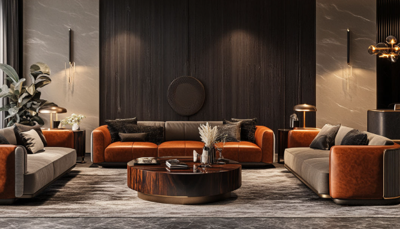

Luxury has always been about more than just price tags and brand names. In contemporary interior design, luxury is defined by sensory experience — the feel of a velvet sofa under your fingertips, the subtle sheen of hand-finished marble, the interplay of light on brushed metal surfaces.
In a world where trends come and go quickly, textures and materials provide a timeless language that communicates sophistication, comfort, and intentionality. The right combination can elevate even a minimalist space into something extraordinary.
Texture: The Silent Communicator
Texture operates on both a visual and tactile level. Rough-hewn stone walls, soft wool rugs, sleek lacquered cabinets — each adds a distinct layer of meaning to a space. Even when viewers don’t consciously register it, texture sets the emotional tone of a room.
Designers use contrasting textures to create depth and interest: pairing smooth surfaces with rough ones, matte finishes with glossy highlights. This interplay draws the eye and invites touch, transforming a static room into an immersive environment.
Material Choices as a Statement
Materials are the backbone of interior luxury. Whether it’s Carrara marble, walnut wood, or polished brass, high-quality materials carry their own narratives — of craftsmanship, geography, and history. Choosing materials thoughtfully is less about opulence for its own sake and more about curating a sensory journey through space.
For example, pairing warm, natural timbers with cool stone can strike a perfect balance between comfort and grandeur. Incorporating metals in subtle details — like trim, fixtures, or furniture legs — introduces elegance without overwhelming the space.
Minimalism Meets Material Richness
One of the defining trends of modern luxury is material-driven minimalism. Instead of cluttering spaces with ornate décor, designers are letting the inherent beauty of materials take center stage. A single slab of exquisite stone as a kitchen island, or a wall of textured plaster, can make a stronger impact than a room full of embellishments.
This approach relies on craftsmanship and quality — the imperfections of a handmade tile or the natural veining of marble become focal points that give spaces character.
Where Designers Refine Their Craft
Behind every seemingly effortless luxurious space is meticulous material selection. Designers and homeowners alike increasingly look to specialized design platforms for inspiration, sourcing, and technical guidance.
Websites like www.luxuryinteriors.org highlight how texture, finish, and layering can transform an ordinary room into a high-end haven. These kinds of platforms act as both muse and manual — showing not only what materials to use but how to combine them to achieve a refined, cohesive look.
Lighting: The Unsung Hero of Texture
Lighting plays a crucial role in how textures and materials are perceived. Soft, diffused light can bring out the gentle nap of velvet or the grain of wood. Directional lighting emphasizes relief in textured walls, casting shadows that deepen the dimensionality of a space.
Luxury designers use lighting strategically — not just to illuminate, but to sculpt the atmosphere. When materials and lighting work together, the effect can be breathtaking.
Tactility in Unexpected Places
Modern luxury isn’t confined to obvious surfaces. Designers are increasingly paying attention to secondary touchpoints — cabinet handles with a subtle grip, leather-wrapped railings, or silk-lined drawers. These unexpected tactile moments create a sense of intimacy and discovery, hallmarks of truly thoughtful design.
It’s these small details that separate a nice space from one that feels crafted.
Sustainability Meets Luxury
Another emerging dimension is the integration of sustainable materials into high-end design. Reclaimed wood, recycled glass, and eco-friendly composites are proving that environmental responsibility and luxury can coexist.
The tactile richness of these materials often rivals — or surpasses — their traditional counterparts, giving designers more ways to create meaningful, beautiful interiors without compromise.
The Future: Technology and Texture
As technology integrates further into interiors, materials are beginning to take on dynamic roles. Smart glass that changes opacity, responsive fabrics, and textured wall panels with embedded lighting are opening new possibilities.
The luxury of tomorrow might blend centuries-old craftsmanship with futuristic innovation — spaces that feel both grounded and forward-looking.
A Language of Touch and Material
Luxury interiors speak through materials and textures. They tell stories, create moods, and shape experiences in ways that transcend passing trends. In modern design, it’s this sensory language — not just opulence — that defines true elegance.
By paying attention to texture, choosing materials with intention, and drawing inspiration from platforms that understand the nuances of high-end spaces, designers and homeowners can craft environments that feel both timeless and deeply personal.
(0) comments
We welcome your comments
Log In
Post a comment as Guest
Keep it Clean. Please avoid obscene, vulgar, lewd, racist or sexually-oriented language.
PLEASE TURN OFF YOUR CAPS LOCK.
Don't Threaten. Threats of harming another person will not be tolerated.
Be Truthful. Don't knowingly lie about anyone or anything.
Be Nice. No racism, sexism or any sort of -ism that is degrading to another person.
Be Proactive. Use the 'Report' link on each comment to let us know of abusive posts.
Share with Us. We'd love to hear eyewitness accounts, the history behind an article.