

A modern house can be beautifully composed and still feel as though nobody is quite comfortable putting down a coffee cup. Clean lines, expansive glass and immaculate white walls create an impressive architectural framework, but without warmth, the result can feel closer to a gallery than a home.
The solution is not to cover every surface in distressed wood or begin collecting decorative roosters. Successful modern rustic interior design is more restrained than that. It pairs contemporary architecture with materials that show age, texture and evidence of the human hand. Smooth plaster meets rugged stone. Tailored upholstery sits beside an antique table. Sleek cabinetry is softened by timber, linen and handmade ceramic.
The contrast is what makes the style compelling. A rustic element becomes more sculptural against a modern background, while a contemporary room feels more inviting when everything in it is not perfectly polished.
Begin With the Architecture You Already Have

Before adding anything, identify what makes the home modern. It may be an open floor plan, large windows, minimal molding, streamlined cabinetry or a restrained color palette. Those features should remain visible.
One of the most common mistakes is treating rustic design as a decorative theme rather than a material language. A modern house does not need faux barn doors, novelty signs or a room full of intentionally distressed furniture. It needs a few authentic surfaces with enough visual weight to balance the architecture.
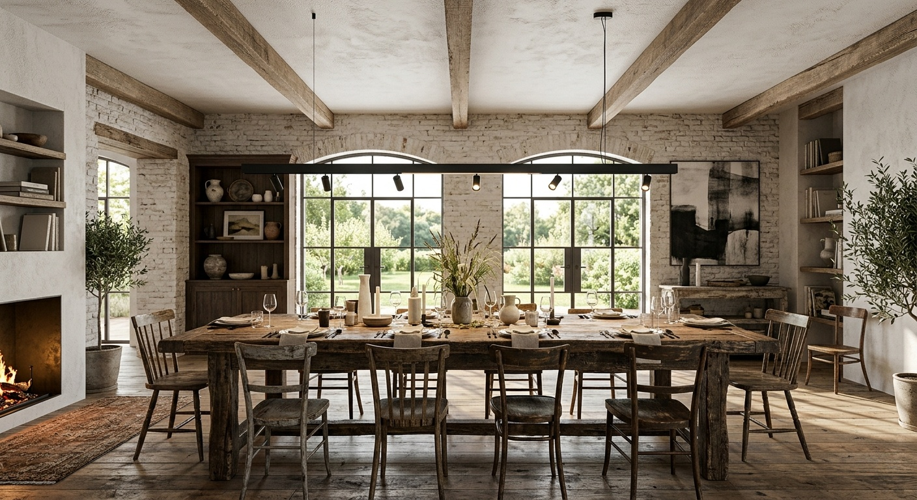
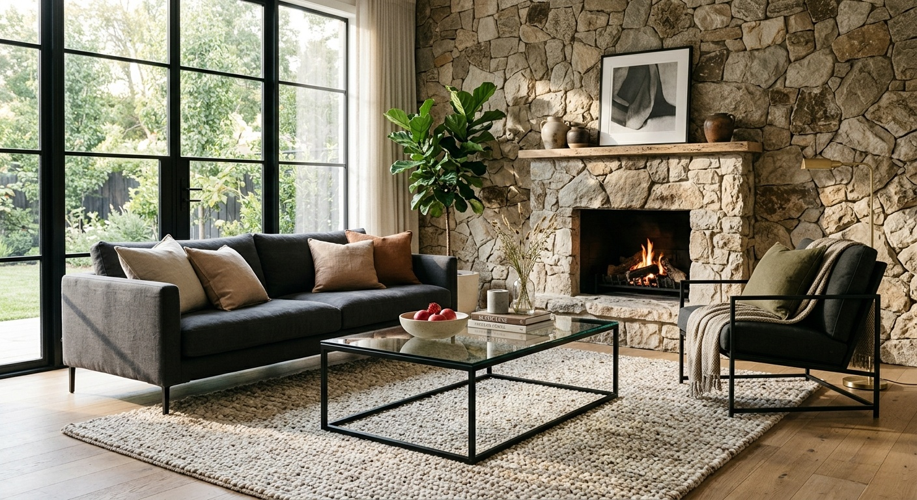
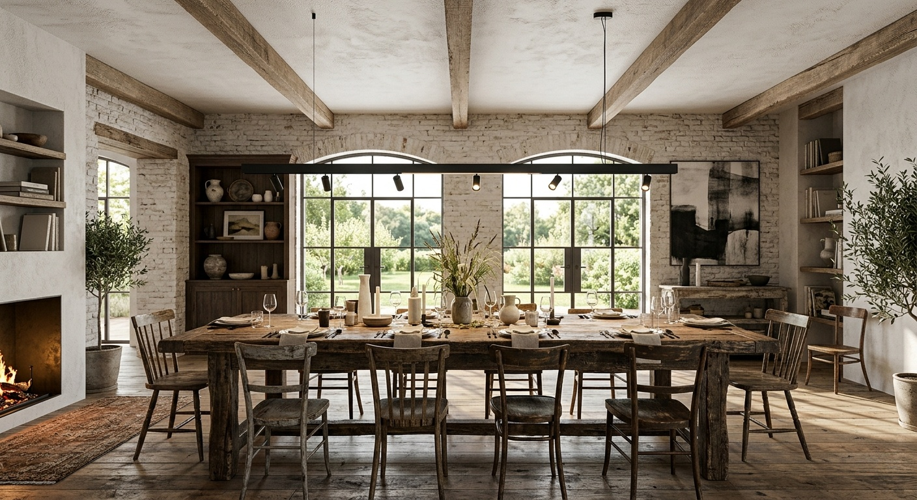
Exposed ceiling beams can bring warmth to a high-volume room, but they should appear structurally believable. A substantial reclaimed-wood mantel can anchor a sleek fireplace without making the entire living room resemble a mountain lodge. Even a single wall finished in stone, limewash or hand-applied plaster can change the character of a room.
Exterior changes should follow the same principle. When considering a larger renovation, materials should feel connected to the home’s original form rather than applied as decoration. FINE’s guide to renovating a home exterior offers additional considerations for making architectural updates feel cohesive.
Choose Natural Materials With Visible Character

Modern spaces often depend on visual consistency. Rustic interiors benefit from precisely the opposite: variation. Knots in wood, irregular edges in stone and subtle differences between handmade tiles prevent a room from feeling mass-produced.
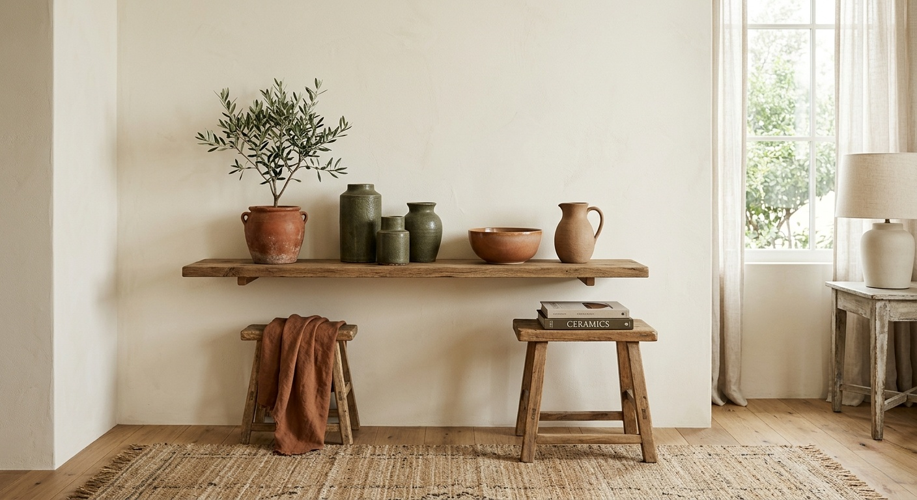
Wood is usually the easiest place to begin, although restraint matters. Rather than using the same timber on the floors, ceiling, walls and furniture, choose one or two prominent applications. Wide-plank flooring, a hand-finished dining table or thick floating shelves may be enough.
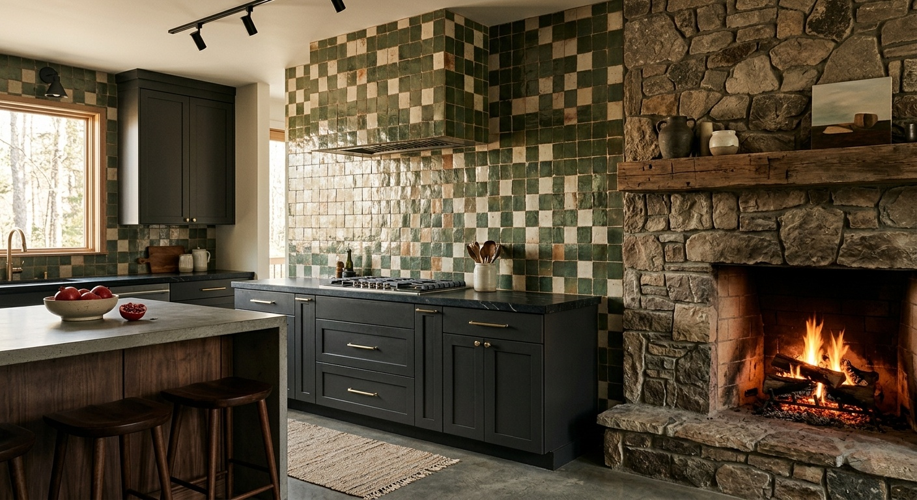
Stone offers another effective counterpoint to smooth contemporary surfaces. A floor-to-ceiling fireplace surround can become the architectural center of a living room, while honed limestone or softly textured tile can introduce depth without appearing aggressively rustic.
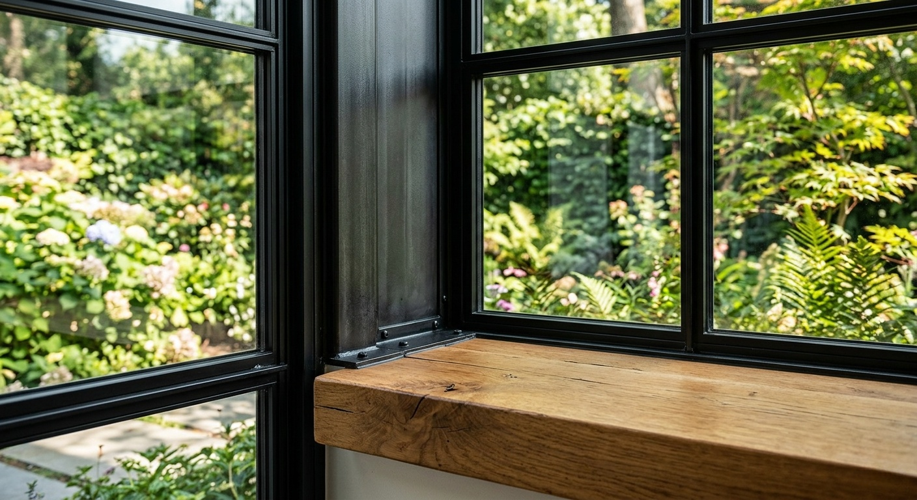
The strongest rooms also mix surface qualities. Pair rough stone with clear glass, old wood with blackened steel or hand-thrown pottery with finely tailored furniture. When every object has the same degree of texture, the room loses tension and begins to feel themed.
Warm the Palette Without Turning Everything Brown

Rustic color does not have to mean an endless procession of beige and brown. The goal is warmth, not monotony.
Replace icy whites with chalk, ivory, putty or soft mushroom tones. These shades still support a minimalist interior but respond more gracefully to wood and stone. Deeper accents can come from olive green, charcoal, oxidized metal, tobacco leather, clay and muted rust.
Color is particularly useful when permanent architectural changes are not practical. An earthy wall finish, a large wool rug or a collection of ceramics can make a stark room feel grounded without requiring a major renovation.
Wall art can also connect modern architecture with a more organic palette. Large abstract pieces, landscape photography and works made with natural pigments tend to be more convincing than overtly rustic signs or prints. See FINE’s guide to choosing wall art for your home’s style for ways to establish the right scale and visual relationship.
Use Textiles to Soften the Modern Framework
Contemporary furniture often has a crisp, architectural silhouette. Textiles keep those lines from feeling severe.
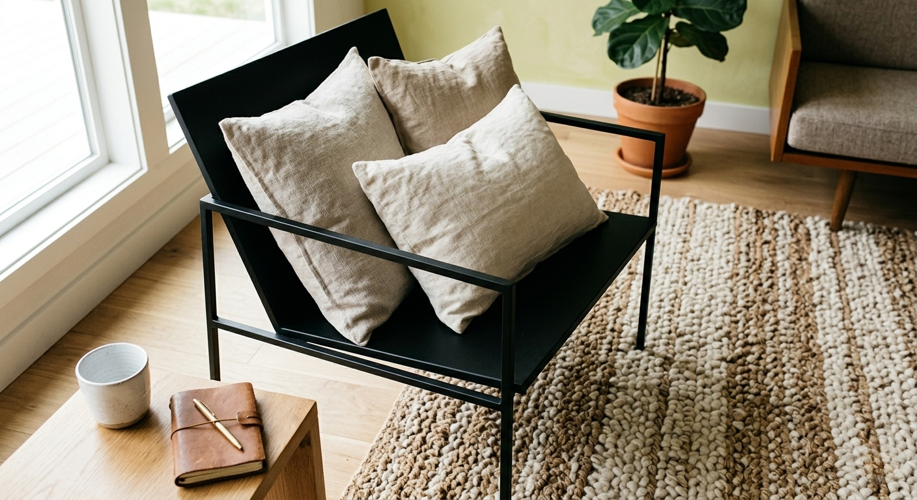
Begin with materials that look and feel substantial: washed linen, wool, mohair, boucle, leather and tightly woven jute. A generously sized rug can soften polished concrete or wide-plank floors, while linen curtains introduce movement around large modern windows.
Layering should appear relaxed but intentional. A wool throw folded over one arm of a sofa is more effective than covering every chair with pillows. Upholstery in oatmeal, camel or warm gray creates a quiet background, allowing the grain of a wood table or the irregular surface of a stone wall to command attention.
This is also where comfort becomes part of the design. Rustic rooms feel welcoming because their materials invite touch. A room can remain visually minimal while still offering places to settle in rather than merely admire from across the room.
Let One Older Piece Interrupt the Perfection

A room furnished entirely with newly purchased “rustic” pieces rarely feels authentic. One genuinely aged object can accomplish more than a dozen reproductions.
Consider an antique farm table beneath a contemporary pendant, a weathered bench in a pristine entry or an old cabinet positioned against a smooth plaster wall. The piece does not need to match the architecture. In fact, the slight disruption is often what gives the room personality.
The same rule applies to accessories. A hand-formed bowl, vintage vessel or carved object carries more presence when it is given room to breathe. Rustic design becomes sophisticated when objects are selected for form, material and provenance rather than accumulated to fill shelves.
Bring Rustic Character Into the Kitchen

The kitchen is where modern rustic design can quickly become predictable. White shaker cabinets, a farmhouse sink and decorative wooden signs are not required.
In a truly contemporary kitchen, keep the cabinetry clean and introduce warmth through a limited number of tactile elements. A stone backsplash with natural variation, counter stools in oak or leather, aged-brass hardware or a substantial wood island can temper glossy surfaces without compromising the room’s modern character.
Open shelves should be used sparingly and stocked with objects that are genuinely attractive enough to display. Handmade ceramics, wood boards and a few pieces of copper cookware create texture; crowded shelves of everyday packaging do not.
When choosing finishes, remember that materials affect more than appearance. Paints, coatings, adhesives, flooring and composite-wood products may release volatile organic compounds into the home. The U.S. Environmental Protection Agency’s guidance on volatile organic compounds explains that VOCs can come from paints, varnishes, wood preservatives, adhesives, building materials and furnishings. Reviewing product emissions alongside color, texture and durability can support a more thoughtful renovation.
Avoid Rustic Design That Feels Manufactured

The fastest way to make a modern home feel dated is to add every recognizable symbol of rustic decorating at once. Faux distressing, artificial weathering and mass-produced “farmhouse” accessories tend to flatten the very character the style is meant to create.
There is also no need to make every room equally rustic. A stone fireplace in the living room may be enough to establish the material direction for the entire home. Nearby rooms can echo it more subtly through color, textiles or a single wood element.
Consistency should come from proportion and palette rather than repetition. Maintaining continuous flooring through open spaces will preserve the home’s modern flow, while rugs and furniture arrangements can create warmer, more intimate zones.
Modern Rustic Design Should Feel Collected Over Time
The most convincing modern rustic homes do not look as though they arrived in a single furniture delivery. They feel composed gradually, with pieces chosen because they offer beauty, utility or a meaningful connection to place.
Start with one element the room genuinely needs: a tactile rug, a substantial table, warmer lighting or an architectural surface. Allow that choice to guide the next rather than trying to complete the entire look at once.
A modern home does not have to surrender its clean lines to become comfortable. By introducing natural variation, honest materials and a few objects with history, it can retain its architectural clarity while gaining something perfection alone cannot provide: character.
Frequently Asked Questions
What is the difference between rustic and farmhouse style?
Rustic design is centered on natural materials, visible texture and objects that show age or craftsmanship. Farmhouse style is a more specific aesthetic associated with rural domestic architecture and may include apron-front sinks, painted wood, traditional cabinetry and agricultural references.
Can rustic décor work in a minimalist home?
Yes. The two styles work particularly well together when rustic elements are limited in number but substantial in scale. One antique table, stone wall or handcrafted bench can add warmth without disrupting a minimalist room.
What colors work in a modern rustic living room?
Warm neutrals such as cream, taupe, camel, mushroom and charcoal create a versatile foundation. Olive green, clay, rust, deep navy and tobacco brown can then be introduced in smaller amounts.
How can I add rustic style without renovating?
Use a large natural-fiber rug, linen window treatments, vintage wood furniture, handmade pottery and warmer lighting. These additions introduce texture and age without changing permanent architectural finishes.
(0) comments
We welcome your comments
Log In
Post a comment as Guest
Keep it Clean. Please avoid obscene, vulgar, lewd, racist or sexually-oriented language.
PLEASE TURN OFF YOUR CAPS LOCK.
Don't Threaten. Threats of harming another person will not be tolerated.
Be Truthful. Don't knowingly lie about anyone or anything.
Be Nice. No racism, sexism or any sort of -ism that is degrading to another person.
Be Proactive. Use the 'Report' link on each comment to let us know of abusive posts.
Share with Us. We'd love to hear eyewitness accounts, the history behind an article.