
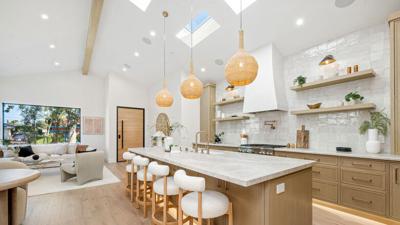

A furniture-inspired kitchen draws on the qualities of a well-chosen sideboard or dining table: balanced proportions, distinctive details, and finishes that suit the home. Cabinetry plays a central role because it occupies so much of the room’s visible surface.
Custom inset cabinetry supports this approach, offering a defined framework for both traditional and transitional interiors. The design begins with the cabinet fronts, then develops through decisions about door profiles, color, hardware, and layout. Each choice should serve the household’s routines while contributing to the room’s character.
The Design Detail Behind a Tailored Kitchen
Inset doors and drawer fronts fit inside the cabinet’s face frame, with their outer surfaces sitting flush with it. The frame remains visible around each opening, creating borders that distinguish this construction from doors mounted over the frame.
For homeowners considering this approach, iStyle Custom Inset by Starmark cabinets offer multiple door designs, allowing the cabinetry’s decorative character to suit the interior.
The furniture-like effect comes partly from the relationship between each opening and its surrounding frame. Narrow, even gaps outline the doors and drawers, so accurate fitting and alignment are important to the finished appearance. Uneven spacing can interrupt the pattern across a cabinet run.
When examining a display or completed installation, look beyond an individual door. Check how adjoining fronts align and whether the gaps appear consistent. Open the doors and drawers to assess their operation. These observations connect the visual appeal of inset construction with its everyday use.
Choosing Door Profiles That Give the Room Character
The door profile determines how much decorative detail the cabinetry introduces. A restrained recessed-panel design can suit a transitional kitchen, where traditional architectural features sit alongside contemporary furnishings. More elaborate profiles may complement paneled walls, substantial moldings, or antique furniture.
Use the room’s existing architecture as a starting point. Simple window trim and clean ceiling lines often support an understated cabinet front. Deeper moldings may accommodate stronger detailing, although matching every architectural feature can make the room feel crowded.
Consider the effect of repetition. A decorative edge that looks appealing on one sample becomes more prominent across a full wall of cabinets. In a compact kitchen, that repetition may carry more visual weight than expected.
Ask to see how the chosen profile will appear on narrow doors and shallow drawer fronts. Confirm how smaller fronts will be treated so the finished arrangement feels consistent across different cabinet sizes.
Finishes That Bring Depth and Warmth
Painted and stained finishes emphasize different qualities of inset cabinetry. Paint makes frame and door-profile outlines more prominent. Stain lets grain and natural color variation contribute to the look.
Choose painted colors in relation to the room’s fixed surfaces. A creamy finish may look noticeably warmer beside cool white stone, while a muted gray can reveal green or violet undertones under different lighting. Flooring also influences how the cabinet color reads, particularly when it covers a large area.
For stained cabinetry, consider how much grain variation you want. Request representative samples and discuss the expected variation with the supplier. A small sample cannot show every characteristic of the finished order.
If combining painted perimeter cabinets with a stained island, establish a clear relationship between the two finishes. Compatible undertones can create cohesion while letting the island stand out as a distinct piece.
Assess samples vertically in the kitchen, beside the proposed countertop and flooring. Examine them in daylight and under the lighting intended for the room before approving the palette.
Hardware That Completes the Furniture-Inspired Look
Knobs and pulls can evoke the character of a dresser or traditional cupboard. Their success depends on how comfortable they are to use and how well their scale suits the cabinet fronts.
Thoughtful cabinet hardware selection accounts for grip, proportion, and the effort required to open a door or drawer. A delicate knob may look appropriate on a small cupboard but feel awkward on a heavy drawer. Test the hardware by hand whenever possible, checking finger clearance and comfort.
Develop a consistent approach to placement. Using knobs on doors and pulls on drawers creates a clear pattern, while a single handle style can produce a more uniform appearance. Either approach should work across the cabinet sizes in the layout.
Metal finishes affect the overall mood. Compare them directly with the cabinet finish rather than relying on product photographs.
Hinges deserve attention too. Confirm which visible or concealed options are available for the selected cabinetry and how they affect door movement, nearby handles, and adjacent cabinets.
Proportions That Make Cabinetry Feel Purposeful
The arrangement of cabinet fronts establishes the kitchen’s visual rhythm. Drawer heights, cupboard widths, and tall units should form a composition that supports the required storage.
Review cabinet elevations alongside the floor plan. The floor plan explains placement and circulation; elevations show the fronts as they will appear from within the room. Together, they help reveal awkward transitions or overly narrow units before production.
Align neighboring drawer fronts where practical, but avoid forcing symmetry at the expense of useful storage. A drawer intended for cookware should accommodate the items it will hold, even if its height differs from nearby drawers.
An island requires attention on every visible side. Discuss how finished ends and the seating side will relate to its doors and drawers. Confirm where panel joints will fall and how corners will be treated.
For tall cabinetry, assess its relationship to windows, doorways, and ceiling height. Incorporate final appliance specifications and opening clearances before approving the cabinet order.
Connecting the Cabinetry to the Rest of the Home
In an open-plan interior, kitchen cabinetry becomes part of the view from dining and living areas. Its finishes and detailing should relate to those spaces without requiring an exact match.
An approach centered on warmer, more personal kitchen design can begin with furnishings the homeowner already intends to keep. A dining table, upholstered chair, or built-in bookcase may provide a useful reference for the cabinet palette.
Select one or two connections. A stained island could share an undertone with the dining table, while cabinet hardware might echo a metal finish used in nearby lighting. The materials can differ while still feeling compatible.
Check the cabinetry from the adjoining rooms, paying attention to exposed ends and tall units. A surface that seems secondary from inside the kitchen may be prominent from the sofa or dining table. Include those views when deciding which areas need a finished treatment.
A Kitchen Shaped by Thoughtful Details
A successful inset kitchen feels suited to its setting and comfortable to use. Its furniture-inspired character comes from decisions made with the whole room in mind, supported by careful fitting and installation.
Take time to resolve the specifications before ordering. A clearly documented design gives the supplier and installer a shared reference, helping preserve the details that made the cabinetry appealing in the first place.

(0) comments
We welcome your comments
Log In
Post a comment as Guest
Keep it Clean. Please avoid obscene, vulgar, lewd, racist or sexually-oriented language.
PLEASE TURN OFF YOUR CAPS LOCK.
Don't Threaten. Threats of harming another person will not be tolerated.
Be Truthful. Don't knowingly lie about anyone or anything.
Be Nice. No racism, sexism or any sort of -ism that is degrading to another person.
Be Proactive. Use the 'Report' link on each comment to let us know of abusive posts.
Share with Us. We'd love to hear eyewitness accounts, the history behind an article.