
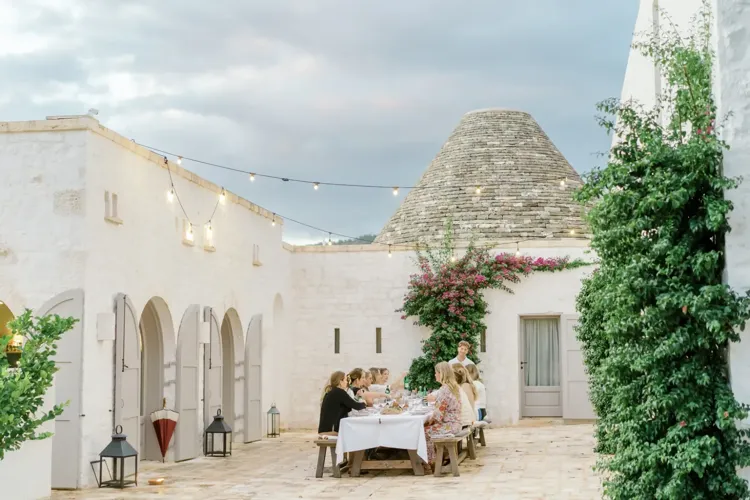
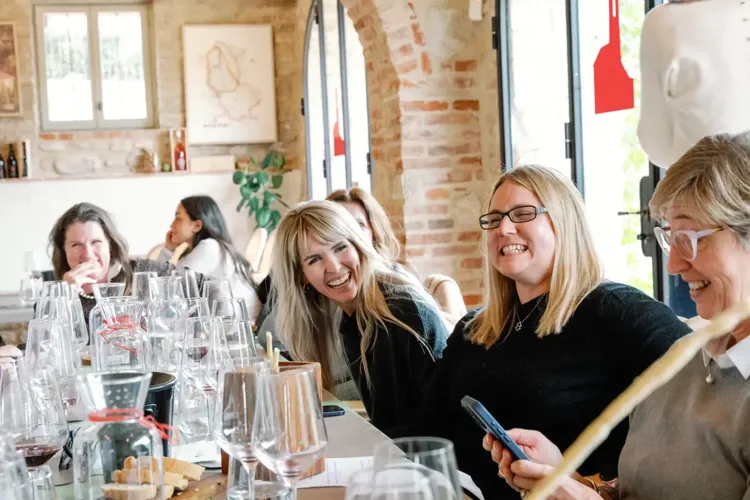
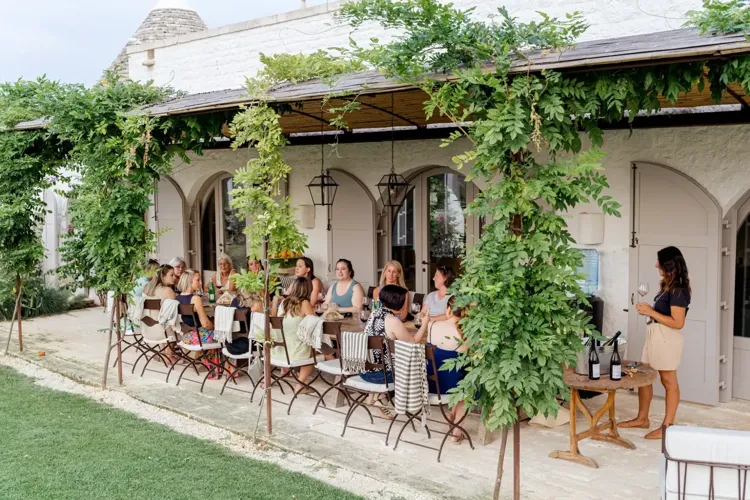
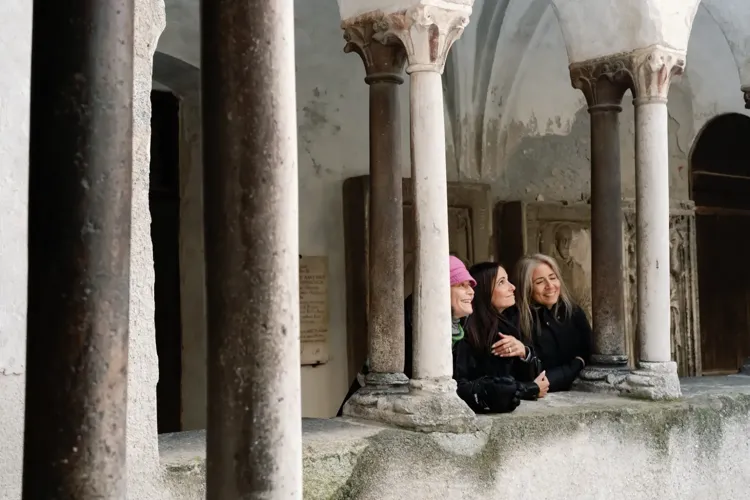

Women gather during an Illuminare Retreat in Europe, where curated experiences, community and thoughtful hospitality are central to the journey.
Luxury travel used to be relatively easy to recognize. A spectacular suite. Champagne on arrival. A coveted dinner reservation. Perhaps a driver waiting outside so you never had to wonder which way to turn.
Those things still matter. But for a growing number of women, the most coveted luxury may be something considerably less tangible: not having to think about what happens next.
No itinerary to build. No restaurant reservations to chase. No group text asking what everyone wants to do tomorrow. No figuring out how to get from the train station to the hotel while simultaneously keeping track of luggage, dinner plans and everyone else's preferences.
Just arrive.
That appetite for travel with less mental clutter is part of a larger shift taking place in luxury tourism. Hilton's 2026 Trends Report found that travelers are increasingly choosing trips around emotional motivations such as rest, reconnection and meaningful experiences, with 56 percent naming “rest and recharge” as their top motivation for leisure travel.
At the same time, solo travel is becoming decidedly more social. Mastercard's 2026 Travel Trendline found that 39 percent of international travelers have already traveled alone, while seven in ten international leisure travelers are interested in solo experiences designed to connect them with like-minded people.
For women in particular, those two trends are beginning to intersect in an interesting place: travel where you can arrive independently without necessarily spending the trip alone.
The Luxury of Giving Up Control
Amanda Donaho sees that desire firsthand.
As founder of Illuminare Retreat, Donaho creates intimate European retreats for women in destinations including Tuscany, Provence, Puglia, Crete, Scotland, Paris and Vienna. Unlike a conventional tour with every hour accounted for, the retreats combine curated experiences with stretches of unstructured time, while much of the planning and decision-making happens behind the scenes.
“In general, I find that the women attending our retreats are eager to let go of control,” Donaho says.
Many of them, she adds, are accustomed to doing exactly the opposite at home. They plan for their families, organize at work, coordinate social calendars and make countless small decisions every day.
Even women who genuinely enjoy planning vacations sometimes discover an unexpected pleasure in relinquishing that job.
That may be one reason today's definition of indulgence increasingly looks different from the conspicuous luxury of the past. A beautiful hotel still matters, of course. FINE has explored the same evolution in everything from wellness retreats that justify the investment to resorts designed around slowing down. But increasingly, great hospitality isn't just about what surrounds the guest. It's about what the guest no longer has to manage.
Solo Does Not Have to Mean Alone

There is also an important distinction between arriving solo and wanting solitude.
“Solo travel simply means you didn't arrive with someone else,” Donaho says. “Many of our guests arrive solo, but from the moment they walk through the door, there's a seat waiting for them at the table.”
That distinction may help explain why organized small-group travel is finding an audience among women who might never have considered themselves “group tour” travelers.
The old model could feel regimented: sightseeing at 9, museum at 11, lunch at 12:30, back on the bus at 1:45.
The newer version is more fluid. Someone else manages the difficult parts, but travelers retain space to wander, sleep late, linger over coffee or spend an afternoon alone.
For some women, it also removes another familiar obstacle to travel: waiting for somebody else to be ready.
Donaho says women who arrive completely solo are often “tired of waiting for someone in their lives to finally take the trip with them.”
Being Cared For Is in the Details

The phrase “being looked after” could easily become luxury-travel marketing speak. What makes it meaningful is execution.
“To me, being looked after means being able to put down the mental load for a little while,” Donaho says. “So much of women's lives is spent anticipating what everyone else needs, organizing, remembering and taking care of things.”
Sometimes that care is grand. Other times, it is almost ridiculously simple.
Donaho recalls a recent stay at Portrait Roma, the Ferragamo family's boutique hotel in Rome. She returned to her room around 10 p.m. to discover piping hot tea waiting for her.
She still doesn't know precisely how the hotel timed it.
That, arguably, is the point.
The best hospitality often feels effortless to the person receiving it precisely because somebody else put considerable effort into making it appear that way. It is the same quality we identified in what separates a truly memorable spa from a merely expensive one: thoughtful details can matter more than showier displays of luxury.
The Appeal of Not Knowing Everything
Illuminare takes the idea one step further by keeping portions of its itineraries secret.
That could sound unnerving in an age when travelers can inspect the hotel room, restaurant menu and street outside their hotel before boarding the flight.
But Donaho makes an important distinction.
“Surprise is a huge part of what we do, but I never want surprise to feel like uncertainty.”
Guests know the practical information they need: where they are staying, how to arrive, weather expectations, what to pack and how physically demanding the trip will be. What they don't necessarily know is precisely what will happen once they're there.
“As adults, we so rarely get to be genuinely surprised anymore,” she says.
That element may be particularly appealing at a time when technology has made travel extraordinarily predictable. We can research nearly everything before experiencing anything.
Luxury, paradoxically, may now include allowing ourselves not to know.
Why Women Are Coming Back

Illuminare says approximately 70 percent of its guests are repeat travelers, based on the company's internal booking data. It also reports a waitlist of roughly 1,500 people, with many retreats selling out within an hour of release. Its Vienna Christmas Retreat reportedly sold out in five minutes.
Those are company figures rather than industry-wide statistics, but the repeat rate is perhaps more interesting than the speed of the sellouts.
If luxury were simply about collecting destinations, a guest might reasonably choose a different company the next time.
Instead, Donaho believes women are returning for the feeling associated with the experience.
“The destination might be what initially gets someone's attention, but it's rarely the only reason they come back,” she says.
Friendships are part of that equation. Women who meet on one retreat have visited one another afterward, traveled together independently and returned for later Illuminare trips together.
First-time guests, Donaho says, often think they are signing up to see a destination. What surprises them is what they remember afterward.
She puts it particularly well: “Most first-time guests arrive ready to see the sights, but leave feeling seen.”
A Different Kind of Five-Star Experience
None of this means beautiful suites, fabulous restaurants or spectacular European villas are becoming irrelevant.
Quite the opposite.
But perhaps the hierarchy is changing.
A five-star room without thoughtful service can feel strangely ordinary. A flawless itinerary that leaves you exhausted is not much of an escape. And a vacation requiring months of research followed by seven days of constant decision-making can start to resemble another job with better scenery.
The next iteration of luxury travel may therefore be less concerned with how much can be added and more interested in what can be taken away: friction, logistics, obligation, overscheduling and the constant pressure to make every moment productive.
Donaho believes that shift will only become more pronounced as technology becomes increasingly embedded in everyday life.
“Women are craving everything that is decidedly not artificial,” she says.
Maybe that is the real indulgence.
To arrive somewhere beautiful. To discover there is already a seat waiting at the table.
And, for once, to let someone else figure out what happens tomorrow.

(0) comments
We welcome your comments
Log In
Post a comment as Guest
Keep it Clean. Please avoid obscene, vulgar, lewd, racist or sexually-oriented language.
PLEASE TURN OFF YOUR CAPS LOCK.
Don't Threaten. Threats of harming another person will not be tolerated.
Be Truthful. Don't knowingly lie about anyone or anything.
Be Nice. No racism, sexism or any sort of -ism that is degrading to another person.
Be Proactive. Use the 'Report' link on each comment to let us know of abusive posts.
Share with Us. We'd love to hear eyewitness accounts, the history behind an article.