
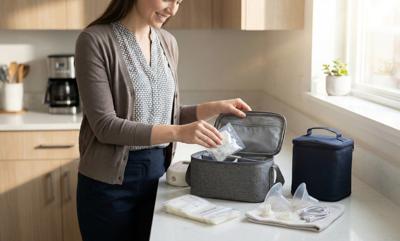
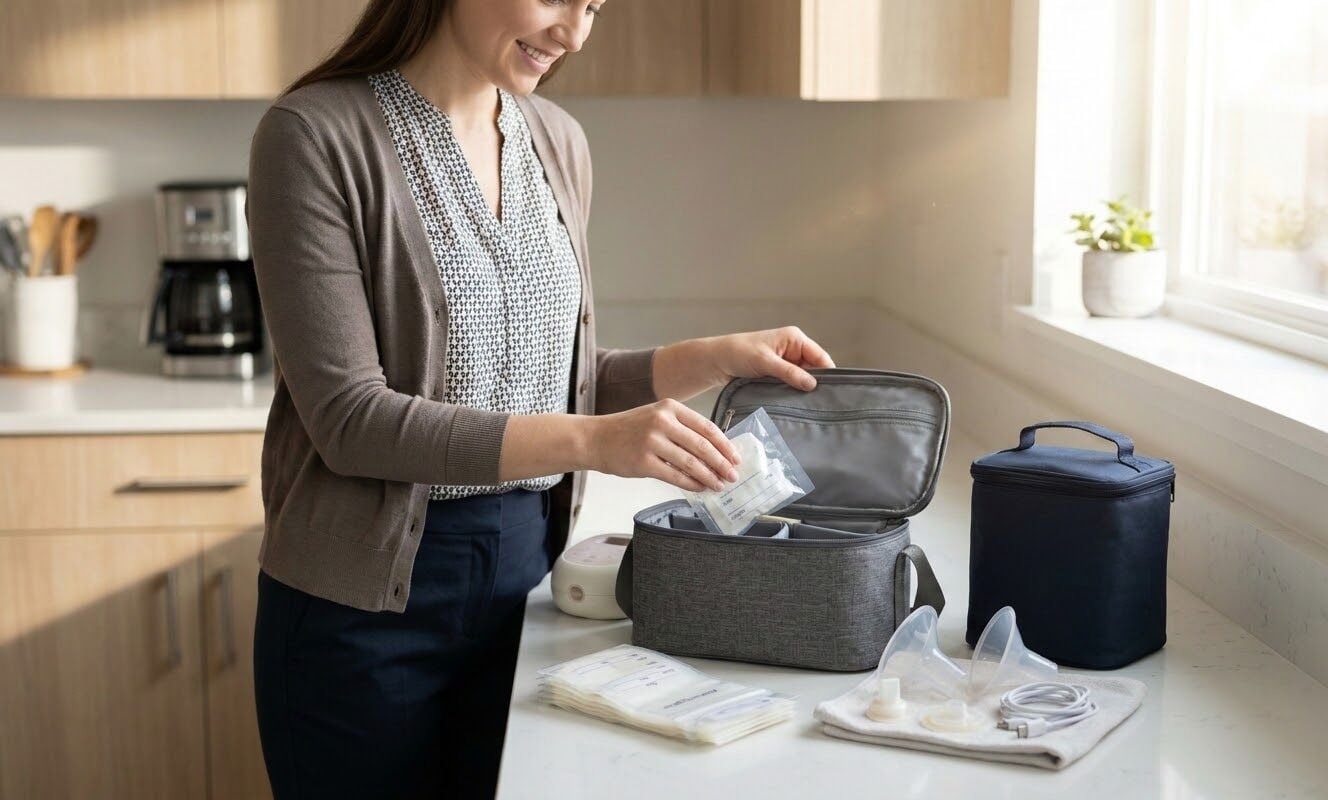
Returning to work while breastfeeding adds a few practical questions to your day. When will you pump? Where can you keep the milk cold? How will you get it home? Thinking through these details before your first shift can make the transition easier, even if your routine changes later.
Prepare Before Returning to Work
Try pumping a few weeks before your first day back. This gives you time to learn how to assemble the pump, check that it feels comfortable, and see how long a session takes. If your baby will receive expressed milk while you are away, their caregiver can practice offering a bottle. If you have questions as you prepare, breastfeeding education resources can help you learn more about feeding and pumping. The CDC also recommends practicing before you begin spending regular time apart.
If possible, save a small amount of milk before returning. It can provide some flexibility while you and your baby’s caregiver establish a routine. Ask how much milk to send each day and whether the childcare provider has labeling requirements. You do not need to build a large freezer supply to get started.
Choose equipment around your actual workday. An electric breast pump may be convenient if you commute or move between work sites. Consider its size and power source, as well as how you will carry and clean its parts. Pack your pump, clean parts, containers, and any needed charger or cooler bag the night before.
Plan Pumping Breaks Around Your Day
Your baby’s usual feeding times offer a starting point. When you are apart, the CDC suggests trying to pump about as often as your baby drinks breast milk. The number and length of breaks may change as your baby grows or your work schedule changes.
Allow time to reach the pumping space, set up, express milk, put it away, and clean or pack your equipment. An office worker might reserve time between meetings; someone working a shift may need a colleague to cover their duties. If a break runs late, adjust your plan for the day rather than expecting every session to happen at an exact time.
Make Each Session Easier
Confirm where you can pump before your first shift and find out how to access the space. Clothing that allows easy access and a bag with supplies kept together can shorten setup time. A pumping bra or wearable pump may free your hands during a session if that is useful to you.
Cleaning needs a plan, too. The CDC recommends thoroughly cleaning parts that touch the breast or milk after every use. If washing them during a shift is difficult, you could bring a clean set for each session and wash the used sets later.
Store Milk Safely
Use breast milk storage bags or clean, food-grade containers with tight-fitting lids. Label each container with the date and time you expressed the milk. Add your name if it will go into a shared refrigerator or to childcare. Refrigerate the milk promptly, or place it in an insulated cooler with frozen ice packs.
For freshly expressed milk, the CDC gives these storage limits:
- Room temperature, 77°F or colder: up to 4 hours
- Refrigerator, 40°F: up to 4 days
- Freezer, 0°F or colder: within 6 months is best; up to 12 months is acceptable
Freshly expressed milk can stay in a cooler with frozen ice packs for up to 24 hours during travel. Once home, use it, refrigerate it, or freeze it. Different limits apply to milk that has been thawed or warmed.
Discuss Your Needs at Work
Before returning, ask your supervisor or HR contact about breaks, a private pumping space, milk storage, and cleaning facilities. If your duties need coverage, discuss how that will work during a typical shift.
Under the federal PUMP Act, most nursing employees have the right to reasonable break time when they need to express milk for up to one year after their child’s birth. The space provided must be private, free from intrusion, and not a bathroom. State laws may offer additional protections.
Your first plan does not have to be your final one. Adjust your pumping times and supplies as you learn what works for your job, commute, and baby’s feeding needs.

(0) comments
We welcome your comments
Log In
Post a comment as Guest
Keep it Clean. Please avoid obscene, vulgar, lewd, racist or sexually-oriented language.
PLEASE TURN OFF YOUR CAPS LOCK.
Don't Threaten. Threats of harming another person will not be tolerated.
Be Truthful. Don't knowingly lie about anyone or anything.
Be Nice. No racism, sexism or any sort of -ism that is degrading to another person.
Be Proactive. Use the 'Report' link on each comment to let us know of abusive posts.
Share with Us. We'd love to hear eyewitness accounts, the history behind an article.