
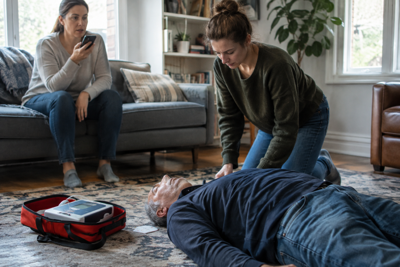
A cardiac emergency is frightening, fast-moving, and rarely convenient. A simple response plan cannot replace professional care, but it can reduce confusion when every second feels uncertain. Taking a CPR certification online course can help household members, coworkers, and community volunteers recognize an emergency and respond with greater confidence.
The goal is not to turn everyone into a medical professional. It is to make sure people know how to call for help, begin CPR when appropriate, locate an AED, and give emergency responders the access and information they need.
Why a Cardiac Emergency Plan Matters
Cardiac arrest requires immediate action before emergency medical services arrive. Stress can make ordinary decisions feel difficult, so a plan gives people specific jobs instead of leaving everyone to guess what to do. The CDC explains that cardiac emergency response plans help organizations prepare by making CPR and AED access part of a coordinated response.
A plan is useful in homes, shared apartments, offices, schools, gyms, places of worship, and community groups. It can be brief. What matters is that people know who calls 911, who starts care, who retrieves equipment, and who meets responders.
What Happens During Cardiac Arrest
Cardiac arrest occurs when the heart suddenly stops pumping blood effectively. It is different from a heart attack, which is usually caused by blocked blood flow to part of the heart muscle. A heart attack can sometimes lead to cardiac arrest, but the two terms do not mean the same thing.
Someone in cardiac arrest may collapse, become unresponsive, and stop breathing normally. Occasional gasps are not normal breathing. If a person does not respond and is not breathing normally, call 911 or the local emergency number right away. Blood flow to the brain and other vital organs is interrupted during cardiac arrest, which is why quick action matters.

How to Build a Household Response Plan
Review this checklist with everyone who regularly spends time in the home. Keep it practical and easy to remember.
- Post emergency numbers. Keep 911 and key contacts visible near shared phones and saved in mobile phones.
- Choose a responder meeting point. Pick a clear location near the entrance or driveway where someone can direct emergency crews.
- Assign basic roles. Decide who calls, who begins CPR, who retrieves an AED, who unlocks the door, and who meets responders.
- Store essential health details. Keep a current list of medications, allergies, medical conditions, and emergency contacts in an easy-to-find place.
- Check access. Make sure house numbers, apartment numbers, gates, and entry instructions are easy for responders to identify.
- Practice occasionally. Walk through the steps once or twice each year, especially after moving or adding new household members.
What to Do During the First Few Minutes
Use a straightforward sequence. First, check that the area is safe for you to enter. Next, try to get a response by speaking loudly and tapping the person. If there is no response and the person is not breathing normally, call 911. Put the phone on speaker if possible so the dispatcher can guide you while your hands remain available.
- Ask someone nearby to bring an AED if one is available.
- Begin chest compressions if the person is unresponsive and not breathing normally.
- Follow the dispatcher's instructions.
- Continue until the person shows signs of life, trained professionals take over, or the area becomes unsafe.
The Role of CPR and AEDs
CPR helps keep blood circulating while emergency care is on the way. An automated external defibrillator, or AED, analyzes the heart's rhythm and can advise or deliver a shock when appropriate. AEDs provide voice and visual prompts, so responders should turn one on and follow its instructions as soon as it arrives.
The Chain of Survival connects early recognition, emergency activation, CPR, defibrillation, professional care, and recovery. No single step guarantees an outcome, but each step supports the next. Training improves technique and confidence, yet a bystander should not delay calling for help or following dispatcher instructions because they feel unsure.
Planning for Homes, Offices, and Public Areas
At Home
- Keep phones charged and accessible.
- Make sure house numbers can be seen from the street.
- Teach children how to call 911 and identify a trusted adult.
- Keep emergency contacts and medical details in a shared location.
At Work
- Identify trained responders and clearly mark AED locations.
- Keep hallways, exits, and equipment access routes clear.
- Review emergency procedures with new employees, contractors, and temporary staff.
- Use brief drills to clarify roles without causing unnecessary alarm.
In Public Places
- Notice AED signs, exits, and emergency phones when entering large venues.
- Ask staff for help rather than sending several people in different directions.
- Give dispatchers the exact address, floor, room, landmark, or entrance location.
Planning Around Children and Older Adults
Children and infants may require age-specific CPR and choking responses, so caregivers should complete training that covers those skills. Use simple language when teaching children how to seek help: tell them to call 911, state where they are, and find a safe adult.
For older adults, plan around mobility limitations, hearing loss, memory concerns, and medication needs. Keep mobility aids nearby, avoid storing important records in locked cabinets, and make sure more than one trusted person knows where essential information is kept.
How to Keep Skills Fresh
Emergency skills fade when they are never reviewed. Refresh CPR and AED knowledge regularly, revisit the locations of nearby AEDs, and discuss what each person would do during an emergency. Employers, schools, licensing boards, and community organizations may also have training requirements that should be followed.
Guidance changes as evidence develops, so use current training materials rather than relying entirely on a class taken years ago. Planning works best when it supports formal instruction, dispatcher assistance, and professional emergency care.
Common Mistakes to Avoid
- Waiting too long to see whether the person improves.
- Assuming gasping means normal breathing.
- Sending everyone to find equipment while no one calls or starts care.
- Giving dispatchers an incomplete location.
- Stopping CPR solely because the rescuer feels uncertain.
- Leaving AEDs or emergency supplies locked away or difficult to reach.
- Creating a plan once and never reviewing it again.
A cardiac emergency plan does not need to be complicated. Clear roles, reliable access for responders, visible emergency information, CPR knowledge, and quick AED access can help people act with less hesitation. Treat this preparation as a shared safety habit, much like knowing a fire escape route or keeping a first-aid kit nearby.

(0) comments
We welcome your comments
Log In
Post a comment as Guest
Keep it Clean. Please avoid obscene, vulgar, lewd, racist or sexually-oriented language.
PLEASE TURN OFF YOUR CAPS LOCK.
Don't Threaten. Threats of harming another person will not be tolerated.
Be Truthful. Don't knowingly lie about anyone or anything.
Be Nice. No racism, sexism or any sort of -ism that is degrading to another person.
Be Proactive. Use the 'Report' link on each comment to let us know of abusive posts.
Share with Us. We'd love to hear eyewitness accounts, the history behind an article.