
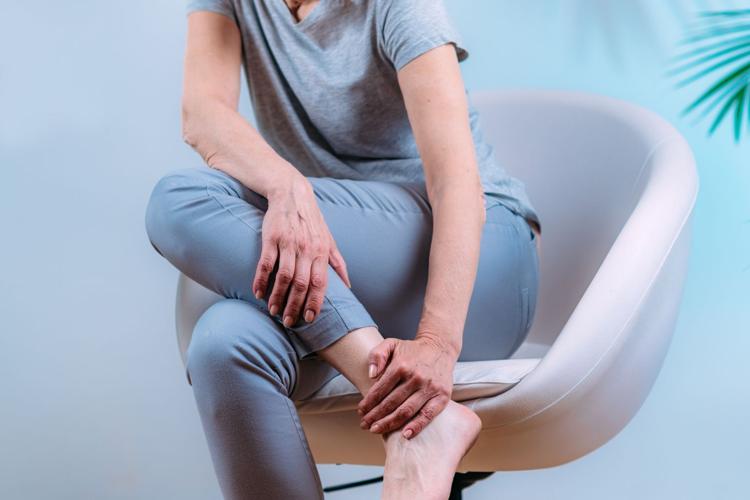
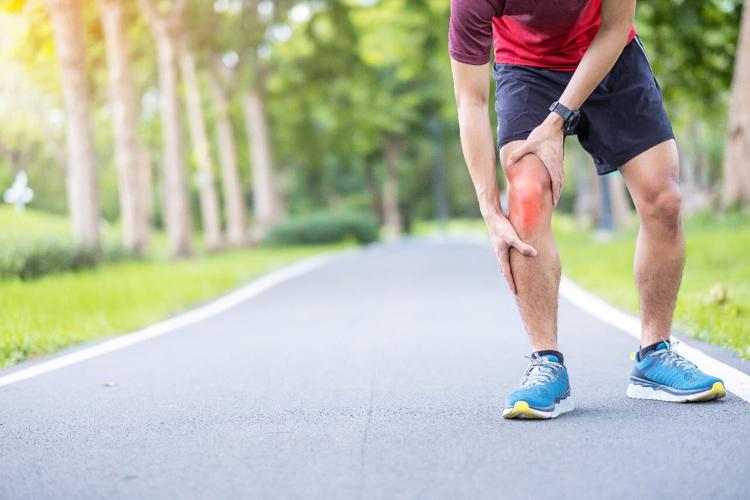

If you have been struggling with joint pain recently, for any reason at all, then there is certainly no doubt that you have been thinking about how to get some relief. Joint aches can make even the most ordinary parts of your day feel extremely difficult. For instance, a sore knee can turn climbing the stairs into a daunting ordeal, and stiff hips can take all the enjoyment out of a walk. Then, aching hands can result in even the simplest of jobs and tasks becoming frustrating for you. Whether caused by an old injury, arthritis, repetitive strain, or any other health condition for that matter, there is no doubt that joint pain can affect your entire life.
It is no wonder, therefore, that you are thinking about how to reduce it and get some relief. As you can see at https://lifestylemedicine.stanford.edu/how-to-reduce-joint-and-arthritis-pain-with-lifestyle-medicine/, there are certainly some methods that you can use to your advantage when trying to do that. A few practical habits can make your symptoms much more manageable throughout the day, as well as help you really stay involved in the activities that matter to you. The goal is, naturally, not for you to ignore the pain or force your way through it, but to respond thoughtfully, know how to protect your joints, as well as know when to get professional support.
What we are going to do right now, thus, is share some pain management tips that you can find quite useful if you are dealing with joint pain. Keep on reading, thus, to find out what you need to know here, and to learn some new tricks that you can try when you are dealing with those symptoms. As you will see, the tricks aren’t aiming at completely resolving the problem, but the idea is for them to reduce your pain level and consequently increase the quality of your life.
Keep Moving
It is not uncommon for people to decide to rest completely until their pain goes away when their joints hurt. I understand where this is coming from, and it is undeniably true that resting can be quite tempting. It can often seem like the smartest move in scenarios like these. But while a short break can be rather helpful after a flare-up or a minor strain, the truth is that too much inactivity can make the stiffness even worse. On top of that, it can also weaken those muscles that support the affected joint, which can leave it feeling much less stable over time. Click this to better understand the connection between physical activity and arthritis.
What this means is that moving is still desirable. In fact, gentle and regular movement is often much more helpful than resting, or than doing too much one a good day, and then avoiding any kind of activity the next several days. This means you may want to engage in walking, water exercise, swimming, cycling, or any kinds of mobility exercises that can be easier on the joints that some high-impact workouts.
Unsurprisingly, though, the best activity is the activity you can stick to – one that you will be able to do consistently and comfortably. Start with shorter workouts. And then, as your body adapts, keep on increasing the time or the intensity. Remember that some mild discomfort can be completely normal when you begin a new activity. Yet, if you start feeling sharp pain, increasing swelling, or similar symptoms, you may need to reduce the activity you’ve started, and talk to a clinician.

Heat and Cold Can Manage Flares and Stiffness
As you may have known already, heat and cold are quite simple pain management tools. When used safely, they can offer short-term relief. Heat is often helpful for stiff and tight joints, and for when you have difficulty moving or falling asleep, or after long periods of inactivity. Warm showers, warm compress, heated pads, or even a simple hot-water bottle can help relax those surrounding muscles and result in gentle movement feeling much easier.
Cold, on the other hand, is more useful when your joints are swollen, feeling hot, or irritated after some kind of an activity. A cold pack can reduce the discomfort by temporarily numbing the affected area. Of course, make sure to always wrap the pack in a thing towel, because putting ice directly on skin is not the smartest move. Apart from that, remember to keep both heat and cold sessions short.
Spread Demanding Tasks Throughout the Day
Pacing yourself throughout the day is another important tip to remember here. This means that you should spread those demanding tasks throughout the day and take regular breaks, instead of continuing until the pain finally forces you to stop. So, break your tasks into shorter blocks, and alternate between those that use different parts of the body. When you have a steady rhythm, that is sure to provide more control over your symptoms, as well as help you which positions, movements, and activities that are making your pain worse.
Reduce Unnecessary Strain on the Affected Joints
If you keep on straining the affected joints, the symptoms are bound to get worse and worse. So, perhaps one of the most obvious, and yet highly important, pain management tips, is to make some small changes in your routine and environment that can reduce pressure on those sore joints. For instance, well-fitting and supportive shoes can make a huge difference. Then, braces, canes, splints, and other mobility aids could also be useful. The idea is to make minor adjustments that can make your daily life much more manageable.
Use Pain Relief Medication Carefully
Pain meds can be rather useful in some situations, and it is completely normal for you to take them, in agreement with your healthcare professional. Yet, as you probably know, medication should always be used carefully. This is why, once again, this should be done in agreement with your healthcare provider, and after an assessment. So, getting medical help is absolutely important for any kind of joint pain, and over-the-counter medication can sometimes be part of the treatment.


(0) comments
We welcome your comments
Log In
Post a comment as Guest
Keep it Clean. Please avoid obscene, vulgar, lewd, racist or sexually-oriented language.
PLEASE TURN OFF YOUR CAPS LOCK.
Don't Threaten. Threats of harming another person will not be tolerated.
Be Truthful. Don't knowingly lie about anyone or anything.
Be Nice. No racism, sexism or any sort of -ism that is degrading to another person.
Be Proactive. Use the 'Report' link on each comment to let us know of abusive posts.
Share with Us. We'd love to hear eyewitness accounts, the history behind an article.