
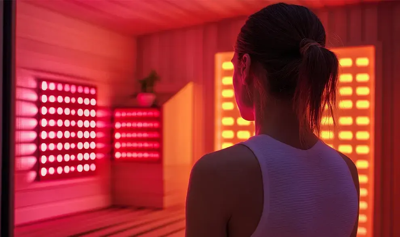
Home wellness no longer stops at a yoga mat left in the corner of a bedroom. An increasing number of people in the US are deliberately building their self-care routines around recovery, mental balance and their overall health beyond just fitness.
Massage guns, air purifiers, meditation apps, blue light glasses, and sleep trackers have become a part of everyday routines. Recovery has become more than just an afterthought. It is gradually becoming a part of the schedule of how people take care of themselves.
As home wellness keeps on being a more popular topic many people are considering the use of infrared light therapy devices as a way to complement the healthy lifestyle habits and self-care routines that they already have.

What Does a Modern Home Wellness Routine Actually Look Like?
It’s more than just hitting a step count or drinking sufficient water, though that is important. The components of a holistic home wellness program include physical health, mental wellness, quality sleep, stress management, and recovery.
People are carving out intentional spaces in their homes, a quiet corner with a foam roller and resistance bands, a spot by the window for morning stretching, a dedicated wind-down setup for evenings.
Wellness beyond fitness now includes:
- Consistency and quality of sleep.
- Proper nutrition and water consumption.
- Stress reduction through breathwork or mindfulness
- Mobility and flexibility at work
- Active Recovery in between workouts
Recovery has been prioritized, in particular. Many now reserve time for it similar to how they reserve time for workouts, knowing that if they don't allow recovery, the rest of the workout routine deteriorates.
Understanding LED Light Therapy
LED light therapy involves targeted wavelengths of light and how they interact with the body at a cellular level. It is non-invasive, painless, and does not require any downtime. You lie or sit close to a device, the light does its job, and you go along with the day.
There are three wavelengths that frequently are referenced in a home wellness setting:
- Red light (around 630 to 660nm): Most of them are related to skin wellness and collagen support.
- Near infrared light (810-850nm): Penetrates deeper in tissue, provides comfort to muscles and joints.
- Blue light (approx. 465nm): Mostly for the combat with acne causing bacteria on the skin.
The applications are for a variety of common wellness objectives: skin, post exercise, relaxation, and joint comfort. It is not a “one size fits all” kind of treatment and the device format is as important as the wavelength itself.
Ways LED Light Therapy Can Complement a Home Wellness Routine
Supporting post-exercise recovery is one of the most common reasons people add LED therapy to their routines. After workouts, muscles go through a repair process driven by inflammation. Research published on BMC Sports Science reviewed randomized controlled trials on red and near-infrared light for tendinopathy and found evidence supporting its use as both a standalone and adjunctive therapy for managing pain and physical function.
Encouraging relaxation is a subtler but equally real benefit. A 10-minute LED session in the evening gives the body a cue to slow down. Paired with low lighting, light stretching, or quiet time, it fits naturally into a wind-down routine without requiring effort or focus.
Supporting joint comfort is where many people, especially those over 40, find consistent value. Everyday activities like walking, gardening, and going up stairs put repetitive stress on joints. A2023 study highlighted photobiomodulation as a non-pharmacological option for knee osteoarthritis showing comparative effectiveness and strong patient acceptability.
For skin wellness, astudy by Fernanda et al. found that red LED therapy promoted skin healing by decreasing inflammation and stimulating collagen synthesis, supporting its role in everyday skin care routines.
Building a Comfortable Recovery Space at Home
You don't need a dedicated room or expensive equipment to make this work. A small, consistent setup is more valuable than an elaborate one you never use.
A practical home wellness corner might include:
- Sofa or floor cushion
- Yoga mat and foam roller
- Resistance or stretch bands
- A water bottle within reach
- Soft, warm lighting
- A recovery device like an LED panel or wearable wrap
The goal is frictionless access. When everything is already set up and within reach, you're far more likely to actually use it. Consistency over several weeks produces results that a single intense session never will.
Choosing Wellness Technology for Your Home
Before buying anything, it helps to get clear on a few practical questions. How much space do you have? Do you want something portable or stationary? How often will you realistically use it, and for what?
LED light therapy devices come in several formats. Face masks and wands are designed for skin wellness. Full panels and mats cover larger body areas for muscle and general recovery. Wearable wraps target specific spots hands-free. With the growing variety of light therapy products, consumers can choose devices based on individual wellness goals. Those interested in more localized support frequently research red light therapy devices for knee pain to compare device types and treatment coverage before committing.
Budget matters too. An entry-level device used four times a week will outperform a premium device that sits unused. Start with what fits your routine, not what looks most impressive.
Wellness Habits That Work Well Alongside LED Light Therapy
Light therapy is most effective when combined with other healthy life practices. The habits that compound most effectively over time are also the simplest ones:
- Walking or mild exercise daily
- Regular stretching and movability exercises.
- Two to three times of strength training a week
- 7-9 hours of good sleep
- Consuming sufficient fluids all day long.
- Balanced nutrition with enough protein for tissue repair
- Mindfulness, journaling, or spending time outdoors to reduce stress.
Layer LED therapy on top of these, and the combined effect is greater than any single habit alone.
Maintaining a healthy home doesn't require a lot of complicated or high tech items. It starts with consistent daily habits and builds from there. LED light therapy is just one of the therapies people are using to become part of a balanced and healthy lifestyle.
When combined with regular use of movement, sleep and good nutrition, it can help achieve the physical comfort and skin health that most people want. Keep it simple, keep it consistent, and let the results build over time.
References:
The effect of low-level red and near-infrared photobiomodulation on pain and function in tendinopathy: a systematic review and meta-analysis of randomized control trials - PMC
https://pmc.ncbi.nlm.nih.gov/articles/PMC8364035/
Photobiomodulation for knee osteoarthritis: a model-based dosimetry study - PMC
https://pmc.ncbi.nlm.nih.gov/articles/PMC10110300/
Red light-emitting diode on skin healing: an in vitro and in vivo experimental study
https://www.ncbi.nlm.nih.gov/pmc/articles/PMC11745292/

(0) comments
We welcome your comments
Log In
Post a comment as Guest
Keep it Clean. Please avoid obscene, vulgar, lewd, racist or sexually-oriented language.
PLEASE TURN OFF YOUR CAPS LOCK.
Don't Threaten. Threats of harming another person will not be tolerated.
Be Truthful. Don't knowingly lie about anyone or anything.
Be Nice. No racism, sexism or any sort of -ism that is degrading to another person.
Be Proactive. Use the 'Report' link on each comment to let us know of abusive posts.
Share with Us. We'd love to hear eyewitness accounts, the history behind an article.