

You're probably in one of two spots right now. Either you've got a set of fabric resistance bands and you're wondering if they can do anything beyond glute warm-ups, or you've tried home workouts before and quit because they felt too easy or too random.
That frustration is fair. A lot of resistance band routines give you a list of exercises but skip the part that matters: how to create enough tension, stability, and progression to make full-body strength training feel effective. Fabric resistance bands can do that when you use them like training tools, not props
More Than Just Light Stretches
Fabric bands often get dismissed because people associate them with rehab exercises, warm-ups, or quick activation drills. But the training effect depends on setup, not just the equipment.
If you position the band well, control your tempo, and avoid relying on momentum, bands can challenge your legs, upper back, shoulders, and core. That is why many people use resistance bands for full-body training when they want a simple way to add progressive resistance to home workouts without bulky gym equipment.
They are especially useful at home because they make poor mechanics easy to notice. If your knees cave in, your trunk shifts, or you lose pressure through your feet, the movement becomes harder to control.
A fabric band session starts feeling more serious when you:
- create tension at the beginning of the movement, not just at the end;
- use positions like split stance, half-kneeling, or single-leg support;
- slow down the hardest part of each rep.
Practical rule: if the first half of the rep feels empty, change the setup before adding more exercises.
Why Full-Body Training Works Well at Home
Not everyone needs a five-day split. Many people need a plan they can repeat consistently. Full-body training helps because each session covers the major movement patterns in one workout.
A band-based session can train squat, hinge, push, pull, and core control without turning your week into a scheduling puzzle. That is not a shortcut. It is just efficient.
Full-body resistance band workouts also give you more chances to practice the same basic movements. For home trainees, that often matters more than having a complicated routine.
Finding Your Rhythm with Frequency and Recovery
The fastest way to ruin a good program is to train hard for a few days, get sore, and then quit. Recovery is part of the plan.
A simple weekly rhythm can look like this:
- Monday: full-body band session
- Wednesday: full-body band session
- Friday: optional third session if recovery feels good
If three days feels like too much, start with two. Consistency beats motivation spikes.
On off days, keep it light. Walk, stretch, or do a few mobility drills. What does not work is turning every “recovery” day into another hard workout.
Building a Full-Body Band Session

A strong session does not need twenty exercises. It needs coverage. Instead of training random body parts, build around movement patterns.
A simple beginner template:
Movement Pattern | Exercise | Sets & Reps |
Squat | Banded squat | 2–3 sets of 8–12 |
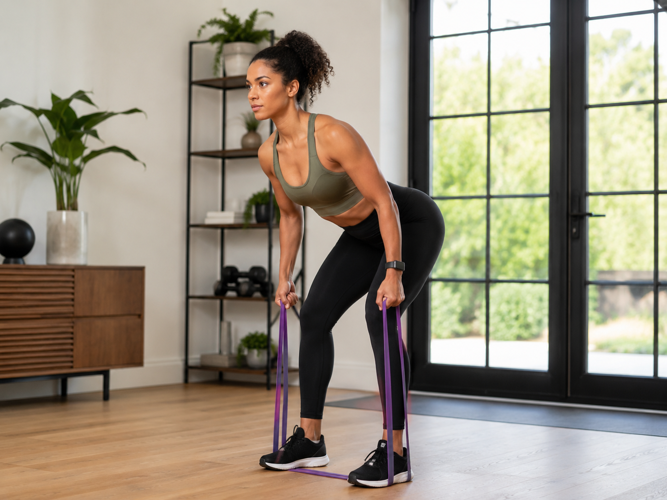
Hinge | Banded Romanian deadlift | 2–3 sets of 8–12 |
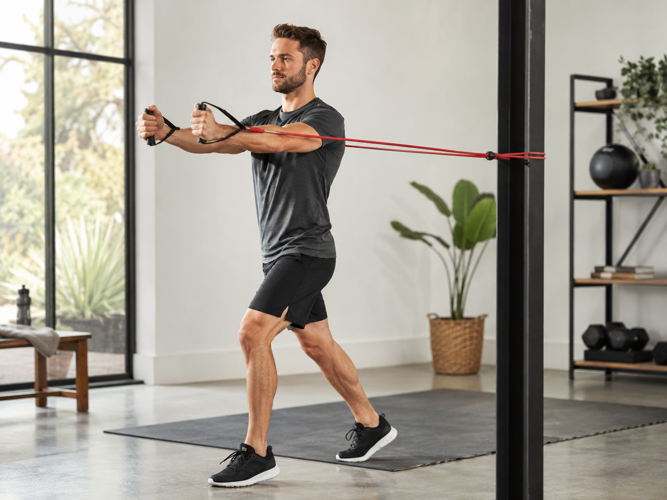
Push | Standing band chest press | 2–3 sets of 8–12 |
Pull | Seated or standing band row | 2–3 sets of 8–12 |
Core | Pallof press or band hold | 2–3 controlled sets |
Optional | Band face pull or lateral walk | 2–3 controlled sets |
Choose exercises that fit your body. If your knees feel uncomfortable, use a box squat or supported squat. If your lower back gets tight, shorten the hinge range and focus on control. If pressing bothers your shoulders, try a more comfortable angle instead of forcing a straight path.
Five movements done well are better than ten rushed exercises.
How to Keep Getting Stronger with Bands
Bands stop working when the training stops progressing. Repeating the same tension, stance, tempo, and reps every week will eventually feel easy.
You can progress with fabric bands by:
- stepping wider or increasing the starting tension;
- adding a pause where the exercise is hardest;
- improving range of motion if you have been cutting reps short;
- reducing rest slightly when work capacity is the goal;
- moving to one-sided exercises like split squats or single-arm rows.
Progression does not always mean using a thicker band. Sometimes a better setup makes the same band much harder.
That is also why progression should be tracked across both lower-body and upper-body movements. Reviews on resistance training have looked at differences in how strength develops across muscle groups, so a good resistance band routine should progress squats, hinges, presses, rows, and core work instead of only making one exercise harder.
Adapting Workouts for Your Body and Goals
Not everyone should train the same way. A beginner building confidence, a stronger trainee looking for more challenge, and someone returning after time off may all need different setups.
For lower-impact training, use controlled movements, supported stances, and lighter resistance. Good options include:
- supported split-stance rows;
- gentle rotational presses;
- Pallof press holds;
- step-and-reach patterns;
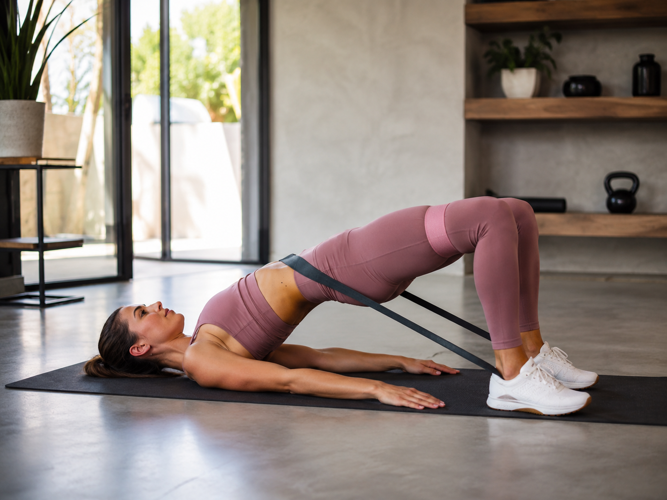
- slow glute bridges or box squats.
For stronger trainees, bands become more challenging when you stop standing square and symmetrical. Try offset stances, single-arm work, single-leg variations, or longer pauses under tension.
The movement might look simple. The setup decides whether it feels like work.
Troubleshooting Your Band Workouts

A few problems come up often.
If the band rolls during squats, use a wider fabric band, set it flat before the first rep, and keep your knees from collapsing inward.
If you do not feel the target muscle, slow down and focus on tension where the exercise should be hardest.
If the workout feels too easy, change the angle, widen your stance, pause longer, or switch to one-sided work before assuming bands are not enough.
Fabric resistance bands are simple, but simple does not mean weak. If you create real tension, train the full body, respect recovery, and keep progressing the work, bands can carry more of your strength training than most people expect.

(0) comments
We welcome your comments
Log In
Post a comment as Guest
Keep it Clean. Please avoid obscene, vulgar, lewd, racist or sexually-oriented language.
PLEASE TURN OFF YOUR CAPS LOCK.
Don't Threaten. Threats of harming another person will not be tolerated.
Be Truthful. Don't knowingly lie about anyone or anything.
Be Nice. No racism, sexism or any sort of -ism that is degrading to another person.
Be Proactive. Use the 'Report' link on each comment to let us know of abusive posts.
Share with Us. We'd love to hear eyewitness accounts, the history behind an article.