
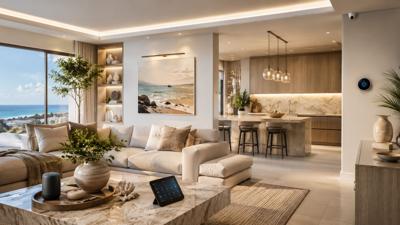

Smart home automation now works best when it blends into the design of the home instead of competing with it.
Smart homes used to feel like a party trick. The lights dimmed from a phone, music played in another room, and everyone pretended it was the future. Now the future is sitting quietly in the thermostat, the front door, the garage, the leak sensor under the sink, and the lighting scene that makes the house feel better the second you walk in.
That is the real shift. Smart home automation is no longer about filling a house with flashy gadgets. It is about choosing a few useful upgrades that make the home easier to live in, less wasteful, more secure, and more responsive to the way people actually move through the day.
For luxury homeowners, the best technology is often the least obvious. It does not make the house feel like a showroom demo or a control room. It works in the background. It cools the house before you come home, locks the door after a rushed morning, turns on the entry light when guests arrive, alerts you to a leak before it becomes a renovation, and sets the mood for dinner without sending anyone across the room to hunt for switches.
The smart home conversation has matured. Homeowners are asking better questions now. Will this save money? Will it make the house safer? Will it work with the devices I already own? Will it look good in the room? Will it protect my privacy? Those questions matter more than whether the refrigerator can take a picture of the milk.
The good news is that smart home automation has finally grown up. The best upgrades now are not gimmicks. They are the quiet luxuries that make a home feel more intelligent, more comfortable, and more polished.
Smart Thermostats Still Make The Strongest First Upgrade
If you are only going to start with one smart-home upgrade, the thermostat still makes the most sense for many households. Heating and cooling are major parts of home energy use, and a smart thermostat can help manage comfort without requiring constant manual adjustment.
An ENERGY STAR certified smart thermostat can learn patterns, support scheduling, offer remote control, and adjust temperature settings when the house is empty. That matters in homes where people are gone during the day, travel often, have multiple floors, or forget to adjust the temperature before leaving.
The ecobee Smart Thermostat Premium is a strong example of where this category has gone. It is designed for app control, energy management, indoor comfort, and a more polished wall presence than the old plastic thermostats many homes still have. For homeowners who care about design as much as utility, that matters.
The appeal is not only savings. It is comfort. A smart thermostat can cool the house before you arrive home from dinner, reduce unnecessary use while everyone is away, and keep bedrooms more comfortable at night. In a coastal or desert-adjacent climate, that kind of control can feel less like technology and more like common sense.
For a more refined home, design also matters. Choose a thermostat that looks clean on the wall and works with the home’s existing HVAC system. Compatibility is not optional. Before buying, confirm whether the system uses a C-wire, whether it supports heat pumps or multi-zone equipment, and whether the app works with the platform you already use.
Smart Locks Make Everyday Access Feel More Polished
A front door says a lot about a home. The hardware, lighting, landscaping, house numbers, and walkway all create the first impression. A smart lock should add convenience without making the entry look overly technical.
Modern smart locks can offer keypads, app access, fingerprint entry, temporary guest codes, activity logs, auto-locking, and remote control. That makes them especially useful for households with frequent guests, cleaners, contractors, dog walkers, adult children, short-term visitors, or anyone who has ever hidden a key under a planter and immediately regretted it.
The Kwikset Halo line fits naturally into this conversation because it brings keyless entry, app control, and remote access into a front-door format that still looks like residential hardware. It is the kind of upgrade that feels practical right away, especially for homes where people are constantly coming and going.
The best use of smart home automation is not simply unlocking the door from a phone. It is connecting the entry to the rhythm of the house. Unlocking the door can turn on the foyer light. Locking it at night can become part of a routine that checks the front door, garage entry, and selected lights. A temporary code can expire after a guest leaves.
For a deeper look at this category, FINE’s guide to keyless entry for homes explains why smart locks have become one of the most practical front-door upgrades for modern living.
Security Cameras Are About Awareness, Not Paranoia
Home security has become one of the biggest reasons people invest in smart technology. A good system can help monitor entry points, driveways, side yards, garages, pool gates, deliveries, and guest arrivals without making the home feel locked down.
The strongest systems are not necessarily the most complicated. Look for clear video quality, reliable night vision, smart alerts, two-way audio, secure storage options, and a design that does not clash with the home’s exterior. A camera should feel intentional, not like a last-minute plastic add-on near the front door.
For larger homes, smart security becomes more useful when it is layered. A video doorbell may cover the front entry. Outdoor cameras may cover side gates or driveways. Contact sensors may monitor doors and windows. Motion lighting may help illuminate walkways. A smart lock can manage access. Together, those features create awareness without requiring someone to constantly watch a screen.
Privacy settings deserve attention here. Homeowners should review app permissions, enable two-factor authentication when available, use strong passwords, and avoid keeping old devices connected after they are no longer supported. Smart security should not create a new security problem.
Leak Sensors Are The Quiet Upgrade More Homeowners Should Install
Not every smart-home feature is glamorous. Some of the most valuable devices are the ones you hope never need to use.
Water leak sensors are a strong example. Placed under sinks, near water heaters, behind washing machines, beside dishwashers, near refrigerators with water lines, or in mechanical rooms, these small devices can alert you when moisture appears where it should not be. In a luxury home, that kind of early warning can protect flooring, cabinetry, drywall, rugs, custom millwork, and expensive finishes.
For homeowners who want more than a simple alert, a system like the Moen Flo Smart Water Monitor and Shutoff shows where the category is headed. Installed on the home’s water line, it is designed to monitor water use and help shut off water when a serious issue is detected.
This is where smart home automation becomes less about convenience and more about prevention. A small alert can mean the difference between wiping up water and dealing with a major insurance claim.
For homeowners who travel often or maintain second homes, leak detection is especially valuable. Some systems can pair with automatic water shutoff valves, allowing the home to respond before damage spreads. It is not the sexiest upgrade in the house, but it may be one of the smartest.
Smart Lighting Makes A Home Feel More Finished
Lighting is one of the fastest ways to make a home feel more luxurious, and smart lighting gives homeowners more control over that mood. The mistake is thinking of it only as colored bulbs. The real benefit is layered lighting that responds to the moment.
Smart dimmers, switches, bulbs, and scenes can support morning routines, evening entertaining, movie nights, outdoor dining, nighttime pathways, and vacation settings. A kitchen can brighten for prep work, soften for dinner, and shift again for late-night cleanup. A hallway light can turn on gently after dark. Outdoor lights can follow a schedule that makes the home look occupied while you are away.
Lutron Caséta is a strong example for design-conscious homeowners because it focuses on smart switches, dimmers, plugs, shades, and lighting controls rather than making every room dependent on individual smart bulbs. That tends to feel more permanent and polished in a finished home.
The most refined smart lighting does not announce itself. It simply makes every room feel better. For luxury homes, built-in switches and dimmers often look more elevated than relying only on visible smart bulbs. Done well, lighting automation can make a house feel calmer in the morning, warmer at night, and more impressive when guests arrive.
The Kitchen Has Finally Become Useful Instead Of Gimmicky
The 2014 version of smart kitchen technology was obsessed with refrigerators taking pictures of groceries. That still exists, but the better conversation now is about whether kitchen technology actually improves daily life.
Smart ovens, ranges, refrigerators, dishwashers, coffee systems, and faucets can be useful when they solve real problems. A smart oven that preheats remotely can help on a busy evening. A dishwasher that alerts you to a leak or cycle issue can be practical. A refrigerator that helps track temperature can be useful for households that entertain often, store specialty foods, or travel.
The goal is not to turn cooking into an app marathon. A beautiful kitchen should still feel like a kitchen. The best smart features support timing, safety, maintenance, and efficiency without making the room feel like a showroom demonstration.
This is especially important in luxury kitchens, where the materials and design should remain the focus. Technology should support the space, not compete with the stone, cabinetry, lighting, and appliances that already define the room.
Smart Garage Access Is More Important Than People Realize
For many homes, the garage is the real front door. Groceries come in through it. Kids enter through it. Deliveries may pass through it. Homeowners often leave from it first thing in the morning and return through it at night.
A smart garage door opener can show whether the door is open or closed, allow remote closing, support guest access, improve lighting, and in some models provide quieter operation or battery backup. That is not flashy technology. It is everyday convenience.
This is one of those upgrades people do not think about until they have it. Then they wonder why they waited so long. Being able to check the garage from dinner, the office, the airport, or bed is exactly the kind of simple convenience that makes smart home automation feel worth it.
FINE’s guide to smart garage door openers covers why this overlooked upgrade can make a surprisingly large difference in how a home functions.
Entertainment Automation Should Feel Effortless
Entertainment was one of the earliest promises of smart homes, and it is still one of the most enjoyable when done well. The difference now is that homeowners are less impressed by the ability to blast music from a phone and more interested in creating an atmosphere.
A good entertainment setup can connect music, lighting, shades, temperature, and outdoor spaces into one easy scene. Dinner can begin with warmer lighting and soft music in the kitchen. A movie night can lower the shades, dim the lights, and adjust the temperature. A poolside evening can bring on landscape lighting and music without anyone leaving the conversation to manage the controls.
The key is restraint. Not every room needs a screen. Not every moment needs a command. The best systems make hosting feel smoother, not more complicated.
Compatibility Matters More Than Buying The Newest Device
One of the biggest frustrations with smart-home technology is that not every device works cleanly with every platform. A light may work with Alexa but not Apple Home. A lock may need a separate bridge. A camera may keep its best features inside its own app. A thermostat may require wiring the home does not currently have.
This is why compatibility should come before impulse buying. Before purchasing, decide which ecosystem the home will use most: Apple Home, Amazon Alexa, Google Home, Samsung SmartThings, or a professionally installed control system. Then check whether the device supports that platform.
Matter, the smart-home connectivity standard backed by major technology companies, was designed to make devices work more easily across ecosystems. The idea is promising, but real-world support still varies by device, platform, and feature. In other words, do not buy only because a box says it is compatible. Check the specific functions you want to use.
A smart home should not require six apps to turn off the lights. The fewer systems fighting each other, the better the experience.
Privacy Should Be Part Of The Design Plan
Every connected device adds convenience, but it also adds another point of access to the home network. That does not mean homeowners should avoid smart technology. It means they should install it thoughtfully.
Use strong, unique passwords. Turn on two-factor authentication where available. Keep apps and device firmware updated. Remove old devices from accounts when you replace them. Be careful with shared access. Review what each app can see and control.
The National Institute of Standards and Technology recommends paying attention to connected devices because the Internet of Things can introduce security and privacy risks if devices are not managed properly. That advice applies directly to smart-home products, especially cameras, locks, speakers, and connected appliances.
Homeowners can also use a separate Wi-Fi network for smart-home devices. That kind of setup can help keep connected devices more contained if one product becomes vulnerable.
Luxury is not only about convenience. It is also about control. A well-designed smart home should make life easier without making the homeowner feel exposed.
Where To Start If Your Home Is Not Smart Yet
The biggest mistake homeowners make is trying to automate everything at once. That usually creates a house full of competing apps, forgotten passwords, and devices that seemed exciting for one week.
Start with the pain point you actually feel. If the house is too hot when you arrive home, start with the thermostat. If keys are always a hassle, start with the lock. If deliveries are a concern, start with the front entry. If water damage would be a nightmare, install leak sensors. If the home feels flat at night, upgrade the lighting.
Once the first upgrade works well, build slowly. The best smart homes are edited. They feel intentional. They solve real problems. They do not make the homeowner feel like an unpaid IT manager.
That is especially true in luxury spaces, where visual calm matters. A home can be highly connected without looking overly technical. The smartest homes often look the simplest.
What Smart Home Automation Should Do Now
The best smart home automation today is not about showing off. It is about making a home more responsive, efficient, secure, and comfortable.
It should make the home feel better when you wake up, easier when you leave, safer while you are away, and more welcoming when you return. It should simplify daily routines, protect expensive finishes, improve energy management, and create a more graceful experience for guests.
Smart homes work best when they are edited. A few useful, compatible devices will outperform a house full of gadgets that do not talk to each other. The goal is not to make the home feel futuristic. The goal is to make it feel effortless.
That is the real promise of smart-home technology now. Not another gadget trying to impress your guests, but a house that quietly helps you live better.
Related Articles You May Enjoy From FINE Magazine
- Keyless Entry for Homes: The Smart Front Door Upgrade That Makes Everyday Living Easier
- Smart Garage Door Openers That Make Everyday Home Access Easier
- Home 101: Importance of Smart Locks
- Top Smart Security Upgrades for Modern Luxury Homes
- Garage Door Openers Are the Quiet Luxury Upgrade Homeowners Forget About


(0) comments
We welcome your comments
Log In
Post a comment as Guest
Keep it Clean. Please avoid obscene, vulgar, lewd, racist or sexually-oriented language.
PLEASE TURN OFF YOUR CAPS LOCK.
Don't Threaten. Threats of harming another person will not be tolerated.
Be Truthful. Don't knowingly lie about anyone or anything.
Be Nice. No racism, sexism or any sort of -ism that is degrading to another person.
Be Proactive. Use the 'Report' link on each comment to let us know of abusive posts.
Share with Us. We'd love to hear eyewitness accounts, the history behind an article.