
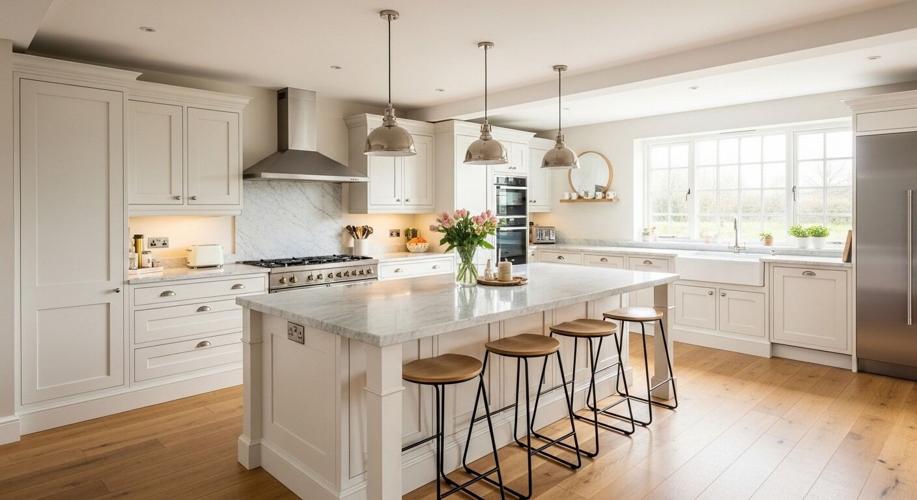
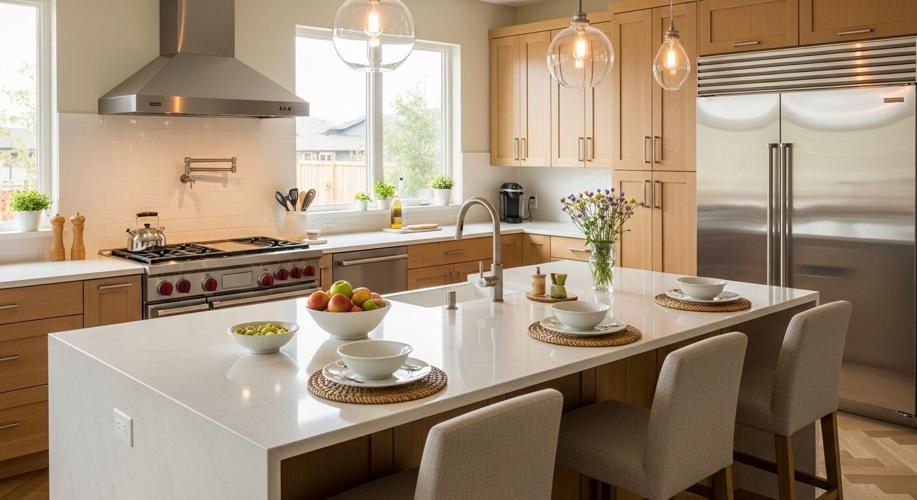

A kitchen island can look impressive in listing photos, but that does not automatically make it a good investment. The islands that genuinely improve a home are the ones that solve problems: they add useful prep space, give people a comfortable place to sit, provide storage, and make the kitchen easier to move through.
That distinction matters because kitchens remain one of the most closely scrutinized areas of a home. Buyers are not simply looking for expensive stone and oversized appliances. They are imagining breakfast before work, friends gathering with a glass of wine, children doing homework, groceries being unpacked, and whether two people can cook without constantly getting in each other's way. A well-designed island with seating can help answer all of those questions at once.
Why Kitchen Islands Appeal to Buyers

An island occupies an unusual position in the home because it can be both architectural and social. It may contain cabinets, drawers, appliances and electrical outlets, yet it can also replace part of the breakfast table, become a buffet during a party or give guests somewhere to sit without entering the main cooking zone.
That flexibility is particularly valuable in kitchens connected to living and dining spaces. Instead of erecting a wall, an island can subtly define where the kitchen begins while preserving sightlines and conversation. FINE has explored the same principle in our look at kitchen layout changes that can improve market appeal. The strongest layouts are not simply open; they give each area a purpose.
Seating Turns Counter Space Into Living Space
A countertop without seating is primarily a work surface. Add comfortable stools and sufficient knee room, and the island becomes another place to live. It can accommodate morning coffee, a quick lunch, homework, laptop work or the friend who inevitably wants to talk while dinner is being prepared.
This is one reason seating can matter more than sheer island size. Four comfortable seats at a thoughtfully proportioned island may contribute more to everyday life than a massive slab of stone that interrupts circulation. In an upscale home especially, usefulness tends to feel more luxurious than size for size's sake.
The Best Islands Improve Kitchen Workflow
Value begins to disappear when an island interferes with the very room it is supposed to improve. Doors should open without colliding, stools should not block major walkways, and people should be able to move between the refrigerator, sink and cooking area without navigating an obstacle course.
This is where renovation planning matters more than trend chasing. The 2026 U.S. Houzz Kitchen Trends Study found that improving kitchen functionality continues to be an important reason homeowners renovate. An island should therefore earn its square footage. If adding one leaves the kitchen pinched or awkward, a peninsula, smaller movable island or uninterrupted open floor may actually be the more sophisticated choice.
Storage Can Be a Bigger Selling Point Than Another Cabinet Wall
An island can quietly solve one of the least glamorous but most persistent kitchen problems: where everything goes. Deep drawers can hold cookware, vertical dividers can organize baking sheets, hidden outlets can support small appliances, and cabinets facing the dining side can store serving pieces that are used only occasionally.
Good storage also improves the visual experience of the kitchen. Appliances disappear, counters stay calmer and the room photographs better. That matters whether a homeowner is preparing to sell or simply wants the kitchen to feel less like a collection point for mail, chargers and yesterday's coffee cup.
Proportion Matters More Than Maximum Size
The temptation in a large kitchen is often to build the largest island that will fit. That is not always the best decision. An oversized island can make reaching the center awkward, create long walking distances and overwhelm cabinetry that should otherwise feel balanced.
Smaller kitchens have the opposite problem. Squeezing an island into a room without enough circulation can make the kitchen feel smaller rather than larger. Before adding one, consider the surrounding cabinet doors, appliance clearances, stool depth and the route people naturally take through the room. A luxury kitchen should feel effortless to navigate.
Materials Should Match the Value of the Home
An island is usually one of the largest visual surfaces in a kitchen, which makes material selection important. Natural stone, quartz, wood and other quality surfaces can create a strong focal point, but the island does not need to shout for attention. In many of the most successful kitchens, it complements the surrounding cabinetry while introducing one subtle point of difference through color, texture, lighting or shape.
Homeowners planning a broader renovation should also consider where an island fits within the overall budget. Our guide to how much a kitchen remodel costs in 2026 explains why layout changes, cabinetry, surfaces and labor can quickly alter the price of a project.
More Expensive Does Not Always Mean More Valuable
This is where homeowners should be wary of simple claims that adding an island will increase a property's value by a predetermined percentage. Real estate does not work that neatly. The return depends on the home's starting condition, neighborhood, price range, local buyers and how much was spent on the improvement.
In fact, broader remodeling data suggests restraint can sometimes produce a better percentage return than an extravagant renovation. The lesson is not to build the cheapest possible island. It is to avoid spending $50,000 solving a $15,000 problem. An island that makes an already attractive kitchen markedly more functional can be a smart investment. One packed with expensive features a future buyer may not value can become over-improvement.
Small Details Separate a Good Island From a Great One
Comfortable seating needs more thought than selecting attractive stools. The counter height should work with the seat height, there should be adequate room for knees, and diners should not feel as though they are sitting shoulder-to-shoulder. Pendant lighting should illuminate the surface without becoming a wall of fixtures between the kitchen and adjacent rooms.
Integrated outlets, convenient charging, task lighting and carefully located storage can make the difference between an island that merely looks finished and one that functions beautifully. For homeowners who want to elevate a kitchen without rebuilding everything, FINE's guide to kitchen upgrades that make everyday cooking feel richer offers additional ways to improve the room through details rather than demolition.
A Kitchen Island Should Earn Its Place
A kitchen island with seating can absolutely strengthen a home's appeal, but not because buyers are checking an “island” box on a list. Its value comes from what it enables: more useful workspace, smarter storage, casual dining, better entertaining and a natural connection between the kitchen and the rest of the home.
The best version feels as though it belonged in the architecture from the beginning. It fits the room instead of dominating it, makes everyday routines easier and gives people a reason to gather. That combination of design and usefulness is what can make a kitchen more desirable now and more persuasive when it eventually comes time to sell.
(0) comments
We welcome your comments
Log In
Post a comment as Guest
Keep it Clean. Please avoid obscene, vulgar, lewd, racist or sexually-oriented language.
PLEASE TURN OFF YOUR CAPS LOCK.
Don't Threaten. Threats of harming another person will not be tolerated.
Be Truthful. Don't knowingly lie about anyone or anything.
Be Nice. No racism, sexism or any sort of -ism that is degrading to another person.
Be Proactive. Use the 'Report' link on each comment to let us know of abusive posts.
Share with Us. We'd love to hear eyewitness accounts, the history behind an article.