
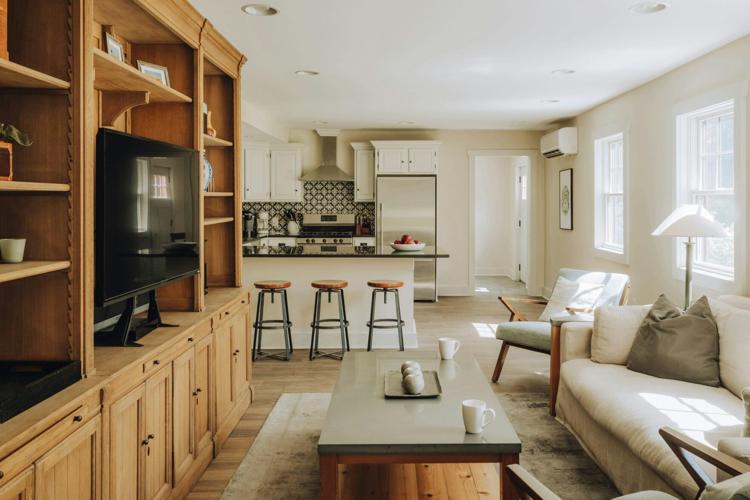
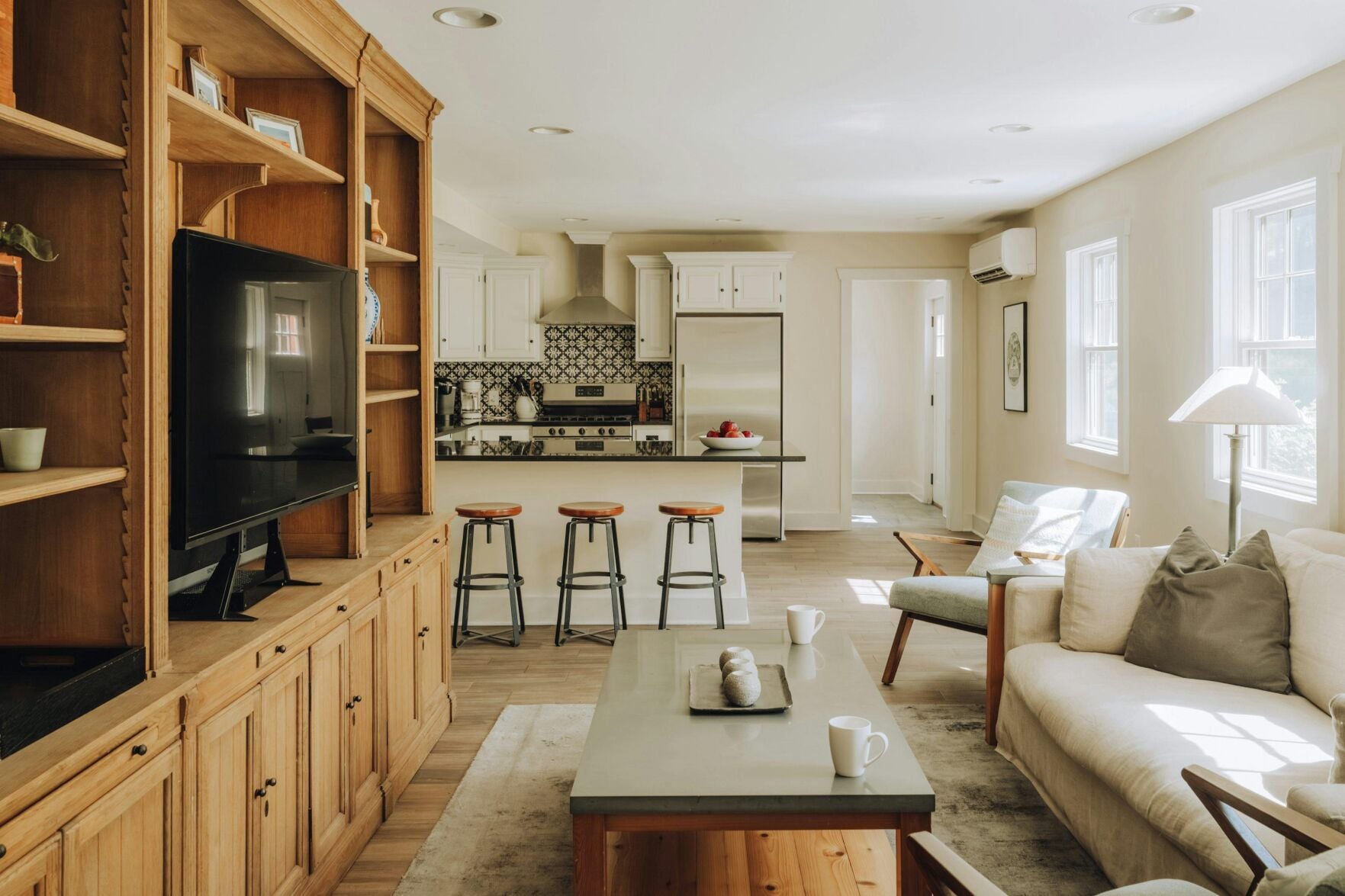
Imagine a living room where the coffee table is clear, the sofa is perfectly inviting, and beautiful cabinetry displays a carefully chosen collection of books, ceramics, and artwork.
What you don't see is equally important.
Behind those elegant doors are television remotes, charging cables, children's toys, paperwork, extra blankets, and all the little things that usually make a room feel unfinished.
Nothing has been thrown away. The family still lives here. The children still play here. Yet the room feels calmer, more spacious, and thoughtfully designed.
That is the beauty of hidden storage.
A well-organized home doesn't need to look minimalist or sacrifice personality. It simply needs to distinguish between the things worth displaying and the everyday essentials better kept out of sight.
And some of the most effective hidden storage ideas require little more than choosing the right furniture, rethinking an awkward corner, or making existing cabinetry work harder.
Beautiful Storage Begins With How You Actually Live
Before purchasing another storage basket or commissioning expensive cabinetry, spend a day observing where clutter naturally accumulates.
Perhaps shoes gather beside the front door because the coat closet is too far away. Mail piles up on the kitchen island because there is no convenient drawer nearby. Throws remain on the sofa because nobody wants to carry them upstairs after watching television.
These patterns reveal where storage is missing or inconvenient.
The most effective solution places storage as close as possible to where an item is used.
A cabinet for shoes belongs near the entrance. Television accessories should live close to the entertainment area. Kitchen utensils need to be accessible from the preparation space, not hidden in the least convenient cupboard.
A useful exercise is to identify the five objects that most frequently make each room look cluttered. Then ask whether those objects could disappear behind a door, inside a drawer, or beneath a piece of furniture without becoming harder to retrieve.
This small change in thinking can be more valuable than adding another large storage unit.
Give Your Entryway a Beautiful Place to Hide Everyday Clutter
The entrance creates the first impression of a home, but it also absorbs some of the messiest parts of daily life.
Shoes, handbags, umbrellas, keys, and deliveries can quickly turn a beautifully decorated hallway into an informal storage area.
A shallow shoe cabinet is often more useful than a conventional console table because it provides concealed storage without occupying much floor space.
The IKEA STÄLL Shoe Cabinet in Oak Veneer is a particularly useful example. At approximately 6¾ inches deep, it offers four concealed compartments designed to accommodate roughly eight pairs of shoes, depending on their size.
Its natural wood appearance works well in contemporary and transitional interiors, especially when styled beneath a mirror or a favorite piece of art.
For the most practical arrangement, reserve the cabinet for shoes worn regularly and store seasonal footwear elsewhere. Keep a small tray on top for keys, and add discreet wall hooks if handbags and jackets regularly end up on nearby furniture.
The cabinet must be secured to the wall according to IKEA's instructions.
Where space permits, a storage bench offers another attractive approach, combining seating with room for scarves, gloves, and outdoor accessories.
For further inspiration, FINE's guide to welcoming and inviting home hallways explores how furniture, lighting, and thoughtful details can transform an entrance.
Make Living Room Storage Look Like Part of the Architecture
The living room is where beautiful design and everyday clutter most frequently collide.
A carefully chosen sofa and elegant coffee table can lose their impact when surrounded by remote controls, charging equipment, toys, magazines, and miscellaneous household objects.
Rather than distributing these items among multiple decorative baskets, consider bringing them together behind closed cabinetry.
The IKEA BESTÅ Storage Combination with SMEVIKEN Doors demonstrates how a relatively simple cabinet can provide generous concealed storage while maintaining a polished appearance.
Its paneled doors and adjustable shelves make it suitable for storing board games, paperwork, books, and everyday accessories. In the right room, a series of coordinated cabinets or custom units can create an architectural effect, especially when the finishes complement the surrounding walls.
Keep the interior organized with smaller compartments so charging cables, electronics accessories, and paperwork don't become a single collection of miscellaneous objects. Allow appropriate ventilation for powered equipment.
For rooms that need a softer solution, the West Elm Bowery Storage Ottoman brings concealed storage into an upholstered piece of furniture.
Its removable upholstered top reveals a generous interior compartment suited to blankets, cushions, and other soft furnishings.
Positioned beside a sofa or lounge chair, it provides practical storage without introducing another hard-edged cabinet. The trade-off is that accessing the contents requires lifting the top, making it better for occasional-use items than objects needed throughout the day.
A successful living room doesn't need every surface to be empty. Books, artwork, and carefully collected objects give the space its identity.
The purpose of concealed storage is to let those pieces stand out.
Give the Kitchen Its Countertops Back
Few rooms benefit from thoughtful storage more than the kitchen.
Even a beautifully renovated kitchen can feel crowded when countertops become permanent homes for coffee equipment, utensils, cutting boards, small appliances, and pantry ingredients.
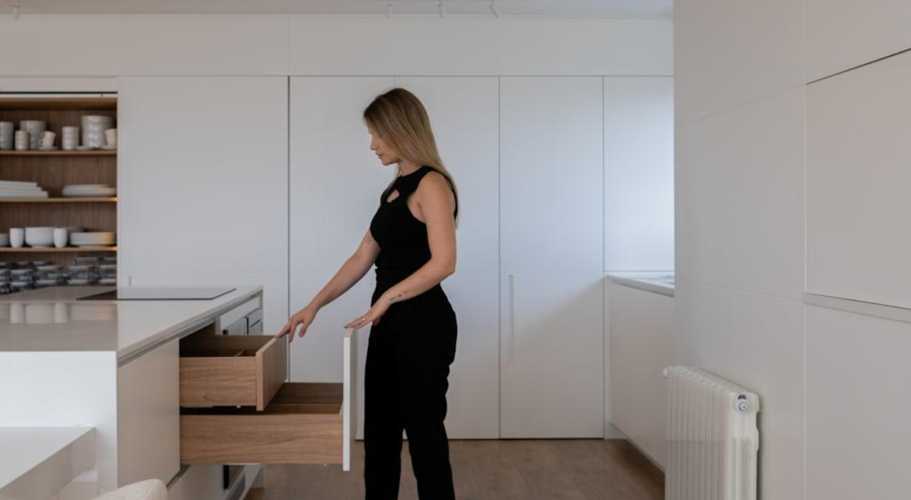
The solution isn't necessarily more cabinetry. Sometimes it is making existing cabinets easier to use.
The Rev-A-Shelf 448 Series Wood Pantry Pullout is an example of how a tall pantry cabinet can become considerably more accessible.
Available in configurations for different cabinet openings, the system uses pull-out shelving to bring stored items forward rather than leaving them difficult to reach at the back.
This makes it useful for organizing jars, packaged foods, baking supplies, and cooking ingredients.
The key is to organize by frequency of use. Everyday ingredients should occupy the easiest-to-reach shelves, while bulk supplies and occasional baking equipment can be stored higher or lower.
Before ordering, measure the cabinet opening, usable internal depth, and height. The 448 series requires a compatible cabinet configuration and appropriate installation; it isn't a universal insert for every cupboard.
Appliance garages are another appealing option, especially for homeowners who want to conceal a toaster or coffee station behind coordinated cabinet doors.
However, appliances that generate heat or moisture should only be enclosed and operated according to their manufacturer's clearance and ventilation requirements.
Not everything needs to disappear. If a coffee machine is used several times daily, keeping it on an attractive, dedicated counter station may be more practical than repeatedly moving it.
As FINE explored in The Modern Kitchen Reset That Makes Daily Cooking Feel Easier, improving a kitchen's everyday function doesn't always require a renovation.

Sometimes the greatest luxury is simply having enough counter space to prepare dinner without rearranging everything first.
Let the Bedroom Feel Like a Retreat Again
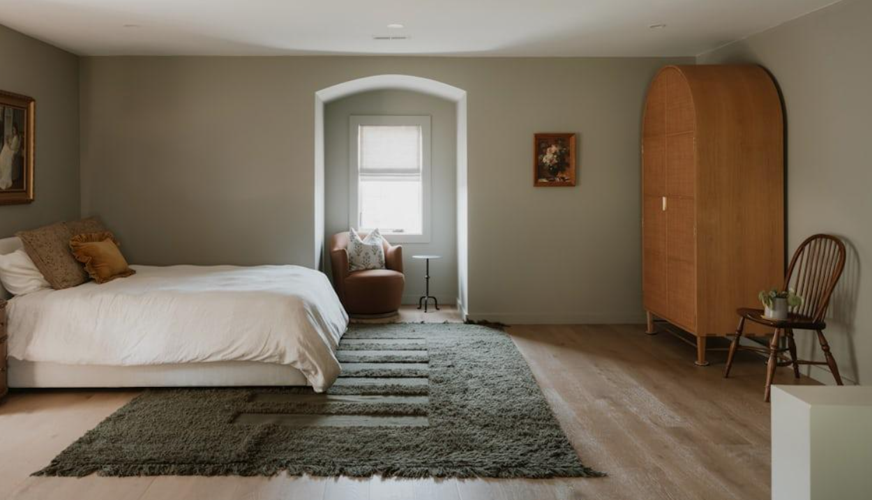
Bedrooms should encourage relaxation, yet they often become unofficial storage rooms for clothing, extra bedding, and belongings without a permanent home.
One of the easiest ways to reclaim space is to reconsider the bed.
The Article Lenia Queen Panel Storage Bed in White Oak incorporates four soft-close drawers beneath a refined, mid-century-inspired wooden frame.
The drawers provide concealed storage for extra bedding, clothing, and other essentials without requiring another chest of drawers.
This can be particularly valuable in smaller bedrooms, although the bed needs sufficient clearance for the drawers to open. Measure the space around bedside tables and nearby walls before purchasing.
Wardrobe design deserves equal attention.
The IKEA PAX / GRIMO Wardrobe Combination offers a useful example of closed storage that can be adapted with interior organizers.
Its paneled doors provide a traditional furniture-inspired appearance, while the PAX system allows homeowners to arrange clothing rails, shelves, and additional accessories around their needs.
For the most effective arrangement, place frequently worn clothing at comfortable reaching height, reserve upper shelves for seasonal pieces, and use internal drawers or compartments to prevent smaller items from becoming disorganized.
Additional organizers may need to be purchased separately, and the wardrobe requires secure anchoring.
In larger bedrooms, fitted wardrobes painted to complement the wall color can create an even more seamless appearance.
The objective isn't to eliminate personality from the room. A favorite photograph, beautiful lamp, or piece of artwork should remain visible.
It's the laundry piles and overflowing drawers that deserve somewhere else to go.
Bring the Same Hidden Storage Thinking Into the Bathroom
Bathroom clutter is particularly noticeable because countertops and vanities often have limited surface area.
Skincare products, grooming tools, toothbrushes, cosmetics, and spare toiletries can quickly overwhelm an otherwise elegant space.
One of the smartest solutions is a mirrored medicine cabinet that doubles as concealed storage.
The KOHLER Verdera 15-Inch Medicine Cabinet combines a streamlined mirrored exterior with adjustable interior shelves, a magnifying mirror, and a soft-close door.
It can be recessed into a suitable wall or surface-mounted using the required installation components.
Recessed installation creates a particularly clean appearance because much of the cabinet sits within the wall cavity rather than projecting into the bathroom.
However, plumbing, electrical wiring, wall framing, and structural conditions must be checked before cutting into a wall.
Inside the cabinet, arrange daily skincare and grooming products at eye level. Keep larger bottles and cleaning supplies in vanity drawers or suitable lower cabinets.
For a finishing touch, leave only a few attractive essentials visible on the countertop.
A bathroom feels more luxurious when there is enough open space to appreciate the materials, fixtures, and lighting rather than a collection of products surrounding the sink.
Look for Storage in the Spaces You Usually Ignore
Some of the most useful storage opportunities are hiding in places homeowners rarely consider.
An awkward alcove can become a fitted bookcase with closed cupboards beneath the shelves. A window seat can conceal blankets while creating an inviting reading area. A wide hallway might accommodate slim cabinetry without disturbing the room's circulation.
The space beneath a staircase can be especially valuable.
Instead of installing one deep cupboard, consider custom pull-out compartments designed to follow the slope of the stairs.
A taller section could accommodate a vacuum cleaner or luggage, while smaller drawers provide storage for shoes, seasonal accessories, or household supplies.
When drawer fronts are finished to match adjacent wall paneling, the storage can become almost invisible.
However, this is one area where professional assessment matters. Staircases may contain structural elements, building services, or required fire-safety features that should not be altered without proper evaluation.
The best custom installations don't simply fill an empty space. They solve a specific storage problem while respecting the home's architecture.
When Is Custom Storage Worth the Investment?
Custom cabinetry can make an extraordinary difference in a room with awkward dimensions, sloping ceilings, unusual alcoves, or substantial storage needs.
But bespoke millwork isn't automatically the smartest investment.
A carefully selected sideboard, modular wardrobe, or storage bed may provide the necessary function at a lower cost and with greater flexibility if furniture arrangements change.
Before committing to built-ins, consider three practical questions.
What exactly needs to be stored? Measure the objects themselves, especially large items such as suitcases, vacuum cleaners, and household equipment.
How frequently will they be used? Daily essentials need convenient access. Infrequently used belongings can occupy less accessible compartments.
Will the design remain useful? Adjustable shelving and flexible internal layouts are often more valuable over time than highly specialized compartments.
Mark proposed cabinet dimensions with painter's tape to understand how the finished piece will affect movement through the room. Check door swings, drawer clearance, accessibility, and proximity to outlets or mechanical services.

Safety is important too. The U.S. Consumer Product Safety Commission's Anchor It! campaign recommends securing furniture with drawers, doors, and shelves to help prevent dangerous tip-over accidents.
Beautiful storage should make daily life easier and safer, not introduce another problem behind an elegant cabinet door.
The FINE Take
The most beautiful homes aren't necessarily the ones with the fewest possessions. They're the ones where everyday life has been thoughtfully accommodated.
An elegant shoe cabinet can transform a crowded entrance. A storage ottoman can restore calm to a living room. A well-designed pantry can make cooking easier, while a beautiful wardrobe allows a bedroom to feel like a retreat again.
The finest hidden storage ideas don't demand elaborate organizing routines or constant tidying.
They make it surprisingly easy for everything to find its place.
And when the remotes, paperwork, shoes, extra blankets, and everyday necessities have somewhere convenient to disappear, something wonderful happens.
The furniture looks more beautiful. The architecture becomes more noticeable. The room feels more spacious.
Not because the home has been emptied of life, but because it has finally been designed to accommodate it.

(0) comments
We welcome your comments
Log In
Post a comment as Guest
Keep it Clean. Please avoid obscene, vulgar, lewd, racist or sexually-oriented language.
PLEASE TURN OFF YOUR CAPS LOCK.
Don't Threaten. Threats of harming another person will not be tolerated.
Be Truthful. Don't knowingly lie about anyone or anything.
Be Nice. No racism, sexism or any sort of -ism that is degrading to another person.
Be Proactive. Use the 'Report' link on each comment to let us know of abusive posts.
Share with Us. We'd love to hear eyewitness accounts, the history behind an article.