
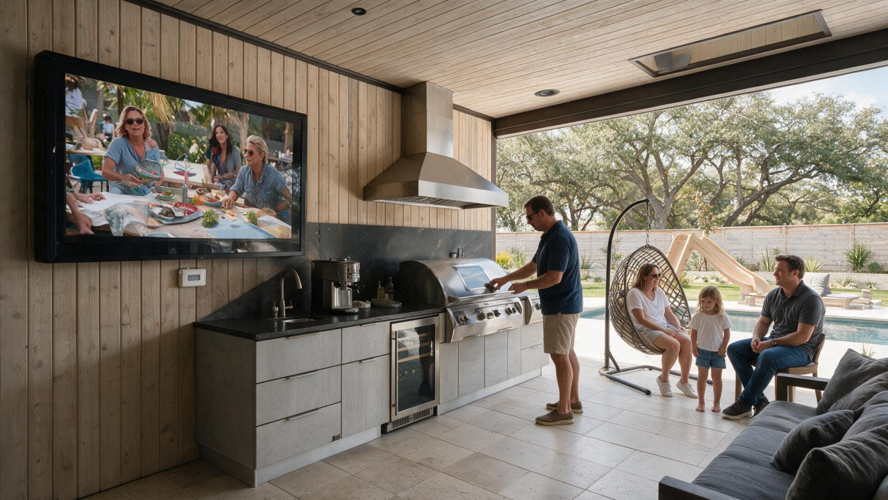
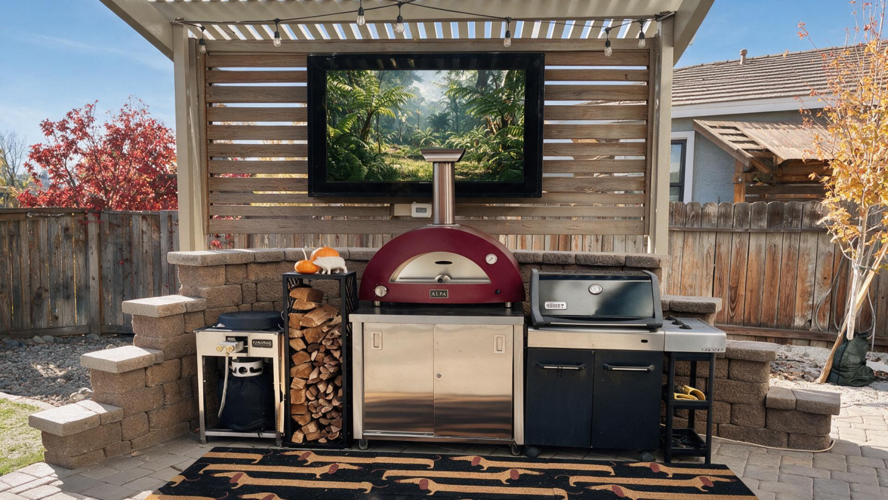

Outdoor kitchens have moved well past the grill-and-counter setup of a decade ago. Homeowners now treat these spaces as extensions of the living room, complete with screens, sound, and smart controls that turn a simple cookout into a full entertainment experience. According to HTF Market Intelligence, the global outdoor kitchen market was valued at $3.40 billion in 2024 and is projected to reach $8.30 billion by 2033, growing at a compound annual rate of 10.6%. The direction is clear: outdoor kitchens are growing fast, and entertainment technology is becoming a core part of that growth. This post walks through the practical side of adding entertainment tech to an outdoor kitchen, from screens and sound to installation and upkeep.
The Rise of Outdoor Entertainment Spaces
Patios used to mean a table, a few chairs, and maybe a string of lights. That's no longer the standard. Homeowners are increasingly investing in updating their outdoor spaces, and industry professionals widely agree that outdoor kitchens remain one of the most requested outdoor features. Designers are seeing the same shift firsthand. Outdoor living spaces expand the overall usable entertaining area of a home, creating additional places to relax, gather, entertain guests, and even watch a movie. Landscape designs are also becoming more sophisticated, incorporating features such as adjustable lighting color and intensity as well as sound systems that follow guests through the garden and shut off automatically once they've moved on.
As outdoor spaces become more entertainment-focused, screens are increasingly taking center stage. For homeowners who want a TV outside without committing to a purpose-built outdoor display, an outdoor TV enclosure offers a middle path worth considering before finalizing a design.
Must-Have Entertainment Tech for Outdoor Kitchens
A handful of technology categories show up again and again in well-designed outdoor kitchens:
Built-in Sound Systems
Speakers designed for outdoor use, often weatherproofed and sometimes built into landscaping or structural elements, let homeowners create zones of sound that match the mood of the gathering.
Weather-resistant Televisions and Protective Enclosures
Whether through a purpose-built outdoor TV or a standard television housed in a protective case, screens have become a near-default feature for outdoor entertaining areas used for sports, movie nights, or background viewing during dinner parties.
Streaming and Connectivity
Reliable Wi-Fi extension to outdoor areas, along with streaming devices rated for outdoor conditions, keeps entertainment options flexible rather than locked to cable.
Smart Lighting and Control Systems
Centralized apps or voice assistants now let homeowners adjust lighting, sound, and even screen power from a single device, cutting down on the clutter of multiple remotes and switches.
Each of these elements works best when planned together rather than added piecemeal, which is where thoughtful design integration becomes important.
Choosing the Right Outdoor TV Cover Solution
Once a homeowner decides to add a screen, the next decision is how to protect it. There are two main options: purchase a purpose-built outdoor TV or use a standard indoor television with a weatherproof enclosure.
Purpose-built outdoor TVs are designed to withstand sunlight, moisture, and temperature fluctuations, making them suitable for exposed locations. However, they typically cost between $1,500 and $6,000 or more, depending on the size and brand.
A protective enclosure offers a more budget-friendly alternative. For example, the AcrtMatic outdoor TV enclosure starts at around $299 and allows homeowners to use a standard television. It features UV- and impact-resistant polycarbonate construction, a 5mm transparent front panel, and an IP65 rating. Additional features include a keyed lock, drainage channels, and automatic USB-powered fans. Models accommodate TVs ranging from approximately 28 to 120 inches. Homeowners should check the TV's width, height, and depth when selecting the right enclosure.
A purpose-built outdoor TV is worth considering for locations with prolonged direct sunlight or heavy outdoor use, while an enclosure may be a more economical choice for partially sheltered spaces or those looking to reuse an existing television.
Design Integration Tips
Getting the technology right is only half the job. How it fits into the overall design matters just as much.
Mounting that complements the kitchen's aesthetic. A screen mounted above a stone backsplash or tucked into a pergola structure reads very differently than one bolted to a bare wall.

Matching the mount's finish and placement to existing materials, whether that's stainless steel, stone, or wood, keeps the space feeling cohesive.
Creating a focal point. Rather than treating the TV or speaker system as an afterthought, many designers build the layout around it, positioning seating to face the screen or placing speakers to create a natural listening zone near the dining or lounge area.
Cable management. Exposed wiring is one of the fastest ways to undercut an otherwise polished design. Running cables through conduit, behind cabinetry, or underground where possible keeps the space looking clean and also protects the wiring itself from weather exposure.
Installation and Maintenance Considerations
Some entertainment tech installations are straightforward enough for a confident DIYer, while others benefit from professional help. Mounting a television in a protective enclosure is often comparable to installing a standard indoor TV mount, which makes it approachable for homeowners comfortable with basic tools. Wiring for sound systems, smart lighting networks, or anything requiring electrical work is usually better left to a licensed electrician or integrator, both for safety and to avoid voiding warranties.
Seasonal maintenance matters too. Checking drainage channels before heavy rain seasons, inspecting seals and locks periodically, and clearing debris from vents or fans all help extend the life of outdoor electronics. In colder climates, it's worth checking whether a given enclosure or device is rated for freezing temperatures or whether additional insulation or heating elements are needed.
Taking these steps consistently is what separates an outdoor entertainment setup that lasts for years from one that needs constant repair or early replacement.
Bringing It All Together
Entertainment technology has changed what an outdoor kitchen can be, turning a cooking space into a genuine extension of the home's living area. The right combination of screens, sound, lighting, and smart controls makes outdoor gatherings feel just as comfortable and connected as anything happening indoors. The key is planning for protection and integration from the start, whether that means choosing between a purpose-built outdoor TV and a weatherproof enclosure, or mapping out cable runs before construction begins. Homeowners who invest in quality solutions matched to their climate, budget, and how they actually use the space tend to get the most lasting value out of their outdoor entertainment setup.

(0) comments
We welcome your comments
Log In
Post a comment as Guest
Keep it Clean. Please avoid obscene, vulgar, lewd, racist or sexually-oriented language.
PLEASE TURN OFF YOUR CAPS LOCK.
Don't Threaten. Threats of harming another person will not be tolerated.
Be Truthful. Don't knowingly lie about anyone or anything.
Be Nice. No racism, sexism or any sort of -ism that is degrading to another person.
Be Proactive. Use the 'Report' link on each comment to let us know of abusive posts.
Share with Us. We'd love to hear eyewitness accounts, the history behind an article.