
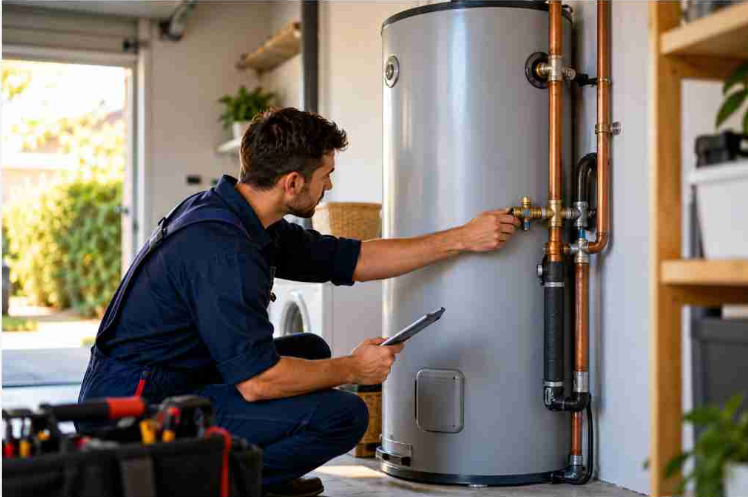
A water heater rarely gets much attention until the morning shower turns unexpectedly cold. Yet the decision to repair or replace one can have a meaningful impact on household expenses, energy use, and everyday comfort.
The challenge is knowing when a minor fault deserves a repair and when an aging system is becoming an expensive problem. Several clues can help homeowners make that distinction, from unusual noises and rising utility bills to persistent leaks and repeated breakdowns.
6 Signs Your Water Heater May Need Replacing
1. Your Water Heater Is Getting Older
Age is an important consideration. Conventional storage-tank water heaters often last around 10–15 years, while tankless models can last longer. Actual lifespan depends on water quality, maintenance, and usage.
An older system does not automatically need replacing, but frequent problems or declining performance may suggest that investing in another repair is no longer worthwhile.
2. You Notice Leaks or Corrosion
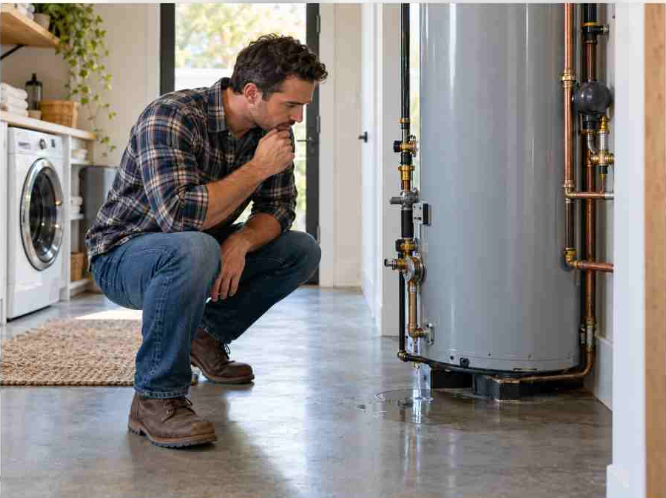
Moisture around the tank, rust, or persistent puddles can indicate damaged fittings, faulty valves, or internal corrosion.
A leaking connection may be relatively inexpensive to repair. However, if the storage tank itself has corroded and developed a leak, replacement is generally necessary. An inspection can establish the source before water damage spreads to surrounding floors or walls.
3. Your Water Heater Makes Unusual Noises
Rumbling, popping, and banging sounds can indicate sediment accumulating inside a storage tank. Minerals settle at the bottom over time, sometimes creating noise as water heats.
Flushing the tank or replacing a faulty component may resolve the issue. Persistent noises, particularly in an older system, deserve professional attention.
4. Your Energy Bills Are Increasing
A sudden increase in gas or electricity costs may indicate declining water-heating efficiency. Sediment buildup, worn heating elements, and faulty thermostats can make a system work harder than necessary.
If your household's hot water consumption has remained consistent, an inspection may help determine whether maintenance or an energy-efficient replacement makes more financial sense.
5. Hot Water Temperatures Are Inconsistent
Water that fluctuates between hot and cold, takes unusually long to heat, or runs out quickly may indicate a malfunctioning thermostat, heating element, or burner.
Some problems are straightforward to repair. However, if the system consistently fails to meet household demand, it may be undersized or nearing the end of its useful life.
6. You Keep Paying for Repairs
An occasional repair is normal, but repeated breakdowns can quickly become expensive. If you are continually replacing components or arranging service visits, compare the cumulative repair costs with the price of a replacement.
A newer system may offer greater reliability and more predictable maintenance expenses.
When Does Repair Make More Sense?
Repair is generally the sensible choice when the water heater is relatively new, structurally sound, and experiencing an isolated problem.
Faulty thermostats, damaged heating elements, loose connections, and malfunctioning valves can often be repaired without replacing the entire appliance.
Regular inspections and preventative care can also help identify problems early. As explained in FINE Magazine's guide to why regular plumbing maintenance saves money, addressing minor plumbing issues before they develop can help homeowners avoid more expensive repairs.
When Is Replacement the Better Investment?
Replacement becomes more attractive when the tank has developed internal corrosion, the system is approaching the end of its expected lifespan, or repair expenses are becoming increasingly frequent.
It may also be worthwhile when an existing unit consumes excessive energy or cannot provide enough hot water for the household.
The decision should account for more than the purchase price. Installation expenses, expected energy consumption, maintenance requirements, and warranty coverage all contribute to the long-term cost.
Understanding Your Water Heater Replacement Options
If replacement is necessary, homeowners generally have three common options:
- Conventional tank water heaters: These store heated water in an insulated tank. They are familiar, widely available, and generally less expensive to install, but have limited storage capacity and can lose heat while water sits in the tank.
- Tankless water heaters: These heat water on demand rather than maintaining a full tank. They save space and can provide a continuous supply within their flow-rate capacity, although installation costs may be higher.
- Heat-pump water heaters: These transfer heat from surrounding air into stored water. They can use considerably less electricity than conventional electric resistance models, although they require suitable installation space and ventilation.
The U.S. Department of Energy provides useful information about residential water heater types and technologies. Homeowners can also explore ENERGY STAR's heat-pump water heater guidance when comparing energy-efficient alternatives.
Questions to Ask Before Replacing Your Water Heater
Before committing to a new system, discuss the following with a licensed professional:
- Can the existing unit be repaired safely and cost-effectively?
- What capacity would suit the household's daily hot water requirements?
- Which replacement option offers the best balance of installation and operating costs?
- Are plumbing, electrical, ventilation, or gas-line modifications necessary?
- What warranties and ongoing maintenance requirements should be expected?
These questions can help homeowners compare estimates and avoid paying for a system that does not suit their property.
The FINE Take
A failing water heater does not always need to be replaced immediately. Sometimes, a relatively inexpensive repair can restore reliable performance for several more years. In other cases, continuing to maintain an aging or damaged unit simply delays an expense that is becoming unavoidable.
The most useful starting point is an assessment of the system's overall condition, rather than a decision based on one warning sign. Understanding what has failed, what a repair would involve, and how a replacement would perform over time makes it easier to choose an option that serves the household well.

(0) comments
We welcome your comments
Log In
Post a comment as Guest
Keep it Clean. Please avoid obscene, vulgar, lewd, racist or sexually-oriented language.
PLEASE TURN OFF YOUR CAPS LOCK.
Don't Threaten. Threats of harming another person will not be tolerated.
Be Truthful. Don't knowingly lie about anyone or anything.
Be Nice. No racism, sexism or any sort of -ism that is degrading to another person.
Be Proactive. Use the 'Report' link on each comment to let us know of abusive posts.
Share with Us. We'd love to hear eyewitness accounts, the history behind an article.