
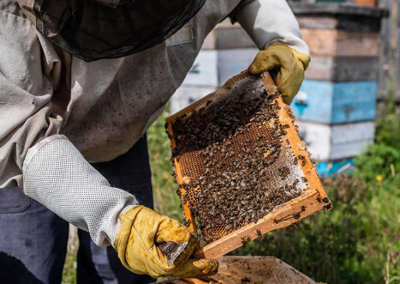

A low hum from the lavender, a swarm hanging from the eaves, a steady line of insects entering a gap beside the garage door. Homeowners across the state meet scenes like these every spring, and the first reaction is often alarm. That reaction is understandable, yet it can lead to hasty decisions, from spraying a nest to sealing a hole, that harm the insects and sometimes the household as well. Bees are among the most valuable animals in any garden, and most of them will never trouble anyone. A few situations do call for caution, especially when a colony sits beside a door, a pool deck, or a play area. The sections below explain the ecological case for tolerance, the signs that separate a harmless visitor from a real concern, and the steps that keep people safe.
The Ecological Work Bees Do Across the State
California supports an unusually rich bee fauna, with well over a thousand native species recorded. Most are solitary. A female digs a small tunnel in bare soil or lays eggs in a hollow stem, stocks each cell with pollen, and seals it, leaving no hive to defend. Bumble bees, sweat bees, mason bees, and leafcutters visit gardens, chaparral slopes, and roadside wildflowers, and they pollinate crops and native plants that managed hives often miss. Native species face pressure from habitat loss and pesticide use, which gives backyard tolerance real value.
The honey bee is a different story. It is a European import kept in managed hives, and the state’s almond orchards depend on rented colonies every February. Feral honey bee colonies that move into walls or tree cavities are descendants of escaped swarms, and they behave very differently from a lone mason bee on a flowerpot. Colonies number in the tens of thousands, store honey that must be defended, and can respond to vibration or disturbance with large numbers of stinging workers.
That ecological value is the reason a blanket policy of removal makes little sense. A bumble bee nest in a retaining wall can be left alone for a season at no cost, and its occupants will be gone by autumn, with only new queens surviving the winter. Judgment, not fear, should drive the decision.
When a Nearby Colony Can Safely Be Left Alone
Coexistence is reasonable more often than most people expect. A solitary bee tunneling into a bare patch of garden soil poses almost no threat and needs no action. The same is true of a bumble bee nest in an old rodent burrow at the back of a yard. A practical test involves distance and use. If the nest sits well away from doors, walkways, and seating, and nobody in the household has a known allergy to stings, simple observation is usually enough.
Judging bees in California is easier once the species is known, since behavior varies so widely between them. Homeowners can watch from a distance of several meters for a few days, noting how many insects come and go, which direction they fly, and whether they react to people passing by. A calm, small, intermittent flow suggests a modest nest. Dense, constant traffic funneling into a single crack points toward a honey bee colony, which carries a different level of risk and a different set of options.
Seasonality helps too. Swarms, which are clusters of honey bees resting briefly on a branch or fence while scouts look for a home, usually move on within a few days. They are typically docile because they carry no stores to defend, though they should still be left undisturbed.
Warning Signs That a Colony Has Settled Too Close
Location changes the calculation. A colony that has chosen a wall void beside a front door, a hollow pillar at a pool, or the eave above a patio table sits in the path of daily life, and ordinary activity such as mowing, closing a gate, or hammering a nail can provoke a defensive response. Pool areas are especially tricky, since bees visit the water for a drink and may land on swimmers. Several signs indicate that tolerance has reached its limit:
- Bees hover near the entrance or bounce off people who pass, instead of flying straight past.
- Traffic is dense and constant, with dozens of insects entering and leaving every minute.
- A dark stain, sticky residue, or audible buzzing appears on an interior wall.
- Someone in the household has been stung, or has a history of severe reactions to stings.
- Pets or children have been drawn to the area and cannot be kept away.
Africanized honey bees, now established across southern parts of the state, raise the stakes. They look much like European honey bees but defend nests more intensely, pursue intruders farther, and deploy greater numbers. Visual identification by an amateur is unreliable, which is one more reason to keep a safe distance. Sightings that persist beyond a week or two usually justify a call.
Why Professional Assessment Beats Do-It-Yourself Removal
Once a colony is confirmed near a high-use area, the next step is an inspection by someone trained to identify the species and read the structure. Hidden nests are the main reason. A hive inside a wall may span several feet of cavity, and wax, honey, and brood remain after the bees are gone. Removing only the adults leaves a mass of honey that can ferment, soak into drywall, and attract rats, ants, and a fresh colony the following season.
Homeowners weighing options for local bee nesting activity should look for a provider who can distinguish honey bees from native species, explain whether live relocation by a beekeeper is possible, and describe how the cavity will be cleaned and repaired. A good assessment also covers timing, since bees are calmer and easier to work around at dusk, and it flags structural damage such as stained ceilings or sagging insulation. Professional removal is also the safer choice when the colony sits above ladder height or near electrical lines, and when anyone nearby is allergic. Asking for a written scope of work before any cutting begins prevents surprises. Licensing requirements for pest work vary, so verifying credentials is a reasonable first question. Estimates should list who handles repair, since open cavities invite repeat occupants.
Habits That Keep Bees Away From Pools, Patios, and Doors
Prevention starts with making high-use areas less appealing without reducing the garden’s value. Flowering plants such as lavender, salvia, and ceanothus draw foragers, so placing them at the edges of the yard, instead of beside the patio table or pool gate, keeps most visits away from people. Water is the other draw. Honey bees collect it to cool the hive, and a dripping hose bib, a fountain, or a damp pool skimmer basket can become a daily stop, so fixing leaks and offering a shallow dish with pebbles in a far corner redirects them. Ground-nesting bees favor bare, sunny soil, so leaving a small uncovered patch away from walkways supports them at no cost.
Structure matters as well. Honey bees seek cavities and carpenter bees favor soft wood, so sealing gaps in siding, soffits, and chimney caps, repairing rotted fascia, and painting or staining exposed timber reduces nest sites. Timing is critical, though. Sealing should only happen after an inspection confirms nothing is living inside, since trapped bees will search for another way out, often through the interior of the house.
Household routines help in smaller ways. Keep drink cans and sugary snacks covered at poolside gatherings, since bees and wasps investigate open sweet liquids. Wear shoes on lawns with clover. Teach children to stay calm and walk away slowly if a bee lands on them, rather than swatting.
Bees deserve patience, and households deserve safety, and the two goals rarely conflict when the details are weighed carefully. Calm observation beats a rushed reaction. Solitary and bumble bees working a garden can be admired from a distance, since they feed plants and fade away with the season. A honey bee colony inside a wall beside a doorway, on the other hand, is a problem that grows quietly and rarely resolves by itself. Observing from a distance, noting traffic and behavior, and requesting an expert inspection before any sealing or spraying leads to better results for people and insects alike. A photo of the entrance and a note of the date make that inspection call faster and more useful. With sensible plantings, tidy water sources, and well-maintained trim, most homes can share a yard with pollinators without surrendering their patios to them.

(0) comments
We welcome your comments
Log In
Post a comment as Guest
Keep it Clean. Please avoid obscene, vulgar, lewd, racist or sexually-oriented language.
PLEASE TURN OFF YOUR CAPS LOCK.
Don't Threaten. Threats of harming another person will not be tolerated.
Be Truthful. Don't knowingly lie about anyone or anything.
Be Nice. No racism, sexism or any sort of -ism that is degrading to another person.
Be Proactive. Use the 'Report' link on each comment to let us know of abusive posts.
Share with Us. We'd love to hear eyewitness accounts, the history behind an article.