
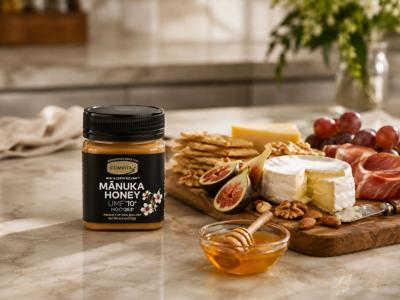
Manuka honey has become one of those pantry items people talk about with unusual enthusiasm. It shows up in tea rituals, wellness cabinets, luxury gift baskets, and carefully styled breakfast trays. One small jar can cost far more than everyday honey, which naturally raises the question: is Manuka honey actually worth the price?
The answer depends on what you expect from it.
Manuka honey can be a beautiful, flavorful, and useful pantry upgrade. It has a richer taste than ordinary honey, a thicker texture, and a reputation that comes from both its origin and the way quality Manuka honey is tested and rated. But it is not magic. It should not be treated as a cure-all, and it should not replace medical care.
The best way to appreciate Manuka honey is to understand what makes it different, how to read the label, and how to use it in a way that feels worth the splurge.
What Is Manuka Honey?
Manuka honey is made by bees that collect nectar from the Manuka plant, which grows in New Zealand and parts of Australia. While all honey has its own character, Manuka honey is known for its deeper flavor, thicker consistency, and distinctive rating systems.
Compared with a lighter grocery-store honey, Manuka honey can taste more intense. Some jars lean earthy and herbal, while others have a richer caramel-like sweetness. That complexity is part of the appeal. It is not the honey most people buy for large-batch baking. It is the honey you notice when it is stirred into tea, drizzled over fruit, or placed on a board with cheese and crackers.
That is also why it should be purchased with a little more care. The Manuka category can be confusing, and labels matter.
Why Manuka Honey Costs More
Manuka honey usually costs more than regular honey because it is tied to a specific plant, limited harvest windows, testing standards, and consumer demand. Not every jar of Manuka honey is the same, and not every label gives shoppers enough useful information.
Higher-rated jars often cost more because they contain higher measured levels of certain compounds associated with Manuka honey. MGO, which stands for methylglyoxal, is one of the numbers shoppers may see on a label. UMF, which stands for Unique Manuka Factor, is another common rating system used for New Zealand Manuka honey.
The higher the rating, the more premium the jar usually becomes. That does not mean everyone needs the strongest or most expensive option. For everyday use, many people simply want a quality jar with a clear rating, a good flavor, and a brand they can understand.
What MGO and UMF Mean
MGO and UMF are two of the most common rating terms used on Manuka honey labels.
MGO measures methylglyoxal, one of the naturally occurring compounds associated with Manuka honey. A higher MGO number means a higher measured concentration of that compound.
UMF is a grading system connected to quality and authenticity. The UMF Honey Association explains that UMF-certified Manuka honey is independently tested and certified. For shoppers, that matters because it gives the label more meaning than vague wellness language.
For readers who want a deeper explanation, FINE’s guide to understanding MGO and UMF in Manuka honey explains how the rating systems work and why they matter when choosing a jar.
The short version is simple: if you are paying for Manuka honey, look for a clear rating. A pretty jar with no meaningful rating may not be the best value.
A Manuka Honey Brand to Know
Comvita Manuka Honey is a strong example of the kind of brand shoppers may come across when looking for a premium jar. The company is known for New Zealand Manuka honey and offers UMF-rated options, which makes it a useful example for understanding what to look for on a label.
That does not mean every reader needs the highest-priced jar on the shelf. It simply means Comvita gives shoppers a clear example of what a more transparent Manuka honey brand can look like: origin information, rating language, and product details that help explain what is inside the jar.
For this kind of product, that transparency matters. Manuka honey is not something most people buy every week. If you are going to pay more for it, the label should help you understand why.
The Realistic Benefits of Manuka Honey
Manuka honey is often discussed for its wellness reputation, but the most realistic benefits are practical and easy to understand.
It can be a rich natural sweetener. It can make tea feel more soothing. It can add depth to yogurt, toast, fruit, cheese boards, dressings, marinades, and roasted vegetables. It can also turn a simple pantry moment into something that feels more elevated.
That is where the value is strongest. Manuka honey does not need to be presented as a cure or a miracle ingredient to be worth enjoying. It can simply be a better, more memorable version of something people already use.
Where the Claims Go Too Far
Manuka honey should not be described as a cure for serious health problems. It should not be framed as a treatment for infections, digestive disease, acne, ulcers, immune disorders, or chronic conditions.
That does not mean it has no value. It means the value should be described honestly.
The better way to think about Manuka honey is as a premium food with a strong wellness reputation, interesting properties, and beautiful everyday uses. It belongs in the same conversation as quality olive oil, specialty vinegar, good tea, artisan chocolate, or an excellent sea salt. It can make ordinary routines feel more thoughtful, but it should not be asked to do the job of medicine.
Food-Grade Honey Is Not Medical-Grade Honey
This is one of the most important points for readers.
Food-grade Manuka honey is the jar most people buy to eat. It belongs in tea, breakfast bowls, cheese boards, dressings, and desserts.
Medical-grade honey is prepared for medical use. It is treated, cleaned, and used in specific products and settings. Those two things should not be confused.
For cuts, burns, ulcers, infections, or slow-healing wounds, readers should follow medical guidance rather than putting pantry honey on the skin. This keeps the article responsible without turning it into a medical explainer.
How to Choose a Quality Jar
A good Manuka honey purchase starts with the label.
Look for a clear UMF or MGO rating. Check the country of origin. Look for a brand that explains its sourcing and rating system in plain language. Be cautious with jars that use vague phrases but do not tell you what the rating means.
Price should also make sense. A very inexpensive jar claiming to be a high-grade Manuka honey should raise questions. At the same time, the strongest rating is not always necessary for everyday use.
For most homes, the best jar is the one you will actually enjoy using. If you mainly want it for tea, toast, yogurt, or entertaining, you may not need the highest rating available. A well-labeled, moderate-rated jar from a reputable brand may be enough.
Smart Ways to Use Manuka Honey at Home
Manuka honey works best when it is used intentionally. Because it costs more than everyday honey, it makes sense to use it where the flavor can stand out.
Stir a small spoonful into warm tea after the water has cooled slightly. Drizzle it over Greek yogurt with berries, walnuts, or granola. Spread it lightly on toast with butter, ricotta, or almond butter. Whisk it into a vinaigrette with olive oil, vinegar, Dijon mustard, and lemon. Use it as a finishing touch over roasted carrots, squash, or sweet potatoes.
It is also beautiful for entertaining. I placed the jar on the counter next to a Boarderie cheese and charcuterie board, and guests could not keep their hands off it. That is where Manuka honey makes immediate sense. It gives people something to taste, talk about, and come back to. A small drizzle over sharp cheese, fruit, nuts, or seeded crackers can make a board feel more generous and polished without much effort.
That is the kind of use that makes Manuka honey feel worth the price. It does not need to be hidden in a complicated recipe. It shines when a small amount turns something simple into something memorable.
Who Should Avoid or Limit Manuka Honey
Manuka honey is still honey, which means it contains sugar. Anyone managing diabetes, blood sugar concerns, allergies, or a medically restricted diet should treat it carefully and ask a healthcare provider when needed.
Honey should not be given to infants under 12 months. If someone has a medical condition, takes medication, or wants to use honey for anything beyond normal food use, it is best to ask a qualified healthcare professional.
Manuka honey can be part of a beautiful pantry, but it should still be used with common sense.
Is Manuka Honey Worth Buying?
Manuka honey can be worth buying if you enjoy premium pantry staples and know how to use them. It is not the right choice for every recipe, and it is not necessary for every household. But for tea, breakfast trays, cheese boards, thoughtful gifts, and small everyday rituals, it can feel special.
The key is to buy carefully. Look for a clear rating, a reputable brand, and a flavor you will actually use. Comvita is one example of a Manuka honey brand that helps shoppers understand the label and the rating system.
Manuka honey does not need to be treated like liquid gold or a wellness miracle. Its real value is simpler than that. It is a rich, distinctive honey that can make ordinary moments feel more considered, especially when it is served well.
Related Articles You May Enjoy From FINE Magazine
Understanding MGO and UMF: A Guide to Manuka Honey Quality
More food, wellness, and entertaining features from FINE Magazine


(0) comments
We welcome your comments
Log In
Post a comment as Guest
Keep it Clean. Please avoid obscene, vulgar, lewd, racist or sexually-oriented language.
PLEASE TURN OFF YOUR CAPS LOCK.
Don't Threaten. Threats of harming another person will not be tolerated.
Be Truthful. Don't knowingly lie about anyone or anything.
Be Nice. No racism, sexism or any sort of -ism that is degrading to another person.
Be Proactive. Use the 'Report' link on each comment to let us know of abusive posts.
Share with Us. We'd love to hear eyewitness accounts, the history behind an article.