
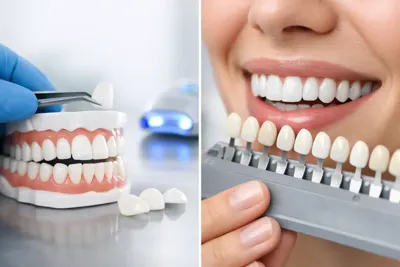

Cosmetic dentistry often begins with a deceptively simple request: make the smile look better. Yet the right treatment depends on what “better” means for the individual patient. Some people are satisfied with a brighter version of their natural teeth, while others want to correct chips, uneven edges, gaps, proportions, or persistent discoloration. Teeth whitening and dental veneers can both create a more polished appearance, but they address different problems and require very different commitments. Understanding those differences is essential before investing time, money, and healthy tooth structure in a cosmetic procedure.
Teeth whitening is primarily a color treatment. It can reduce many stains and lighten the shade of natural teeth, but it does not alter their shape, size, spacing, or position. Veneers are thin restorations attached to the visible surfaces of selected teeth, allowing a dentist to change several aesthetic characteristics at once. They can conceal discoloration while also adjusting contours, symmetry, visible gaps, and minor irregularities. The comparison is therefore not simply between two ways to obtain whiter teeth, but between a color correction procedure and a broader form of cosmetic reconstruction.
The most conservative option that can predictably meet the patient’s goals is generally the most sensible place to begin. A person with healthy, evenly shaped teeth and ordinary staining may gain little from covering those teeth with restorations. Conversely, repeated whitening may disappoint someone whose primary concern is a chipped edge, a large gap, or discoloration that does not respond to bleaching agents. A careful cosmetic evaluation separates problems that can be lightened from those that must be masked or reshaped. That distinction helps patients avoid both undertreatment and unnecessary dental work.
How Teeth Whitening Works and Where Veneers Fit
Professional teeth whitening uses bleaching agents, most commonly hydrogen peroxide or carbamide peroxide, to break down compounds that cause discoloration within natural teeth. As these compounds become less concentrated, the enamel appears lighter and the smile looks brighter. Treatment may be completed in a dental office, at home with dentist-provided trays, or with carefully selected over-the-counter products. The strength of the whitening agent, the application method, and the treatment period can all influence the final result. Whitening toothpastes work differently because they mainly polish away surface stains rather than changing the deeper color of the teeth.
The effectiveness of whitening depends largely on the type and source of the discoloration. Yellow or brown stains caused by coffee, tea, red wine, tobacco, aging, and certain foods often respond more predictably than gray or internally discolored teeth. Teeth darkened by trauma, medication exposure, developmental conditions, or previous dental procedures may show limited improvement. Crowns, fillings, bonding, bridges, and veneers also retain their original shade when the surrounding natural teeth are whitened. For these reasons, patients often benefit from comparing whitening with other cosmetic treatments before deciding how to improve their smiles.
A professional consultation can help determine whether discoloration is the only concern or part of a broader cosmetic issue involving tooth shape, size, spacing, or symmetry. Union Square Dental Practice, a downtown San Francisco practice led by UCSF School of Dentistry graduates Dr. Mahsa Hakim and Dr. Nazanin Hakim, has served the community for more than two decades. Its information about professional whitening options and custom dental veneers illustrates in the same treatment context how the procedures address different aesthetic goals. Whitening is designed primarily to brighten natural tooth structure, while veneers can also alter visible contours, proportions, spacing, and minor alignment irregularities. This comparison shows why the most appropriate treatment depends on the specific cause of dissatisfaction rather than on a general desire for a whiter smile.
What Dental Veneers Can Change Beyond Tooth Color
Dental veneers are thin, tooth-colored coverings bonded to the front surfaces of teeth. Porcelain veneers are individually fabricated and are valued for their strength, translucency, and resistance to visible staining. Composite veneers are created from tooth-colored resin that can often be sculpted directly onto the teeth. Composite treatment may require fewer appointments and can sometimes preserve more enamel, although the material is generally less resistant to wear and staining than porcelain. Both types rely on careful planning because the shape, shade, texture, and proportion of each restoration affect the overall realism of the smile.
The broader appeal of veneers lies in their ability to address several concerns simultaneously. A veneer can cover a dark tooth, lengthen a worn edge, close a small gap, improve the appearance of a minor rotation, and create a more balanced contour. Whitening cannot perform any of those structural or proportional changes. Veneers may therefore be considered when the patient’s dissatisfaction involves more than shade alone. They are especially relevant when multiple visible teeth have inconsistent shapes, permanent color differences, old cosmetic bonding, or surface defects that cannot be corrected through bleaching.
That versatility comes with a significant qualification. Veneers are restorations, not reversible beauty treatments that can simply be removed when preferences change. Porcelain veneer placement commonly involves removing a small amount of enamel so the restoration can fit naturally and bond securely. Even procedures described as minimal-preparation or no-preparation treatments require careful case selection because adding material can make unsuitable teeth appear bulky. Once enamel has been altered, the treated tooth will generally require continued restoration coverage. Patients should therefore view veneers as a long-term dental commitment rather than a temporary cosmetic experiment.
Comparing the Appearance and Predictability of Results
Whitening preserves the natural variations, contours, translucency, and surface anatomy of the patient’s own teeth. The result can look highly authentic because the teeth remain unchanged except for their apparent color. At the same time, whitening does not allow complete control over the final shade or guarantee that every tooth will respond identically. One tooth may remain darker because of an old injury, internal discoloration, or a previous restoration. The outcome is often best described as an enhanced natural smile rather than a completely redesigned one.
Veneers provide a greater degree of control over the finished appearance. A dentist and laboratory technician can plan the brightness, width, length, edge position, translucency, and surface texture of the restorations. This control can produce substantial improvement when teeth are uneven, worn, misshapen, or deeply discolored. It can also create problems when the design is too opaque, too uniform, too large, or excessively white for the patient’s face and age. Successful veneer treatment depends on restraint, proportion, and an understanding of how natural teeth reflect light.
Predictability also depends on how clearly the patient communicates the desired result. Descriptions such as “natural,” “bright,” or “perfect” mean different things to different people. Photographs, digital simulations, diagnostic models, and provisional restorations can make those preferences more concrete before the final veneers are produced. Whitening offers fewer design variables, but patients still need realistic expectations about how light their teeth may become. In both cases, a responsible treatment plan should define success in observable terms rather than relying on vague promises of a transformed smile.
Tooth Preservation, Sensitivity, and Clinical Risks
Whitening is usually the more conservative choice because it does not require a dentist to remove healthy enamel for cosmetic reshaping. Its most common adverse effect is temporary tooth sensitivity, which can occur when peroxide reaches the underlying dentin and irritates the nerve inside the tooth. Some patients also experience gum irritation if whitening material contacts soft tissue or is used incorrectly. These effects often improve when treatment is paused or the concentration and schedule are adjusted. Excessive or improper use, however, can increase irritation and may harm enamel or gum tissue.
Veneer treatment introduces a different category of risk because it changes the physical structure of the tooth. Removing enamel may lead to sensitivity, particularly when preparation extends into deeper tooth layers. Veneers can also chip, crack, loosen, wear, or develop staining along their margins over time. Decay remains possible around or beneath the restorations if plaque control is poor or the bonded margins deteriorate. A damaged veneer may require repair or complete replacement, and complications can become more difficult to manage after repeated treatment cycles.
Underlying oral health must take priority regardless of the cosmetic procedure being considered. Untreated cavities, gum inflammation, enamel erosion, active infection, or significant bite problems can compromise results and may worsen after cosmetic work. Patients who clench or grind their teeth may place veneers under excessive force and could require a protective nightguard. Whitening can also aggravate existing sensitivity when exposed roots, cracks, or untreated decay are present. A comprehensive examination allows the dentist to identify these issues before appearance becomes the sole focus of treatment.
Durability, Maintenance, and the Aging Smile
Whitening results are not permanent because teeth remain exposed to pigments and continue to change with age. Coffee, tea, red wine, tobacco, dark foods, and inconsistent oral hygiene can gradually reintroduce visible staining. Patients may use professionally recommended touch-up treatments to maintain the shade, although the timing varies according to habits and the original treatment. Regular cleanings can remove some surface deposits and help preserve a brighter appearance. Whitening is therefore best understood as a renewable cosmetic service rather than a one-time permanent correction.
Veneers do not require bleaching to maintain their original ceramic shade, but they are not maintenance-free. Porcelain is relatively resistant to staining, while natural teeth beside or beneath the restorations may continue to change color. Gum tissue can recede with age, potentially exposing veneer margins or creating visible differences near the gumline. Veneers may also require replacement after years of biting forces, wear, repairs, or changes in the supporting teeth. Their durability depends on material selection, bonding quality, bite conditions, oral hygiene, and patient habits.
Daily behavior affects both treatments in different ways. People with whitened teeth may choose to moderate stain-producing foods and rinse after consuming strongly pigmented beverages. People with veneers should avoid using their teeth to open packages, bite fingernails, chew ice, or repeatedly crack hard foods. Brushing with fluoride toothpaste, cleaning between the teeth, and attending routine dental visits remain essential in either case. Cosmetic dentistry does not reduce the need for preventive care, and restorations cannot protect neglected teeth from decay or gum disease.
Cost, Treatment Time, and Long-Term Financial Value
Teeth whitening generally requires a smaller initial investment than veneers. In-office treatment may produce a visible change during a single appointment, while dentist-supervised home whitening may take several days or weeks. Over-the-counter products may cost less, but their fit, concentration, speed, and effectiveness can vary. The financial appeal of whitening is strongest when color is the only significant concern. Paying for a more extensive restorative procedure would offer little additional value if the patient already likes the shape and arrangement of the teeth.
Veneers carry a higher cost because the process may involve diagnostic planning, tooth preparation, impressions or digital scans, laboratory fabrication, provisional restorations, bonding, and follow-up adjustments. The total expense depends on the veneer material, the number of teeth treated, the complexity of the design, and local professional fees. Patients should also consider the eventual cost of repairs or replacement, not merely the initial treatment estimate. A veneer case covering several front teeth can represent a long-term financial obligation because restorations do not last indefinitely. Cosmetic dental services are also frequently excluded from insurance coverage unless a plan determines that treatment is medically necessary.
Value should be assessed according to the problem solved, not according to which treatment creates the largest immediate transformation. Whitening can be highly valuable when it satisfies the patient’s goal with minimal intervention and manageable maintenance. Veneers may provide greater value when a person would otherwise spend years attempting to bleach discoloration that cannot respond or repeatedly repair widespread cosmetic defects. The cheapest initial option is not always the least expensive over time, but the most elaborate option is not automatically the best investment. A sound comparison includes likely lifespan, maintenance, replacement, personal priorities, and the cost of preserving healthy tooth structure.
Who Is a Strong Candidate for Each Option?
A strong whitening candidate typically has healthy natural teeth, stable gums, realistic expectations, and discoloration that is likely to respond to bleaching. The person may be generally satisfied with tooth size, shape, spacing, and alignment but feel that the smile has become dull or stained. Whitening can also be useful before replacing a visible crown, filling, or bonded restoration because the new restoration can be matched to the brighter shade. Patients with extensive existing dental work in the smile zone require more careful planning because those materials will not change color. A dental examination can determine whether bleaching alone is likely to produce a balanced result.
A strong veneer candidate usually has cosmetic concerns that cannot be corrected through color change alone. These may include worn edges, small gaps, moderate shape irregularities, disproportionate teeth, stubborn discoloration, surface defects, or unsatisfactory older bonding. The supporting teeth and gums should be healthy enough to receive restorations, and the patient should understand that future maintenance and replacement are likely. Veneers may be inappropriate when there is insufficient enamel for predictable bonding, severe grinding, active gum disease, extensive decay, or a bite that places destructive pressure on the front teeth. Some patients may need orthodontic or restorative treatment before veneers can be considered.
There is also a large group of patients who benefit from neither procedure as an immediate first step. Tooth movement may be more appropriate when crowding or spacing is the central concern. Cosmetic bonding may correct a small chip without the cost or preparation associated with porcelain veneers. A crown may be necessary when a tooth has lost substantial structure and requires protection beyond its front surface. In other cases, a professional cleaning may remove enough surface stain to satisfy the patient without bleaching or restorations.
Choosing Between Whitening, Veneers, and a Combined Plan
The decision should begin by separating color concerns from structural concerns. Patients can ask whether they would be happy with their existing teeth if those teeth were simply lighter. A confident yes points toward whitening as the logical first option. A no suggests that shape, proportion, spacing, wear, or alignment is contributing to the dissatisfaction. This simple question does not replace a clinical evaluation, but it often clarifies the direction of the treatment discussion.
Whitening and veneers are not always competing choices. A dentist may whiten the untreated teeth first and then match a smaller number of veneers to the new shade. This approach can limit the number of teeth that require restorations while producing a more consistent smile. It also requires careful sequencing because the color of freshly whitened teeth should stabilize before permanent restorative shades are selected. Once veneers, crowns, or bonding are placed, bleaching the surrounding natural teeth later could create an unwanted mismatch.
The strongest cosmetic plan is one that remains acceptable as the patient ages, not merely one that photographs well immediately after treatment. It should preserve as much healthy enamel as practical, account for bite forces, and allow future repairs to be managed without escalating complexity. It should also reflect the patient’s tolerance for maintenance, sensitivity, cost, and irreversible treatment. Whitening is often the prudent first move when the problem is primarily color, while veneers can be justified when several lasting aesthetic concerns require correction at the same time. The final choice should follow a licensed dentist’s examination and a candid discussion of benefits, limitations, alternatives, and long-term obligations.

(0) comments
We welcome your comments
Log In
Post a comment as Guest
Keep it Clean. Please avoid obscene, vulgar, lewd, racist or sexually-oriented language.
PLEASE TURN OFF YOUR CAPS LOCK.
Don't Threaten. Threats of harming another person will not be tolerated.
Be Truthful. Don't knowingly lie about anyone or anything.
Be Nice. No racism, sexism or any sort of -ism that is degrading to another person.
Be Proactive. Use the 'Report' link on each comment to let us know of abusive posts.
Share with Us. We'd love to hear eyewitness accounts, the history behind an article.