

Bone is living tissue, constantly being broken down and rebuilt. After menopause, falling estrogen levels speed up bone breakdown. The years around the final menstrual period are often when bone loss is fastest, yet many women notice no symptoms before a scan reveals low bone density.
Bone loss can be managed. Daily habits matter, as do medications such as alendronate (sold as Fosamax) when fracture risk warrants treatment. For some postmenopausal women with osteopenia, prescription non-drug devices such as Osteoboost may also have a role. Understanding your scan results, fracture risk, and treatment options can help you and your clinician choose a plan.
- Screening depends on age and risk. The U.S. Preventive Services Task Force (USPSTF) recommends screening women 65 and older, and younger postmenopausal women whose risk factors and clinical risk assessment indicate increased fracture risk.
- Lifestyle supports every treatment plan. Adequate calcium and vitamin D, weight-bearing and resistance exercise, and fall prevention all help protect bone health.
- Alendronate reduces fracture risk but requires a specific routine. The tablet must be taken with plain water on an empty stomach, followed by at least 30 minutes upright. Treatment is usually reassessed after three to five years.
- Alternatives have different benefits and cautions. Options include yearly infusions, twice-yearly injections, and bone-building medicines for people at very high risk.
- Some options are not drugs. Osteoboost offers a prescription non-drug approach for postmenopausal women with osteopenia. Its evidence concerns bone density and strength measures, not demonstrated fracture prevention.
- The right plan reflects your health history. Kidney function, digestive problems, fractures, falls, and treatment preferences all belong in the discussion.
Bone Health After Menopause, in Brief
Cells called osteoclasts break down old bone, while osteoblasts build new bone. Estrogen helps keep these processes in balance, one of many hormone signaling shifts that change how the body maintains itself after midlife. After menopause, breakdown can outpace rebuilding, making bone thinner and more fragile. This usually happens without noticeable symptoms.
Osteopenia means bone density is below the normal range but not low enough to meet the bone-density definition of osteoporosis. Osteoporosis means bones are fragile enough to raise concern about fractures. A hip or spinal fragility fracture, a break after a minor fall or similar low-force event, can support an osteoporosis diagnosis even when bone density is above the osteoporosis range.
Bone density is only part of the picture. Age, prior fractures, family history, and other factors help determine how likely a fracture is and whether medication would be useful.
When to Test, and How to Read the Results
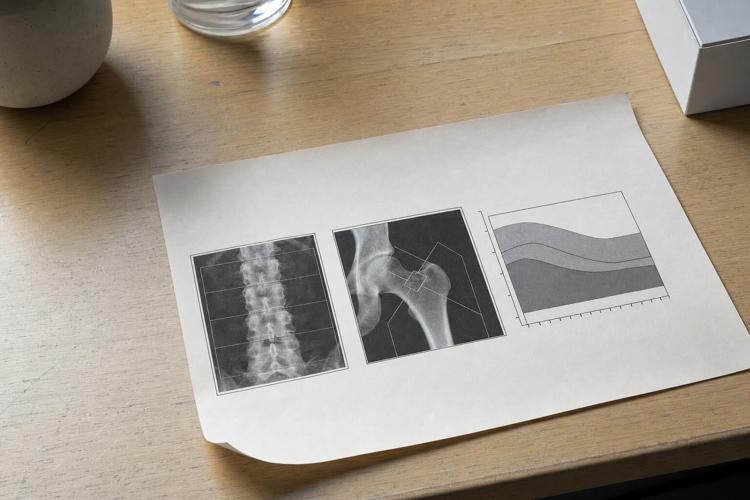
The standard test is a DXA scan (dual-energy X-ray absorptiometry). It uses a very low dose of radiation to measure bone density, usually at the hip and spine. The report lists T-scores, which compare your density with that of a healthy young adult.
The USPSTF recommends screening all women 65 and older. For postmenopausal women younger than 65, clinicians first look for risk factors such as low body weight, a parent who broke a hip, smoking, or excess alcohol use. A clinical risk assessment then helps determine who should have a scan. A previous fragility fracture or a condition that causes bone loss may warrant evaluation outside routine screening recommendations.
For postmenopausal women, the main results mean:
- T-score of -1.0 or higher: normal bone density.
- T-score below -1.0 but above -2.5: low bone mass, also called osteopenia.
- T-score of -2.5 or lower: osteoporosis.
- Elevated FRAX risk: medication may be appropriate even with osteopenia. In U.S. guidance, common treatment thresholds are a 10-year hip fracture risk of at least 3 percent or major osteoporotic fracture risk of at least 20 percent. These are treatment thresholds, not T-score diagnostic categories.
FRAX estimates 10-year fracture risk using factors such as age, weight, fracture history, smoking, and, when available, hip bone density. Your clinician should interpret it alongside your scan and medical history.
A repeat DXA is often considered one to two years after starting or changing treatment, with later testing tailored to your risk. Women with normal results and few risk factors can usually wait longer. When possible, use the same facility and machine to make comparisons more reliable.

Lifestyle Foundations That Matter
These habits support bone health whether or not you need medication. They complement treatment but do not replace it when fracture risk is high.
Calcium: 1,200 mg a Day for Women 51 and Older
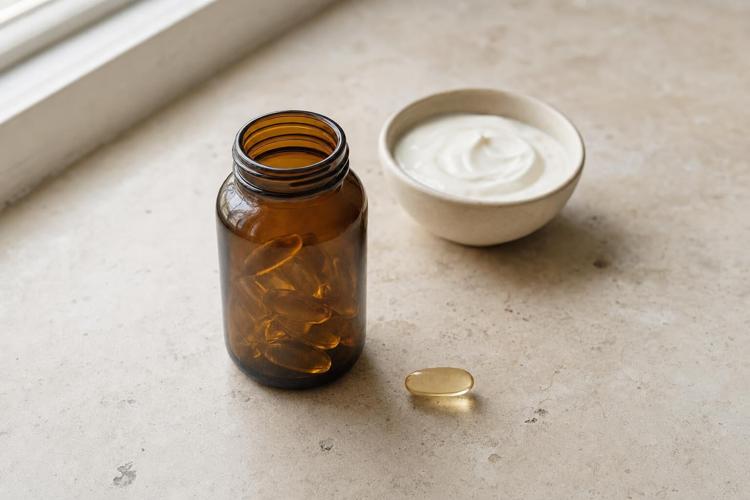
The Bone Health and Osteoporosis Foundation (BHOF) recommends 1,200 mg of calcium daily for women 51 and older, counting food and supplements together. Food comes first: yogurt, milk, cheese, sardines, calcium-set tofu, and leafy greens such as kale and bok choy. Estimate what you already get from food before adding a supplement to fill any gap.

Vitamin D: 800 to 1,000 IU a Day
Vitamin D helps the body absorb calcium. BHOF recommends 800 to 1,000 IU daily for adults 50 and older. Your clinician may adjust that amount based on your health and vitamin D level. The usual adult upper limit is 4,000 IU daily unless a clinician directs otherwise; that limit is not a daily target.
Sun exposure is not a reliable way to judge whether you get enough vitamin D. Older skin makes less, and deliberate unprotected sun exposure carries skin risks. Ask whether your diet, a supplement, or testing is appropriate for you.

Movement That Loads the Bone
Weight-bearing activities, such as walking, stair climbing, and dancing, make your body work against gravity. Add regular resistance training with weights, bands, or body weight, plus balance exercises such as tai chi. Swimming and cycling support cardiovascular fitness but do not load bone in the same way.
Start at a manageable level and build gradually. If you have osteoporosis, a previous spinal fracture, or balance problems, ask your clinician or a physical therapist which movements are safe before trying high-impact exercise or heavy lifting.
Fall Prevention and Everyday Habits
Many fractures follow a fall, so fall prevention matters too. Secure loose rugs, clear cords, add night lighting between the bedroom and bathroom, install grab bars where needed, and choose supportive shoes with good traction. Ask about vision problems or medicines that make you dizzy. Avoid excess alcohol and, if you smoke, seek help quitting.
Fosamax (Alendronate) at a Glance
Alendronate belongs to a class called bisphosphonates. These medicines slow bone breakdown. In women with osteoporosis, alendronate can improve bone density and reduce fractures, including at the spine and hip.
Who it is for. Alendronate is a common first choice for postmenopausal women with osteoporosis or fracture risk high enough to warrant treatment. Before prescribing it, clinicians assess kidney function, calcium levels, swallowing or esophageal problems, and the ability to stay upright after a dose.
How it is taken. A common osteoporosis treatment dose is one 70 mg tablet once a week. Take it after getting up for the day, on an empty stomach, with a full glass of plain water. Wait at least 30 minutes before food, other drinks, medicines, or supplements. Remain upright, sitting or standing, for at least 30 minutes and until after your first food of the day. Follow your prescription instructions exactly: food and minerals reduce absorption, and the tablet can irritate the esophagus.
What to expect. Side effects can include stomach upset, heartburn, and muscle or joint pain. Less common but important risks include esophageal injury, osteonecrosis of the jaw (a problem with jawbone healing), and atypical femur fractures, unusual breaks in the thigh bone. Jaw complications and atypical fractures are rare at osteoporosis treatment doses. For many people at high fracture risk, the benefits outweigh these risks.
How long to stay on it. Bisphosphonates remain in bone after treatment stops, so some people can take a supervised pause, often called a drug holiday. Clinicians generally reassess oral treatment after three to five years. People at lower risk may qualify for a pause; those at higher risk may continue or change therapy. A drug holiday is not automatic and requires follow-up.
If Fosamax Isn't a Fit
Alendronate is not the only option. If you and your clinician are exploring alternatives to medications like Fosamax, prescription options can be considered alongside non-drug approaches. Esophageal problems, difficulty following the dosing routine, or very high fracture risk may point toward another treatment.
Other Bisphosphonates
Risedronate works much like alendronate and comes in several oral schedules. Instructions vary by formulation, so follow the product-specific directions. Ibandronate is available as a monthly tablet or an intravenous injection every three months. It reduces spinal fractures, but evidence for preventing hip and other nonspinal fractures is lacking.
Zoledronic acid is usually given as a yearly intravenous infusion for osteoporosis treatment. It can be useful when oral tablets are unsuitable. Some people feel achy or feverish for a few days after the first infusion. Kidney function and calcium levels need assessment before treatment.
Denosumab (Prolia)
Denosumab is an injection given every six months. It slows bone breakdown and avoids the fasting and upright routine required by oral bisphosphonates.
It should not be stopped or delayed without a treatment plan. Its effect wears off relatively quickly, and missed or discontinued treatment can lead to rapid bone loss and spinal fractures. Another bone-protective medicine is generally needed when it is stopped; denosumab does not have the same drug-holiday option as bisphosphonates.
Denosumab also carries a boxed warning for severe hypocalcemia, dangerously low blood calcium, in people with advanced chronic kidney disease. These patients need specialist assessment and close monitoring. Adequate calcium and vitamin D are important but do not eliminate this risk.
Bone-Building (Anabolic) Options
Teriparatide and abaloparatide stimulate new bone formation. Both are daily self-injections, generally reserved for people at very high fracture risk, such as those with multiple fractures or very low bone density. Treatment is usually a limited course of about two years, with the duration depending on the drug and individual circumstances. An antiresorptive medicine follows to help preserve the gains.
Romosozumab (Evenity)
Romosozumab both builds bone and slows its breakdown. It is given monthly for 12 months, then followed by an antiresorptive. It carries a boxed warning for heart attack, stroke, and cardiovascular death. It should not be started in someone who has had a heart attack or stroke within the previous year, and broader cardiovascular risk must be considered before prescribing it.
Where Menopausal Hormone Therapy Fits
Menopausal hormone therapy can preserve bone density and reduce fractures. It may be appropriate for selected women under 60 or within 10 years of menopause who also have bothersome hot flashes or night sweats. For women using it to treat symptoms, bone protection can be an additional benefit.
Systemic hormone therapy is generally unsuitable for women with contraindications such as a history of breast cancer, blood clots, or stroke. Benefits and risks also change with age and time since menopause. If menopausal symptoms are already prompting a discussion about hormone therapy, ask how your bone health factors into that decision.
Non-Drug Devices and Supports
Not every prescription is a pill or injection. Osteoboost is a prescription wearable belt that delivers calibrated vibration to the lumbar spine and hips. The FDA authorized it through the De Novo pathway in January 2024 as the first prescription device specifically for postmenopausal women with osteopenia. It offers an additional option to discuss alongside nutrition, exercise, and follow-up testing.
Two boundaries matter. The device is labeled for osteopenia and is not indicated for osteoporosis. In its pivotal trial, participants who used it as directed lost less bone strength and density than those using a sham device, so the evidence concerns slowing loss rather than building bone, and fracture risk was not evaluated in that study. Those outcomes should not be treated as interchangeable.
If you are considering alternatives, first clarify whether your fracture risk calls for a medicine with demonstrated fracture-prevention benefits. Your clinician can help determine whether a device fits your situation without delaying needed osteoporosis treatment.
Putting It Together: Sample Pathways
These examples illustrate how risk can shape treatment. They are not individual prescriptions; your plan should reflect your full medical history.
Osteopenia With Low FRAX Risk
A 58-year-old has a spine T-score of -1.6, low estimated fracture risk, and no fragility fractures. The initial focus may be adequate calcium and vitamin D, weight-bearing and resistance exercise, and a personalized repeat-scan interval. A prescription non-drug device such as Osteoboost may be considered as a complement to those habits. Medication is not usually the first step for low-risk osteopenia alone.
Osteoporosis or High Estimated Fracture Risk
A 66-year-old has a hip T-score of -2.7 and no fractures. An antiresorptive is often the first treatment. Alendronate may fit if kidney function and the ability to follow its dosing instructions allow. If tablets are unsuitable, zoledronic acid or denosumab may enter the discussion, with kidney function, calcium status, and the need for reliable follow-up shaping the choice.
Very High Risk or Multiple Fractures
A 71-year-old has two vertebral fractures and a T-score of -3.4. A specialist may recommend building bone first with teriparatide, abaloparatide, or romosozumab, if cardiovascular risk permits, then switching to an antiresorptive to preserve the benefit.
A Treatment-Planning Checklist
Bring these details to your appointment:
- Your most recent DXA report and any earlier reports for comparison
- Your FRAX result, if available
- A list of medicines and supplements, plus recent relevant blood tests
- Any history of reflux, swallowing problems, falls, or fractures
- Planned dental procedures
- Your preferences and practical limits, including cost, travel, and comfort with injections
Staying on Schedule and Using Treatment Safely
A plan works best when its schedule and safety instructions fit your daily life.
- Choose a fixed day for a weekly tablet. Use a phone reminder and keep the dosing instructions handy. Store medicine as directed, away from children.
- Schedule injections before leaving the clinic. For denosumab, contact your care team promptly if an appointment might be missed. Do not arrange a pause on your own.
- Meet your calcium and vitamin D needs. Use supplements only as needed or prescribed, and follow any blood-test monitoring plan.
- Keep up dental care. Tell your dentist which osteoporosis medicine you take and discuss planned invasive dental work with your prescriber.
- Report new symptoms. New thigh, groin, or jaw pain deserves attention. If alendronate causes painful swallowing or new or worsening heartburn, contact your prescriber before another dose.
- Set a reassessment date. Ask when to repeat DXA and when the benefits, risks, and duration of treatment will be reviewed.
What to Ask Your Clinician
These questions can help turn your results into a clear plan:
- Do I have osteopenia or osteoporosis, and how high is my fracture risk?
- Could another health condition or medicine be contributing to my bone loss?
- Do I need calcium, vitamin D, or kidney function tests before treatment?
- If we start alendronate, how will we decide whether a future pause is appropriate?
- Would an infusion or injection suit me better than a tablet?
- If we start denosumab, what is the plan if I need to stop?
- Would a bone-building medicine be a better first choice?
- How do my heart history and menopausal symptoms affect my options?
- Is a prescription non-drug device appropriate for my level of bone loss?
- When should I repeat my DXA, and can I use the same machine?
A Plan to Protect Bone Health
Menopause increases the pace of bone loss, but there are practical ways to protect your bones. Adequate nutrition, appropriate exercise, fall prevention, and treatment matched to fracture risk all play a part. Some women need medication; others with osteopenia may consider a prescription device such as Osteoboost alongside lifestyle measures. The important step is choosing a plan with your clinician and reviewing it as your health and fracture risk change.

(0) comments
We welcome your comments
Log In
Post a comment as Guest
Keep it Clean. Please avoid obscene, vulgar, lewd, racist or sexually-oriented language.
PLEASE TURN OFF YOUR CAPS LOCK.
Don't Threaten. Threats of harming another person will not be tolerated.
Be Truthful. Don't knowingly lie about anyone or anything.
Be Nice. No racism, sexism or any sort of -ism that is degrading to another person.
Be Proactive. Use the 'Report' link on each comment to let us know of abusive posts.
Share with Us. We'd love to hear eyewitness accounts, the history behind an article.