
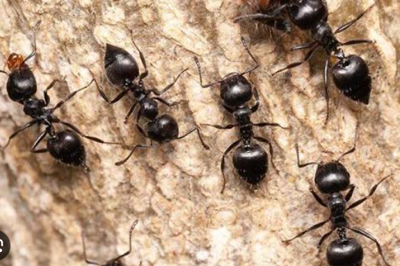

A thin trail of small ants moving along a stone veneer, a fascia board, or a pergola beam rarely looks alarming. Then a gardener brushes a branch, and the ants rush out with their abdomens arched high over their backs, a posture that gives the species its name. Acrobat ants are common across Texas, and they favor features that define many upscale properties: mature trees, timber pergolas, layered rooflines, and trim that has endured seasons of irrigation overspray. They are not the most destructive ants in the state, yet they nest in unexpected places and cause irritation, wiring trouble, and a steady stream of indoor sightings. The sections below describe how to recognize them, where they settle, why damp wood draws them, and how to respond. A calm, accurate approach saves money and avoids repeated surface sprays.
Telling Acrobat Ants Apart From Other Texas Ants
Acrobat ants belong to the genus Crematogaster, and several species live in Texas. Workers are small, roughly an eighth of an inch long, and range from light brown to nearly black, with some showing a reddish head and chest and a darker rear. The most telling feature is the heart-shaped abdomen, which they lift and flex over the body when alarmed. The waist has two segments, and the body looks smooth rather than fuzzy.
Behavior offers more clues. Acrobat ants travel in slow, steady trails rather than the frantic scatter of crazy ants, and they follow edges such as wires, tree limbs, fence rails, and masonry seams. They feed on honeydew from aphids and scale insects, on sugary spills, and on other insects. A trail running up a crape myrtle toward a roofline often passes a honeydew source on the way.
Misidentification is common. Carpenter ants are larger, with a rounded profile from above, while odorous house ants give off a rotten coconut smell when crushed. Acrobat ants may release a sour odor of their own when disturbed. A clear, close photo helps an inspector confirm the species before any treatment is chosen, which matters because the right method depends on knowing exactly which ant is crossing the patio.
Where Colonies Settle Around Large Homes
Homeowners who search for acrobat ants in Texas what to know quickly learn that nest location matters more than almost anything else. These ants do not dig tidy mounds in the lawn. They prefer existing cavities and will occupy almost any protected void: a hollow in a dead tree limb, the gap behind loose bark, a rotting fence post, a stack of firewood, or the abandoned galleries left by wood-boring beetles.
Large properties offer plenty of options. Timber pergolas and decorative beams hold voids at their joints. Hollow-core doors, shutters, window frames, and garage trim can shelter a colony. Behind stone veneer, ants find gaps in mortar and flashing. Inside the house, they use wall voids, attic insulation, and the spaces around ductwork, with foam board insulation a particular favorite because it is easy to excavate. Ants nesting in electrical enclosures can interfere with switches and wiring, so activity near outdoor lighting or pool equipment deserves prompt attention.
A colony often has a main nest and several satellite nests, with workers moving brood between them as conditions change. That arrangement explains why spraying a trail rarely helps. The visible ants are foragers from a nest that may sit thirty feet away, high in a tree, or inside a wall.
Why Moisture-Damaged Wood Draws Activity
Acrobat ants do not eat wood, yet they are strongly tied to it. They excavate galleries in wood that is already soft, and moisture is what softens it. A fascia board beneath a clogged gutter, a window sill exposed to sprinkler overspray, and a deck post sitting in damp soil all create the decayed material these ants hollow out easily. Nests are rarely found in dry, sound lumber.
The pattern gives homeowners a useful clue. If acrobat ants keep appearing in the same corner, a hidden moisture problem is often present. Common sources include a leaking roof valley, failed flashing above a stone wall, a drip from an air conditioner line, and irrigation heads aimed at walls. Texas weather, with heavy spring storms and long humid stretches, makes these failures more likely.
Moisture draws other pests as well. Termites and carpenter ants may share the same damp timber, and an inspection that finds one should look for the others. Probing suspect wood with a screwdriver reveals soft spots, and tapping can produce a hollow sound. Replacing damaged boards removes both the nesting site and the source of attraction, which lasts longer than any treatment applied to the surface.
How Acrobat Ants Behave When Disturbed
Behavior under stress is the trait that gives the species its reputation. When a nest is disturbed, workers scatter in every direction, raise the abdomen, and may bite. Some release a defensive chemical with a sharp, unpleasant odor. Bites are the most common complaint, and some can deliver a mild sting. A person who brushes a branch or restacks firewood may find ants crawling up an arm within seconds.
Disturbance also changes the colony itself. Aggressive spraying or breaking open a nest can cause the colony to split and relocate, and fragments may reestablish elsewhere on the property. Any practical summary of local acrobat ant behavior should therefore include a warning against disrupting a nest without a plan.
Their trails offer an advantage. Acrobat ants follow predictable routes, and tracing a trail back at dusk with a flashlight often reveals the entry point, whether a gap beside a window, a utility penetration, or a branch touching the roof. Trails running over the soffit and along wires toward the attic point to a nest within the structure. Sticky dark streaks, sawdust-like debris, or a faint rustling inside a wall suggest an active colony. Photographing the trail and noting dates helps an inspector later.
Prevention Habits and When to Call for Help
Prevention begins with the conditions that draw the ants to a property. A short checklist covers most of it:
- Repair roof leaks, clogged gutters, and dripping fixtures, then replace wood that has softened.
- Trim branches and shrubs a foot or two away from roofs and walls.
- Store firewood off the ground and away from the house.
- Seal gaps around utility lines, window frames, and stone veneer edges.
- Reduce aphid and scale activity on ornamentals, since honeydew feeds the trails.
- Aim irrigation away from walls and trim.
Treatment works best when it targets the nest. Surface sprays kill the foragers a homeowner sees but leave the colony intact, and repellent residues can scatter trails into new areas. A professional inspection can locate nests in wall voids, trees, and timber, then apply baits or direct treatments where they matter.
Anyone who finds ants inside the house, near wiring, or in repeated spots after repairs should arrange an inspection. A written summary that names the moisture sources to fix is as valuable as the treatment itself, because without those repairs the same damp wood will draw the next colony.
Acrobat ants reward homeowners who look beyond the trail. The ants seen on a wall are foragers, the nest is somewhere else, and its location usually traces back to wood that moisture has already weakened. Correct identification, repairs to leaks and rot, trimmed vegetation, and sealed gaps remove most of what draws a colony. When activity continues, a professional who finds and treats the nest is more effective than repeated spraying of visible lines. Texas properties with mature trees and timber features will always see some pressure, but a calm routine of inspection and repair keeps these ants a minor annoyance instead of a recurring problem inside the walls.

(0) comments
We welcome your comments
Log In
Post a comment as Guest
Keep it Clean. Please avoid obscene, vulgar, lewd, racist or sexually-oriented language.
PLEASE TURN OFF YOUR CAPS LOCK.
Don't Threaten. Threats of harming another person will not be tolerated.
Be Truthful. Don't knowingly lie about anyone or anything.
Be Nice. No racism, sexism or any sort of -ism that is degrading to another person.
Be Proactive. Use the 'Report' link on each comment to let us know of abusive posts.
Share with Us. We'd love to hear eyewitness accounts, the history behind an article.