
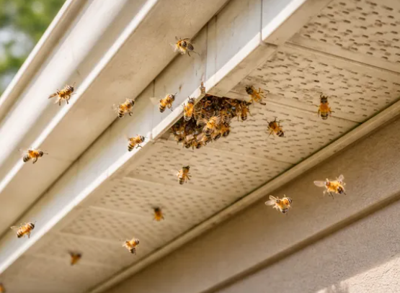

A steady line of bees slipping into a thin seam beside a window is easy to dismiss for a day or two. By the second week the traffic has thickened, a faint hum carries through the bedroom wall, and the homeowner starts wondering what is going on behind the vinyl. Siding creates a dry, sheltered cavity between the cladding and the sheathing, and that space can hold a surprising amount of comb. Because the colony is out of sight, decisions get made on guesswork, and the most tempting guess, caulking the hole, tends to make matters worse. The sections below explain how to recognize the pattern, why inspection is so difficult, what goes wrong with a quick seal, and how to respond with care. Acting calmly and in the right order protects both the household and the structure.
Reading the Signs of Repeated Bee Traffic
One bee landing on a wall means little. Dozens following the same flight path to the same spot means a great deal. Scouts search for cavities in spring, and once a colony commits to a gap, workers make hundreds of trips a day carrying nectar and pollen. The entry is often tiny, such as a quarter-inch seam where a panel meets a corner post, a gap beside a vent, or a spot where a utility line passes through the cladding. Bees need very little room.
Watch the pattern at different times of day. Traffic usually peaks in the warm mid-morning hours and slows toward dusk. Returning workers hover briefly before slipping into the seam, and a few often cluster at the opening to fan their wings. Indoor clues matter too. A low hum through drywall, a warm patch on the wall, or a dark stain spreading across paint can mean wax and honey have begun to leak. Dead bees collecting on window sills or beneath the opening are another sign.
Telling honey bees from carpenter bees or wasps helps. Honey bees are fuzzy and golden brown, while carpenter bees bore perfectly round holes in wood and leave sawdust below. A photo taken from a safe distance lets an inspector confirm what is actually present.
Why a Hidden Colony Resists Inspection
Siding hides everything. Behind a panel lies a cavity that may stretch from a foot to several feet, bounded by sheathing, framing, and sometimes insulation. Honey bees build comb in vertical sheets, and a colony can fill the entire space between two studs. From outside, the only visible evidence is the entrance, which may not line up with the nest. Bees often enter at one point and build several feet above or below it, so the gap shows where they travel but not where they live.
Homeowners who press an ear to the wall or tap on panels run into trouble. Vibration alarms the colony, and a disturbed hive can send many stinging workers streaming out of the seam. Pulling a panel off for a quick look carries the same risk, plus the chance of cracking the siding and widening the opening.
Professionals use less invasive tools. A thermal camera shows the warm outline of a cluster through the wall, a stethoscope picks up the hum, and a small borescope inserted through a drilled hole reveals comb directly. Even then, the size of the colony remains an estimate until the cavity is opened. Any plan should assume the nest is larger than it looks, and that the work behind the wall will take longer than the visible gap suggests.
What Goes Wrong When the Opening Is Sealed Too Soon
Caulk or foam looks like a neat solution. A sealed gap, however, does not erase a colony. Bees that return to a blocked entrance circle in confusion, then hunt for another way in. Inside a wall, the nearest alternatives are often gaps around electrical boxes, recessed lights, and baseboards, which can deliver the whole colony into a bedroom or living room. Neighbors sometimes report a sudden swarm on the lawn after a seal, which is a colony forced out of its home.
Trapped bees also die in the cavity, and a dead colony is not a harmless one. Comb full of honey and brood stays in place. Heat and humidity cause the honey to ferment and run, staining drywall and ceilings, and the smell draws ants, wax moths, beetles, and rodents. Wax softens in summer heat and can drip through the wall. A site left this way may attract a new swarm the following spring, since the scent of old comb signals a good nesting spot.
Sprays create a similar problem. Pouring insecticide into the gap may kill some adults, yet the comb remains, and chemical residue complicates later cleaning. A quick fix often turns a manageable removal into a repair job involving wet insulation and replaced drywall.
Safe Next Steps Once Traffic Has Been Confirmed
Safe handling begins with distance. Keep children, pets, and visitors away from the wall, and avoid mowing, hammering, or running power tools nearby. Anyone dealing with bees in siding can take a few cautious steps before calling for help:
- Note the location of the entrance and photograph it from at least ten feet away.
- Record when traffic is heaviest and roughly how many bees pass in a minute.
- Keep windows near the area closed and move outdoor activity elsewhere.
- Check indoors for staining, buzzing, or warm spots, and photograph what turns up.
- Leave the wall alone: no sealing, spraying, or tapping.
A trained beekeeper or pest professional can confirm the species and decide whether live removal is possible. Many beekeepers relocate honey bee colonies, though availability varies by area, and the work usually requires opening the wall. Good practice means removing comb and honey completely and cleaning the cavity before any repair begins. A written plan that names who will repair the siding avoids a mismatched finish later. If the insect turns out to be wasps or another species, the approach changes entirely. Homeowners handling a bee colony inside exterior cladding should save the sealing for last, after the colony and comb are gone.
Repairs That Keep the Gap From Inviting a New Colony
Once the colony is out, the cavity needs attention. Removing residue and wax scent matters, because leftover comb draws future scouts. Some professionals scrape and vacuum the space, then fill it with insulation or foam so no empty volume remains. The opening is sealed last, and only after confirming nothing is left inside.
Prevention then focuses on gaps. Walk the exterior each spring and examine seams around corners, windows, vents, and utility penetrations. Gaps larger than about an eighth of an inch deserve caulk or flashing. Replace cracked or warped panels, since lifted edges give bees an easy way in. Screen vents with fine mesh, and repair loose trim and open soffit joints. Dryer vents and chimney caps should have working covers.
Landscaping plays a smaller role. Dense flowering shrubs pressed against the wall draw foragers close to the house, so planting them a few feet out reduces scouting along the siding. A yearly inspection before scouts begin their search takes about twenty minutes and costs nothing, yet it closes the very openings that attract colonies in the first place.
Bees behind siding reward patience and punish shortcuts. Repeated traffic through a narrow gap signals a colony that may be larger than it looks, and its hiding place makes confident self-inspection unrealistic. Sealing the opening too early can push bees indoors or leave rotting comb in the wall, while sprays add residue without solving the cause. Calm observation, clear photographs, and an assessment from a trained professional lead to a removal that clears the cavity and protects the home. Afterward, sealing gaps and checking seams each spring keeps the next scout from finding an invitation. The goal is a dry, sound wall with no comb left behind.

(0) comments
We welcome your comments
Log In
Post a comment as Guest
Keep it Clean. Please avoid obscene, vulgar, lewd, racist or sexually-oriented language.
PLEASE TURN OFF YOUR CAPS LOCK.
Don't Threaten. Threats of harming another person will not be tolerated.
Be Truthful. Don't knowingly lie about anyone or anything.
Be Nice. No racism, sexism or any sort of -ism that is degrading to another person.
Be Proactive. Use the 'Report' link on each comment to let us know of abusive posts.
Share with Us. We'd love to hear eyewitness accounts, the history behind an article.