
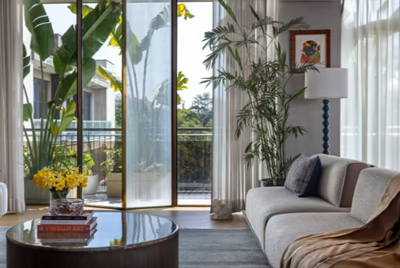

Some homes have that effortless sense of style that's difficult to put your finger on. The furniture is beautiful, the lighting feels just right, and everything seems thoughtfully placed without looking overly decorated. You walk in and immediately feel comfortable.
Interestingly, that feeling often has less to do with expensive furniture and more to do with the details that bring a room to life. Natural materials, warm textures, carefully chosen accessories, and greenery can turn even a simple interior into something special.
And when it comes to greenery, there's no rule that says it has to be real.
Why Beautiful Interiors Need a Touch of Nature
Think about a modern living room with beautiful marble surfaces, clean architectural lines, and carefully selected furniture. It might look impressive, but without softer elements, the space can feel a little too polished.
This is where greenery makes a difference. The irregular shapes of branches and leaves provide a natural contrast to straight lines and structured furniture. A tall olive tree beside a sofa can soften an empty corner, while a leafy ficus can add warmth to a minimalist interior.
The beauty of greenery is that it works with almost any decorating style. Olive trees complement Mediterranean-inspired homes, palms bring a relaxed resort atmosphere, and sculptural bonsai trees can look striking in contemporary spaces.
You don't need to fill every room with plants, either. One beautiful tree in the right location often makes more of an impression than several smaller decorations.
The Appeal of Greenery Without the Maintenance
As lovely as living plants are, they don't always cooperate with our decorating plans. That perfect corner beside the fireplace might be too dark, while a beautiful entryway may not receive enough sunlight to keep a tree healthy.
There is also the question of maintenance. Between work, travel, family life, and everything else demanding attention, keeping large indoor plants looking their best isn't always a priority.
Fortunately, realistic artificial greenery has come a long way. Today's better-quality designs feature natural-looking trunks, varied leaf colours, and carefully arranged branches that capture much of the visual character of living trees.
Brands such as FauxNatural offer artificial olive trees, palms, ficus varieties, and other decorative greenery suited to residential and commercial interiors. For homeowners, these options make it easier to introduce greenery into spaces where maintaining real plants would be difficult.
It's a practical approach to decorating, but the visual result can still feel beautifully considered.
Think Beyond the Living Room
Although living rooms are an obvious place for statement greenery, some of the most interesting opportunities are found elsewhere in the home.
An entrance hall, for example, sets the tone for everything that follows. A tall tree positioned beside a console table can make the space feel more welcoming without adding unnecessary furniture.
In a bedroom, a slender olive tree or smaller leafy arrangement can soften the room's atmosphere. For a home office, greenery adds visual interest to a space often dominated by desks, screens, and storage.
Even bathrooms can benefit from a little greenery. A compact artificial plant placed near a freestanding bathtub or on an open shelf adds a fresh decorative element without depending on natural light.
The key is choosing plants that feel appropriate for the room rather than simply filling every available corner.
How to Make Artificial Greenery Look Expensive
The difference between artificial greenery that looks elegant and greenery that looks obviously decorative often comes down to styling.
Start with the planter. A beautiful ceramic pot, aged terracotta vessel, or textured stone planter can make a tree feel integrated into the interior. Avoid leaving a large artificial tree in a basic nursery-style container.
Pay attention to proportions, too. A tree should complement the height of the room and the scale of the surrounding furniture. In smaller interiors, slender varieties often look more natural than oversized, densely packed trees.
It's also worth spending a few minutes adjusting the branches. Real trees aren't perfectly symmetrical, and artificial versions generally look more convincing when their foliage has a little natural variation.
Finally, consider placement. Although artificial plants don't need sunlight, positioning them near windows or in naturally bright areas can make them feel more believable.
A More Effortless Approach to Luxury
Beautiful interiors don't necessarily need to be elaborate. In fact, some of the most sophisticated homes are those where every detail seems to have been chosen with care.
A statement tree beside a favourite armchair, a few branches arranged on a console, or a touch of greenery in an otherwise minimalist room can change the atmosphere without overwhelming the design.
And perhaps that's the real appeal of realistic artificial greenery. It allows you to enjoy the visual beauty of nature without having to arrange your life around keeping it alive.
After all, a truly luxurious home should be more than beautiful to look at. It should be a pleasure to live in.

(0) comments
We welcome your comments
Log In
Post a comment as Guest
Keep it Clean. Please avoid obscene, vulgar, lewd, racist or sexually-oriented language.
PLEASE TURN OFF YOUR CAPS LOCK.
Don't Threaten. Threats of harming another person will not be tolerated.
Be Truthful. Don't knowingly lie about anyone or anything.
Be Nice. No racism, sexism or any sort of -ism that is degrading to another person.
Be Proactive. Use the 'Report' link on each comment to let us know of abusive posts.
Share with Us. We'd love to hear eyewitness accounts, the history behind an article.