
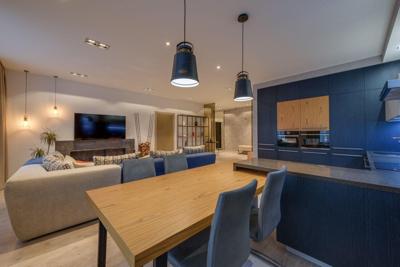

Home design is changing faster than many homeowners realize. Features once viewed as luxury upgrades are becoming practical tools for comfort, energy savings, security, and daily convenience. By 2030, several of these features may feel less like futuristic extras and more like normal parts of a modern home.
From smarter energy systems to healthier indoor spaces, tomorrow’s homes will focus on doing more with less effort. Buyers are also becoming more aware of operating costs, resilience, and technology. That shift is likely to influence what builders install and what homeowners expect when shopping for a property.
Feature 1: Smarter Energy Management
Energy management is moving beyond simply installing efficient appliances. Homes are gaining systems that monitor electricity use, adjust consumption, and help homeowners decide when to run major equipment. Smart thermostats, connected appliances, energy monitors, and automated controls can work together as one system.
By 2030, homeowners may expect a house to know when energy demand is high and respond automatically. A system could adjust heating, cooling, lighting, and appliance use based on occupancy, schedules, or electricity rates. This can make energy use easier to manage without requiring constant attention.
For homeowners interested in long-term efficiency, this trend makes connected energy controls worth watching. An experienced residential design company, EG Home, can help homeowners think about how efficiency, comfort, and technology fit together during a renovation or new-build project.
Feature 2: Solar Power With Home Battery Storage
Solar panels are already common in many markets, yet their role in residential design is likely to grow. Falling technology costs, energy concerns, and interest in greater household resilience are encouraging more homeowners to consider generating electricity at home.
Battery storage adds another layer. Instead of using solar power only while panels are producing electricity, a battery can store excess energy for later use. That can help a household maintain power during certain outages and reduce dependence on the grid during high-demand periods.
By 2030, solar-ready roofs and battery systems may become more familiar features in new construction. Homebuyers may pay closer attention to whether a property has space, wiring, and electrical capacity for future energy upgrades.
Feature 3: Heat Pumps and High-Efficiency Climate Control
Heating and cooling account for a large share of household energy use, making climate control a major area for innovation. Heat pumps are gaining attention because they can provide efficient heating and cooling from one system.
Modern systems can pair with smart thermostats, zoning controls, and improved insulation to maintain more consistent indoor temperatures. Instead of heating or cooling an entire house equally, homeowners can increasingly control different areas based on how each space is used.
By 2030, efficient electric climate systems may be a standard expectation in many new homes. Homebuyers are likely to look beyond the age of a furnace or air conditioner and ask broader questions about efficiency, comfort, maintenance, and operating costs.
Feature 4: Health-Focused Indoor Air Systems
A comfortable home is not only about temperature. Indoor air quality is becoming a bigger part of residential design, with ventilation, filtration, humidity control, and air monitoring gaining attention. For households dealing with seasonal triggers, an air purifier for allergies can also provide an added layer of filtration alongside a well-maintained HVAC system.
Future homes may use sensors to track factors such as humidity, carbon dioxide levels, particles, and other indoor conditions. Automated ventilation can then respond when air quality changes. Better filtration can help reduce airborne particles, while humidity controls can support a more comfortable environment.
By 2030, air-quality monitoring may be built into home control systems rather than treated as a separate gadget. This could make indoor environmental information easier for homeowners to see and act on.
Feature 5: Flexible Rooms That Change With Life
Fixed-purpose rooms are becoming less practical for households whose needs change over time. A room that serves as an office today might become a guest room, hobby area, study space, or bedroom later.
Designers are responding with flexible layouts, movable partitions, built-in storage, adaptable lighting, and rooms with multiple uses. Electrical outlets and data connections can also be placed strategically so spaces can support changing technology.
This approach can make a home useful for longer periods without requiring major remodeling every few years. By 2030, flexibility may become a standard design expectation, particularly as remote work, aging in place, and multigenerational living continue influencing housing needs.
Key Takeaways
When buying a home, look beyond its current features. Check whether it can support future upgrades.
- Check energy efficiency: Look at insulation, appliances, and electrical capacity.
- Ask about heating and cooling: Efficient systems can improve comfort and reduce energy use.
- Look at air quality: Good ventilation and filtration are useful long-term features.
- Choose flexible spaces: Rooms with multiple uses can adapt as your needs change.
- Think ahead: Make sure the home can support future technology and upgrades.
Smart Design Will Matter More
These five features share one important idea: future homes are likely to work harder for their occupants. Energy systems can become more responsive, climate control can become more efficient, indoor air can be monitored, and rooms can adapt as household needs change.
Technology alone will not determine whether a home performs well. Good insulation, thoughtful layouts, durable materials, natural light, and proper construction will remain important. Smart features work best when they are supported by sound design.
By 2030, many homeowners may view these features as normal parts of a well-designed house rather than futuristic upgrades. Smarter energy controls, solar and battery systems, efficient climate equipment, healthier air systems, and flexible rooms all respond to practical needs.
The biggest change may be how these features work together. Instead of adding disconnected gadgets one at a time, homeowners will increasingly expect systems that communicate and support comfort, efficiency, and flexibility as one complete experience.
Frequently Asked Questions
1. What home features may become standard by 2030?
Smart energy systems, solar and battery storage, efficient climate control, indoor air systems, and flexible rooms may become common features.
2. Will solar power be more common in future homes?
Yes. Solar-ready roofs and home battery storage are likely to become more familiar as homeowners look for efficient and resilient energy options.
3. Why will flexible rooms matter by 2030?
Flexible rooms can serve different purposes as household needs change, making homes easier to adapt without major remodeling.
4. Will smart energy systems save homeowners money?
They can help reduce wasted energy by adjusting heating, cooling, lighting, and appliance use based on household needs.
5. Should buyers look for future-ready features today?
Yes. Buyers can check energy efficiency, electrical capacity, climate systems, air quality, and flexible layouts when comparing homes.

(0) comments
We welcome your comments
Log In
Post a comment as Guest
Keep it Clean. Please avoid obscene, vulgar, lewd, racist or sexually-oriented language.
PLEASE TURN OFF YOUR CAPS LOCK.
Don't Threaten. Threats of harming another person will not be tolerated.
Be Truthful. Don't knowingly lie about anyone or anything.
Be Nice. No racism, sexism or any sort of -ism that is degrading to another person.
Be Proactive. Use the 'Report' link on each comment to let us know of abusive posts.
Share with Us. We'd love to hear eyewitness accounts, the history behind an article.