
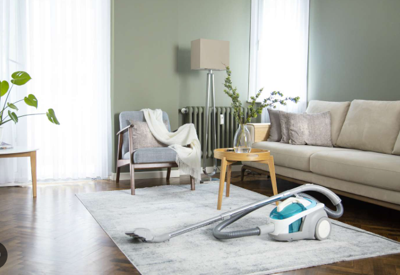

We’re all guilty of skipping a few spots when cleaning. We’d happily spend an entire afternoon getting the stovetop to sparkle and the floors to shine, then flop straight onto a sofa that hasn’t seen a vacuum since delivery day.
It’s a classic ‘out of sight, out of mind’ situation, at least until you find petrified chips stuck to your throw pillows.
Want to avoid the ‘crunchy’ cushion phase and make that investment last a decade? Keep reading to discover simple habits that’ll save your furniture from an early retirement.
Skipping Regular Vacuuming
Every time you sit on your sofa or armchair, you leave behind a little gift: skin cells, sweat, crumbs, pet hair, and whatever you’ve brought in with you from outside. Do that day after day without vacuuming, and you’ve basically turned your furniture into a compost bin.
The problem is, all of that gets trapped deep in the fibres, and once it’s settled in, a quick once-over won’t cut it.
So, what can you do about this? Just try to vacuum your upholstery at least once a week, going over the armrests, seat cushions, and the back. And if you’ve got pets or kids, bump that up to two or three times a week.
For the best results, use a brush attachment for fabric surfaces and switch to a narrow nozzle for the seams.
If allergies are part of the picture, make sure your machine comes with a HEPA filter. Otherwise, you’ll just end up blowing dust mites into the air and breathing them back in—definitely not the kind of recycling anyone wants.
Letting Spills Sit
You’re probably familiar with this scenario: something spills, you notice it, glance around, and then throw a cushion on top of it as if that’s a solution.
Unfortunately, though, your furniture won’t wait for you to deal with it on your schedule. Liquid soaks into fibres within seconds, and once it dries, it locks in dirt and bacteria, which is how a small spill can turn into a stubborn stain.
So, instead of leaving it for ‘later,’ blot the area straight away with a clean cloth, working from the edges inward to avoid spreading the mark.
And when it comes to actually cleaning the fabric, you don’t need anything fancy. For most everyday spills, a simple mix of water and white vinegar will handle it, while oil or grease marks just need a small amount of dish soap.
You can easily pick up these products at Woolworths on your way home, so you don’t have an excuse to ignore spills anymore.
Forgetting to Clean Cushions
Well done—you’ve started vacuuming regularly, and you’re handling spills like a pro. But when was the last time you flipped your cushions over and checked what’s going on underneath?
Cushions soak up more than you’d think. They absorb sweat, hold onto moisture, and catch whatever makes its way through the surface fabric. And since the underside and inner covers rarely get any attention, all of that builds up over time.
Leave it long enough, and you’ll end up wondering how something you sit on every day managed to get that dirty and worn without you noticing.
If the covers come off, wash them every one to three months, following the care label so you don’t end up shrinking them. However, if they don’t, make sure to vacuum both sides instead of just the surface you see.
While you’re at it, flip and rotate the cushions every couple of weeks to spread out wear and give any trapped moisture a chance to air out.
Ignoring the Crevices
The gap between your seat cushions and the armrests is basically a lost-and-found bin that nobody ever checks.
Crumbs, hair, coins, the pen you’ve been looking for since April, and a steady build-up of dust all end up down there, and none of it’s doing your furniture any favours.
After a while, moisture gets trapped against the fabric from the inside, which speeds up wear and creates the perfect environment for dust mites. So, while you might think you’re doing a stellar job because it looks fine on the surface, it’s an entirely different story underneath.
To avoid this, grab a narrow nozzle attachment and vacuum between the cushions, along the armrests, where the back meets the seat base, and underneath the frame.
It’ll just take you an extra minute or two, which certainly beats replacing your entire lounge set a few years down the line.
Using the Wrong Cleaning Product
When something needs cleaning, you probably reach straight for whatever you can find under the sink and get to work. But when it comes to upholstery, that confidence can backfire fast.
Use the wrong product, and you might strip the colour, leave behind a sticky residue that attracts even more dirt, or slowly weaken the fibres.
Not sure what to use? For most fabric pieces, upholstery cleaners and natural ingredients, like vinegar, are your best bet. Leather, on the other hand, needs a leather-safe product, followed by a conditioner to keep it from drying out and cracking.
In any case, don’t go all in straight away. Test your product on a hidden spot first, let it dry completely, then decide if it’s safe to use across the rest.
Now, if your furniture is past the point of a DIY fix, you can always bring in a Melbourne couch cleaning service to handle it.
These experts have the right equipment and cleaners to treat different materials correctly. So, they won’t accidentally bleach your three-seater because they grabbed the wrong product from the cupboard.
It’s time to stop hiding spills with pillows or pretending those crevices don’t exist. You now have all the hacks you need to keep your furniture fresh 24/7.
So, try out our tips today and don’t wait for the dust mites to stage a takeover. Soon enough, you’ll go back to relaxing in your comfortable armchair instead of wondering where that odd smell is coming from.

(0) comments
We welcome your comments
Log In
Post a comment as Guest
Keep it Clean. Please avoid obscene, vulgar, lewd, racist or sexually-oriented language.
PLEASE TURN OFF YOUR CAPS LOCK.
Don't Threaten. Threats of harming another person will not be tolerated.
Be Truthful. Don't knowingly lie about anyone or anything.
Be Nice. No racism, sexism or any sort of -ism that is degrading to another person.
Be Proactive. Use the 'Report' link on each comment to let us know of abusive posts.
Share with Us. We'd love to hear eyewitness accounts, the history behind an article.