
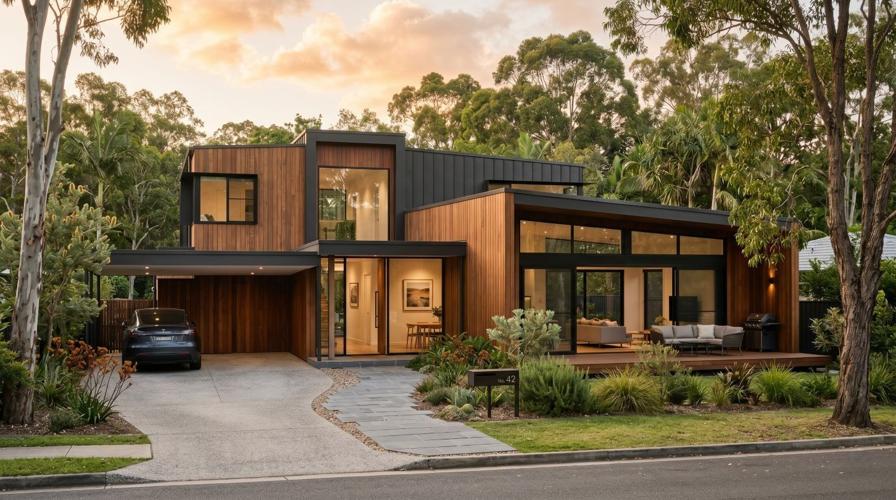

Luxury isn’t about where the house was built
Yes, a factory-built house can feel like a luxury property. I’ve walked through enough of them to say that without crossing my fingers behind my back.
The real question isn’t whether the home came off-site or on-site. It’s whether the finished place feels sharp, solid, and properly resolved. That’s what people notice. Not the transport method. Not the sales pitch. Not the glossy brochure with a couple in linen standing next to a gum tree.
Luxury comes down to execution. Room proportions. Natural light. Acoustic control. Joinery that doesn’t look like it came from a budget apartment fit-out. Bathrooms that feel calm instead of cramped. A kitchen that works when two people are in it at once.
I’ve seen conventionally built homes with seven-figure budgets feel cheap because the planning was lazy. I’ve also seen factory-built homes feel calm, precise, and expensive in all the right ways because someone actually thought the whole thing through.
That’s the difference. Not romance. Not buzzwords. Decisions.
Most homes miss the mark for boring reasons
When people imagine luxury, they usually jump straight to the finish. Stone benchtops. Tapware. Big tiles. Fancy lights. Fine. Those matter. But they’re nowhere near the whole story.
If the ceiling height feels mean, no tapware on earth will save it.
If the windows are in the wrong spot, the house will feel flat all day.
If the hallway is dark and the bedroom doors all crash into each other, the place will feel cheap even if every surface cost a fortune.
The last time I walked through a “high-end” building that had been marketed hard, I knew in about 45 seconds it wasn’t luxury. The ensuite looked polished in photos. In person, the toilet was jammed too close to the vanity, the mirror lighting was wrong, and the storage was an afterthought. That’s not premium. That’s styling.
Factory-built can actually improve quality
This is where people get stuck. They hear “factory-built” and picture something temporary, basic, or cut to the bone. That’s old thinking.
A controlled build environment solves a lot of problems that wreck quality on site. Weather delays. Wet materials. Trades turning up in the wrong order. Sloppy tolerances getting hidden behind plaster. The usual circus.
In a proper factory setup, you can get tighter supervision, cleaner sequencing, and more consistent workmanship. That doesn’t make every factory-built home good. Plenty still miss the mark. But the system itself is not the issue.
And yes, time matters. A well-run modular project can shave months off the build program. I’ve seen total delivery time come in roughly 30% faster than comparable site-built jobs once approvals were sorted and the design was realistic. Not magic. Just fewer moving parts getting smashed by weather and trade delays.
The floor plan does the heavy lifting
If you want a luxury feel, start with the plan. Always.
A house can wear expensive finishes and still feel awkward. Once the layout is wrong, you’re putting lipstick on a wheelie bin.
Good plans do a few things well:
They make the entry feel intentional
They give living areas proper width, not just square metre padding
They place windows for light, privacy, and furniture layout
They separate noise without making the house feel chopped up
They create storage where people actually need it
That last one gets ignored a lot. Then everyone acts surprised when benchtops fill up with clutter and the place loses its polish in a week.
With designer modular homes, the best results come when the design respects both architecture and manufacturing logic. That means clean spans, sensible module joins, and details that don’t fight the build method. If you try to force a bad design into a modular process, you’ll get a compromised house. If the design team knows what they’re doing, the result can be crisp, modern, and genuinely high-end.
Materials matter, but only when the basics are right

I’m all for good materials. I’m not against spending money where it counts. But people waste serious cash on visible upgrades while ignoring the stuff that makes a house feel expensive every day.
Here’s what tends to matter more than people think:
Solid doors with decent acoustic performance
Window frames that suit the climate and orientation
Good insulation and sealing
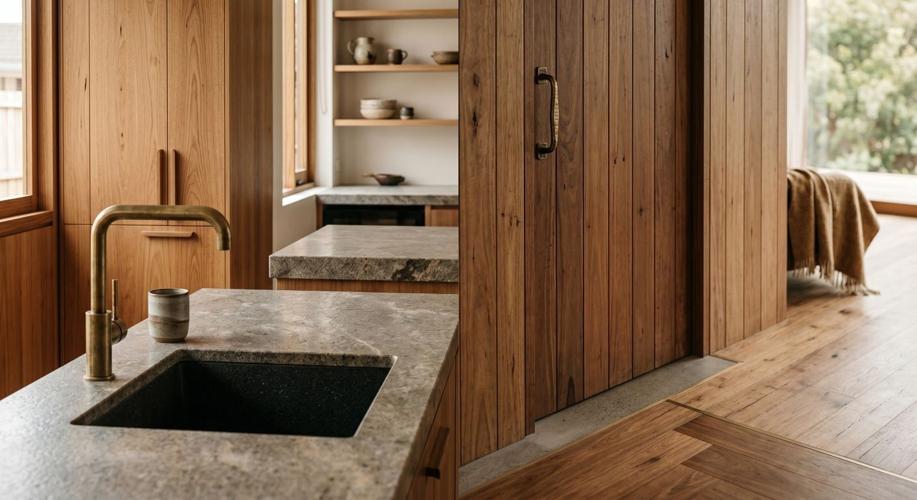
Joinery with clean lines and practical internals
Lighting that layers properly instead of just blasting the room
Flooring transitions that don’t look accidental
You notice these things in use, not just in listing photos.
Site response separates the good from the mediocre
A real luxury home belongs on its block. It doesn’t just land there.
That means orientation, access, fall, neighbours, breezes, views, and privacy all get handled upfront. If a home ignores the site, it will always feel generic, no matter how tidy the finishes are.
This is where some buyers get nervous about modular. Fair enough. They assume factory-built means fixed design with no flexibility. Sometimes that’s true. Usually with the cheaper end of the market. But if you’re working with decent designers and Brisbane custom home builders, you can get a home that responds properly to place instead of pretending every block is flat and forgiving.
I’ve worked on sites where transport access, crane positioning, and set-down areas had to be planned almost as carefully as the house itself. That doesn’t kill the luxury outcome. It just means the team has to know what they’re doing before anyone starts promising miracles.
What makes it feel expensive once you move in
This part gets missed in the sales process. Luxury is not just a first impression. It's in daily use.
Does the bedroom stay quiet?
Does the kitchen feel easy at 7 am when everyone’s half-awake and mildly annoying?
Can you open the house up to a breeze without turning the living room into a wind tunnel?
Do the bathrooms stay warm enough in winter and ventilated enough year-round?
That’s the stuff people remember. Not whether the house was assembled from modules or framed one stick at a time.
The homes that feel genuinely premium usually have a few shared traits:
Calm, consistent detailing
Strong natural light without overheating
Good storage that keeps mess out of sight
Quality underfoot and at hand, doors, handles, cabinetry, switches
A layout that still works when real life turns up
And real life always turns up. Usually with shoes, school bags, wet towels, and a dog that ignores boundaries.
Where factory-built still goes wrong
Let’s not kid ourselves. Some factory-built homes feel cheap because they are cheap.
The failures are predictable:
Bad proportions
Low-grade finishes used to fake sophistication
Weak connection details between modules
Poor transport planning that forces ugly compromises
Standard plans shoved onto unsuitable sites
Sales-led decisions replacing design-led ones
If you’re chasing luxury, you need to be ruthless about who you work with. Ask what’s included. Ask how the modules join. Ask about ceiling heights, acoustic treatment, engineering, service coordination, and what changes once the design hits production. If the answers get vague, walk.
I’ve done enough of this to know that vague now becomes expensive later.
So, can it feel like luxury?
Yes, absolutely. But only if the team treats it like a real home and not a fancy container with upgrades.
Factory-built doesn’t stop a house feeling premium. Poor design does. Cheap detailing does. Lazy planning does.
Get the layout right. Get the site response right. Spend money where people actually feel it. Keep the detailing disciplined. Don’t get hypnotised by brochures. That’s how you end up with a home that feels sharp, calm, and expensive in the ways that matter.
And if someone still says a factory-built house can’t feel luxurious? They’re usually reacting to old rubbish, not the good work being done now. Or they’ve never stood in a well-designed one. That happens more than it should.

(0) comments
We welcome your comments
Log In
Post a comment as Guest
Keep it Clean. Please avoid obscene, vulgar, lewd, racist or sexually-oriented language.
PLEASE TURN OFF YOUR CAPS LOCK.
Don't Threaten. Threats of harming another person will not be tolerated.
Be Truthful. Don't knowingly lie about anyone or anything.
Be Nice. No racism, sexism or any sort of -ism that is degrading to another person.
Be Proactive. Use the 'Report' link on each comment to let us know of abusive posts.
Share with Us. We'd love to hear eyewitness accounts, the history behind an article.