
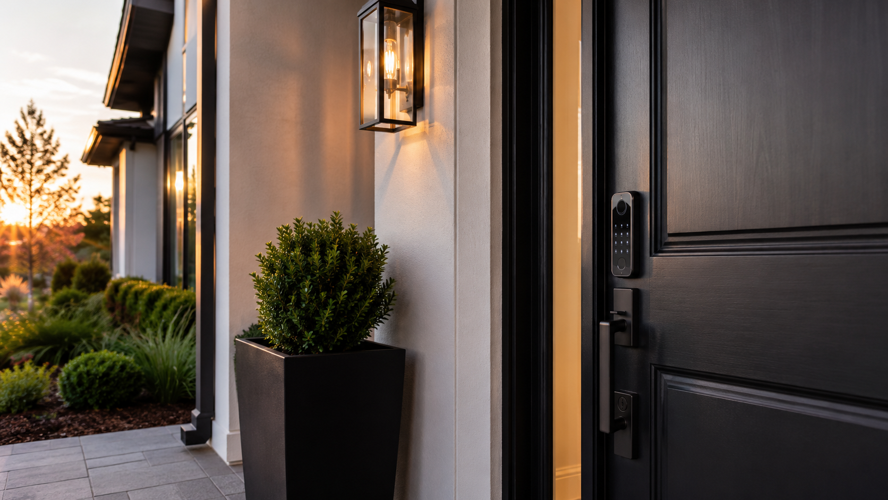
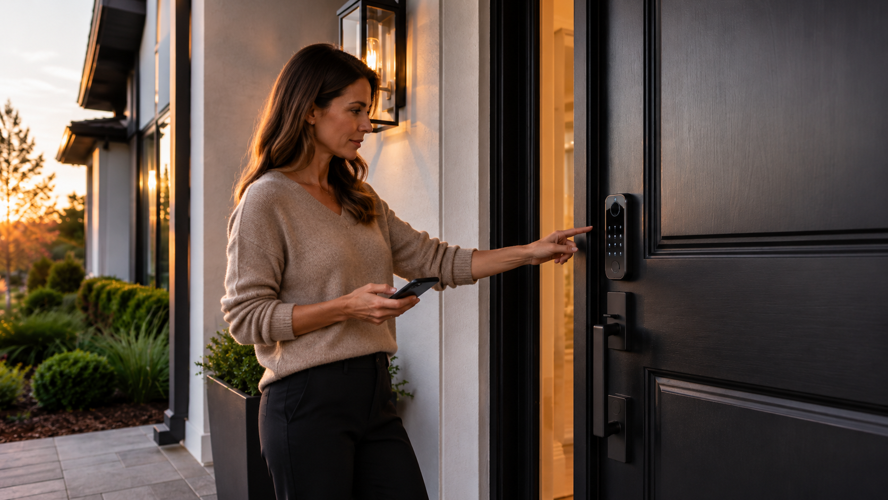
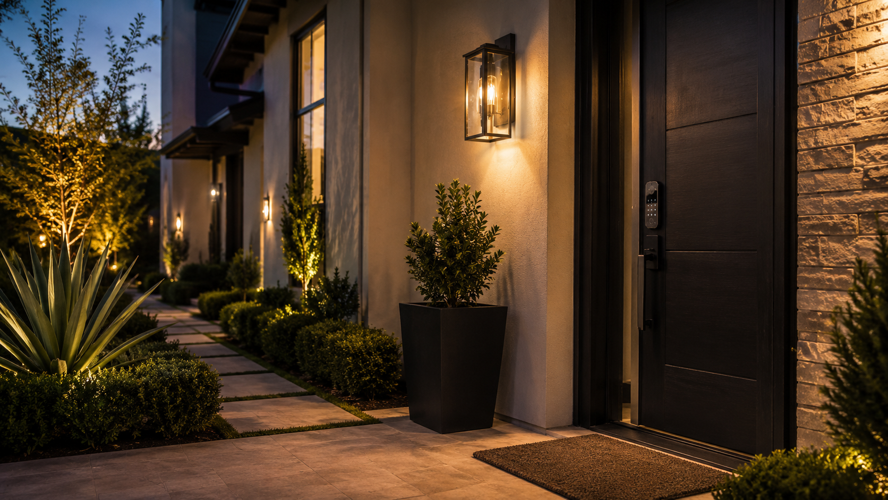

The front door has always said something about a home. It is the first welcome, the first layer of privacy, and often the first small test of how smoothly the day is going.
For years, that test involved keys.
Keys in a purse. Keys in yesterday’s jacket. Keys handed to a neighbor, copied for a contractor, or hidden under a planter in a way that felt clever until you remembered that everyone else has seen that movie too.
Then there is the houseguest problem.
Someone is coming to stay for a day or two. You are happy to have them. You want them to feel welcome and come and go as needed, so you head to the junk drawer for the spare key. It should be there. You put it there yourself. Or did you? Maybe you used it last month when you could not find your own keys and never put it back. Now a simple guest visit has turned into a drive to the hardware store, another copy made, another small key added to the world, and another thing that will almost certainly disappear before the next visit.
Keyless entry changes that entire little drama.
Instead of searching, copying, hiding, and hoping, you create a guest code. Your visitor can come and go. When the visit is over, you delete the code. If the system includes alerts, you may even know when the door opens and closes, without hovering or making the whole thing feel awkward.
That is where keyless entry becomes more than a gadget. It solves a real household problem in a way that feels modern, practical, and surprisingly calm.
As FINE has covered in its guide to top smart security upgrades for modern luxury homes, the best home technology is not only about protection. It is also about comfort, design, and ease of living.
Are Keyless Entry Systems Worth It for Homes?
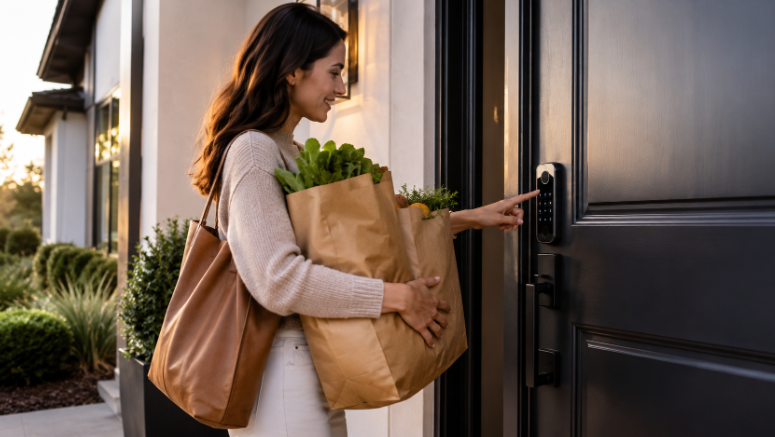
For many homeowners, yes. Keyless entry is worth considering because it makes the front door easier to manage.
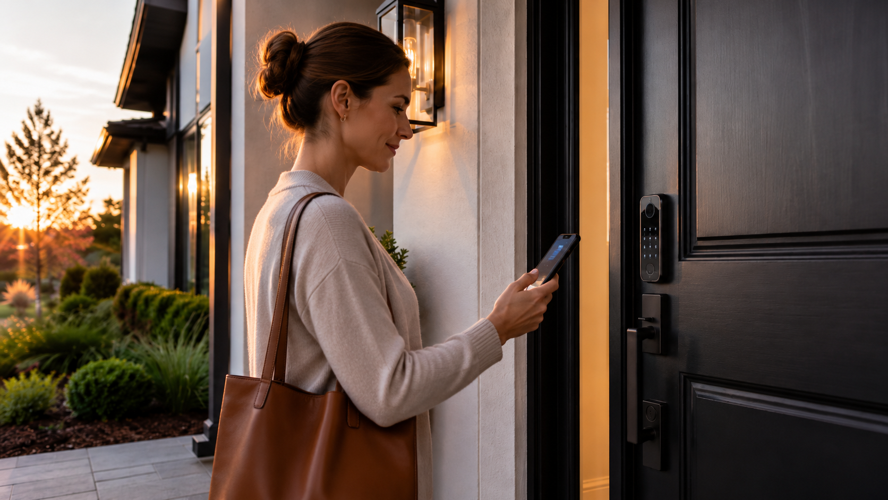
Instead of relying only on a physical key, a keyless entry system may use a keypad code, smartphone app, Bluetooth connection, fingerprint recognition, proximity feature, or a combination of options. The point is not to make the door feel high-tech for the sake of it. The point is to make everyday access less annoying.
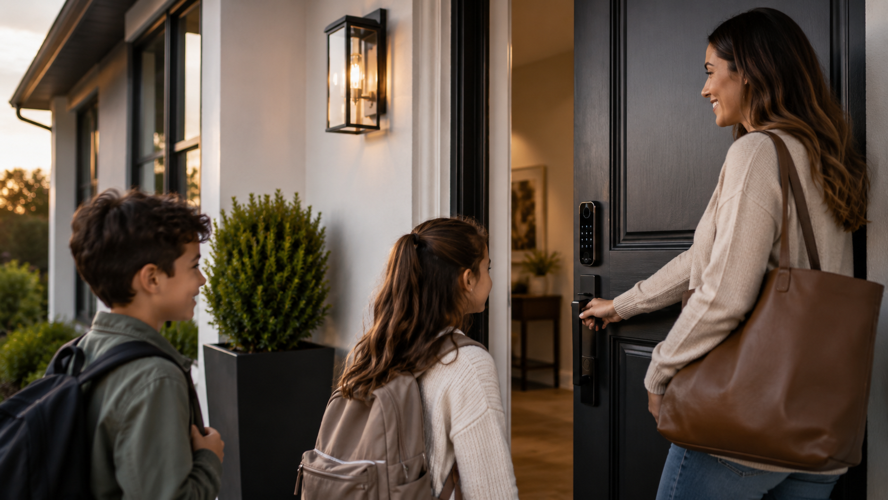
That matters in real life. Kids come home from school. A family member arrives early. A dog walker needs access while you are at work. A guest gets in before you return from the airport. These are not dramatic security events. They are ordinary household moments, and keyless entry makes them easier.
The main benefits are convenience, flexible access, smart-home compatibility, and fewer spare-key headaches. The main drawbacks are battery dependence, app or connectivity issues, installation cost, and the need for smart security habits.
In other words, keyless entry is useful when it makes life simpler. It is not worth it if it adds more confusion than convenience.
What Keyless Entry Actually Changes

The biggest change is not the technology. It is the routine.
A physical key has one job. It opens the door. But once it is copied, loaned out, or misplaced, it becomes harder to manage. You may not remember who has one. You may not know where the spare is. You may not want to ask a worker to return it after a project is done.
A code is different. It can be created for a moment, used for a purpose, and removed when that purpose is over.
That flexibility changes the feeling of the front door. It becomes less of a fixed barrier and more of a managed entry point. The home is still private, but access becomes easier to control.
For busy households, that can remove a surprising amount of friction from the week.
Guest Codes Make Hospitality Easier
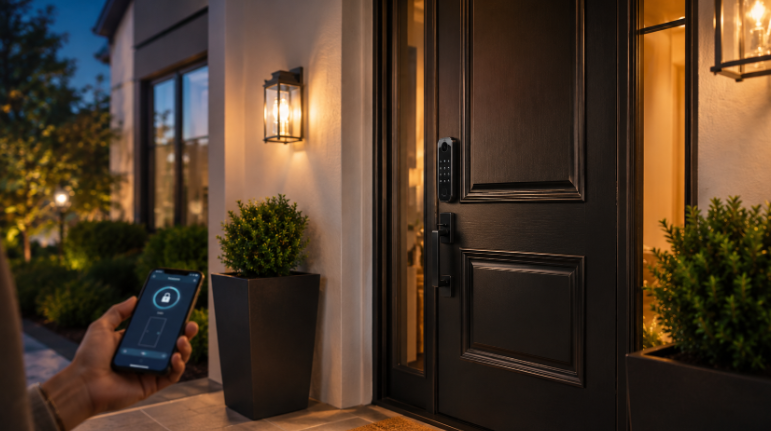
Good hospitality is not only about fresh towels and a comfortable bed. It is also about making arrival easy.
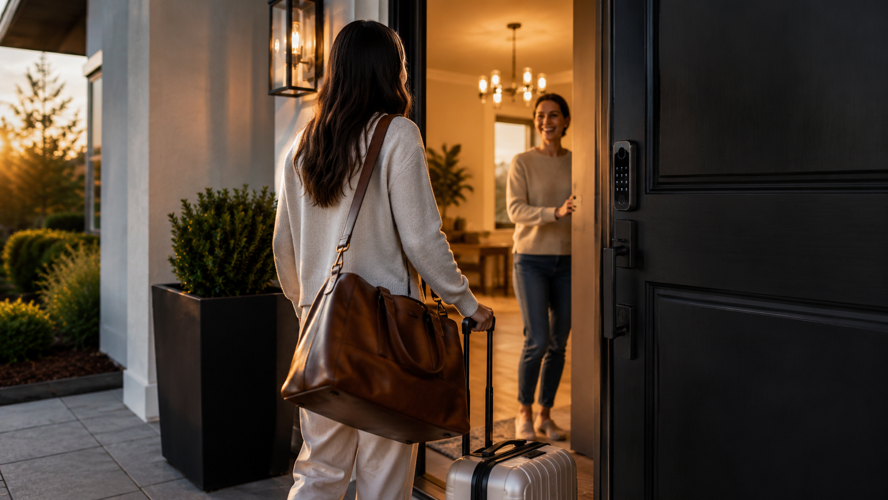
A guest code can make a house visit feel smoother from the start. Your guest does not have to wait outside if you are running late. You do not have to leave a key under a mat. No one has to coordinate a handoff in a parking lot or remember to return the spare before leaving.
This is especially helpful for:
- Weekend guests
- Visiting family
- House sitters
- Pet sitters
- Babysitters
- Short-term guests
- Maintenance appointments
- Scheduled service visits
The benefit is not just access. It is grace. A guest can arrive without stress. You can host without scrambling. And when the stay is over, the code can be removed without changing the lock or wondering where the spare key went.
That is the kind of small convenience people remember because it makes the home feel thoughtful.
How Keyless Entry Fits Into a Smart Home

Keyless entry also fits naturally into a larger smart-home system.
A front door can connect with lighting, cameras, alarms, thermostats, and mobile apps. Unlocking the door could turn on the entry light. Locking it at night could become part of a routine that checks the home’s main entry points. A notification could confirm that someone arrived safely or that the door was locked after a busy morning.
This is where smart-home technology works best. It should not feel like a pile of unrelated gadgets. It should feel like the house is quietly helping.
For homeowners thinking beyond the front door, FINE’s article on building a complete home security system is a helpful reminder that cameras, locks, lighting, sensors, and monitoring work best when they are planned together instead of treated as separate pieces.
The front door is a natural place to start because it is already part of every arrival, every departure, and every guest visit.
Bluetooth Can Make Entry Feel More Seamless

Bluetooth matters because it can make keyless entry feel less like another step and more like a natural part of coming home.
Some systems allow a phone to communicate with the lock when the homeowner is nearby. Instead of pulling out keys or entering a code every time, the door can respond through short-range wireless communication.
That can be useful when your hands are full, when it is raining, when you are arriving late, or when you simply want the technology to stay out of the way.
The National Institute of Standards and Technology notes that Bluetooth is widely used for short-range wireless communication in consumer devices, and its Guide to Bluetooth Security explains why pairing, configuration, and security settings matter.
For homeowners, the practical lesson is simple. Bluetooth can add convenience, but it still needs smart setup. Keep apps updated, use strong account passwords, enable available security settings, and know what backup option exists if a phone battery dies.
Wireless should feel convenient, not careless..
Security Still Depends on Smart Habits

A keyless entry system can make access easier, but it still depends on responsible habits.
Obvious codes should be avoided. Birthdays, anniversaries, street numbers, repeating digits, and simple patterns are easy to remember, but they are also easier to guess. Codes should be changed when they are no longer needed, especially after guest stays, service visits, or home projects.
Connected systems should also be maintained. The Federal Trade Commission advises homeowners to keep internet-connected devices updated, use available security features, and secure the apps connected to those devices. Its guide to securing internet-connected devices at home is a useful resource for smart locks, cameras, thermostats, speakers, and other connected home technology.
The home Wi-Fi network also matters. The FTC recommends encryption and strong router settings in its advice on securing your home Wi-Fi network, which is important because many smart-home devices depend on the privacy and strength of that network.
The goal is not to make the house feel complicated. The goal is to keep convenience from turning into carelessness.
What to Look For Before Making the Switch

Before choosing keyless entry, homeowners should think about how the door is actually used.
A front door used by the whole family may need a simple keypad, easy backup access, and a design that looks good from the street. A side door used by service providers may need temporary codes more than app features. A smart-home-focused household may care most about alerts, automation, and compatibility.
Useful features to consider include:
- Multiple access options
- Temporary or guest codes
- Easy code changes
- Battery alerts
- Backup access method
- Activity history
- Strong app security
- Smart-home compatibility
- Weather resistance for exterior use
- A design that suits the home’s architecture
The design matters more than people sometimes admit. A front door sets the tone for the house. For homeowners planning a larger entry refresh, FINE’s look at front door styles homeowners love in 2026 offers useful inspiration for balancing curb appeal with everyday function.
The best keyless entry choice should feel secure and practical without making the entry look overly technical.
The FINE Take
Keyless entry works best when it makes the home feel easier to live in, not more complicated.
That is why the right product matters. A smart lock should not feel like a science project at the front door. It should be easy to install, easy to use, secure enough to trust, and attractive enough to belong on a beautiful home.
One standout example is the Kwikset Halo Select Plus Touchscreen Wi-Fi and Matter Enabled Smart Lock with Apple Home Keys. It fits naturally into the conversation because it delivers the same practical benefits this article is built around: keyless access, guest codes, app control, smart-home integration, and a more polished front-door experience.
Kwikset has long been known for quality locksets, but the Halo Select Plus feels especially thoughtful because the details are designed for real homeowners, not just tech enthusiasts. The installation is guided through the app with easy-to-follow visuals, and Kwikset notes that the lock can be installed in minutes with just a screwdriver. For this author/homeowner, the process took less than 10 minutes from start to finish. The necessary installation parts were included, along with the batteries, so there was no last-minute search for missing pieces.
The everyday features are where the lock really makes sense. The Halo Select Plus offers remote lock and unlock, guest access sharing, activity history, door-status alerts, and smart-home compatibility with Amazon Alexa, Apple Home, Google Home, and Matter connectivity through Thread. It also supports Apple home keys, allowing users to tap an iPhone or Apple Watch to unlock. For homeowners who still want a physical backup, Kwikset includes physical keys, and its SmartKey Security feature allows the lock to be re-keyed to work with existing keys.
That combination matters because keyless entry is not only about convenience. It is about trust. A guest code is useful. A door-status alert is reassuring. A lock that can still be opened with a physical key is practical. A design that looks elegant on the front door makes the upgrade feel like part of the home, not a gadget attached to it.
The real luxury is not simply unlocking a door with a phone or code. It is welcoming a guest without hunting for a spare key. It is letting the house sitter in without leaving a key under a pot. It is checking that the door is locked without getting out of bed. It is removing one small household hassle from a life that already has enough of them.
Like any smart-home upgrade, keyless entry should be chosen thoughtfully. It comes with responsibilities, from battery checks to code management to basic cybersecurity. But when the product is designed well, those responsibilities feel manageable rather than intimidating.
A beautiful home should welcome the people who belong there. With the right keyless entry system, that welcome becomes easier, smarter, and more secure.


(0) comments
We welcome your comments
Log In
Post a comment as Guest
Keep it Clean. Please avoid obscene, vulgar, lewd, racist or sexually-oriented language.
PLEASE TURN OFF YOUR CAPS LOCK.
Don't Threaten. Threats of harming another person will not be tolerated.
Be Truthful. Don't knowingly lie about anyone or anything.
Be Nice. No racism, sexism or any sort of -ism that is degrading to another person.
Be Proactive. Use the 'Report' link on each comment to let us know of abusive posts.
Share with Us. We'd love to hear eyewitness accounts, the history behind an article.