
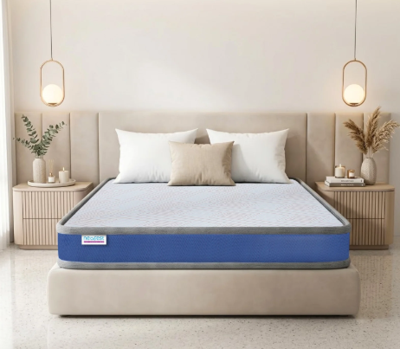

Two people sharing a queen bed get about 30 inches of mattress each, which is roughly the width of a standard bar stool. Add a restless sleeper, a large dog that claims the foot of the bed, or simply two adults who like a bit of personal space, and that number starts to feel tight by the second week. Most couples do not realize how cramped a queen actually is until they have already lived with it for a year.
Before you decide which size to buy, it helps to understand what actually changes between the two, since the differences go well beyond a few extra inches. Room dimensions, frame footprint, bedding cost, and even how the bed reads as a focal point in the room all shift once you move from queen to king. If you have already measured your space and are leaning toward the bigger option, a king size mattress gives two adults close to their own individual sleeping zone, but it is worth checking the five differences below before you commit.
Measuring the Actual Size Difference
A queen mattress measures 60 inches wide by 80 inches long. A king measures 76 inches wide by 80 inches long, the same length but 16 inches wider, which works out to roughly the width of an extra pillow on each side. Once you factor in a frame and headboard, the footprint typically grows to about 62 by 84 inches for a queen and 78 by 84 inches for a king.
That 16-inch gap sounds modest until you picture it across a shared bed. Split evenly, it gives each sleeper close to 6 to 8 additional inches of personal space, enough to stop shoulders and elbows from crossing the centre line during the night. For anyone who already feels crowded in a queen, this is usually the single biggest factor in the decision.
Checking Whether the Room Can Actually Fit It
Mattress size is only half the equation, since the room has to absorb the extra width without losing traffic flow. A general guideline is to keep the bedroom at least 10 feet wide for a queen and 12 feet wide for a king, which leaves 24 to 30 inches of clearance on each side for walking, opening dresser drawers, and making the bed without bumping into a wall.
Doorways and hallways matter just as much as the room itself. A king mattress is flexible enough to bend slightly for tight corners, but a king bed frame, particularly a solid wood or upholstered one, often ships in pieces specifically because it will not clear a standard 32-inch doorway in one assembled unit. Measure the path from the front door to the bedroom before assuming the frame will fit.
Comparing Cost Beyond the Mattress Itself
The mattress price gap between queen and king is real, but it is usually smaller than people expect, often landing in the range of 20 to 35 percent more for a king at a similar comfort tier. Where the cost adds up faster is everything that surrounds the mattress: sheets, duvet covers, mattress protectors, and bed skirts are all sized differently and priced as a separate line item once you size up.
A queen flat sheet typically measures around 90 by 102 inches, while a king flat sheet runs closer to 108 by 102 inches, and the difference shows up at checkout every time you replace linens. Over several years of ownership, bedding alone can close a meaningful portion of the gap between what looked like a small price difference in the showroom.
Matching Mattress Size to How the Bed Is Actually Used
A queen suits a single sleeper who wants room to stretch out, a couple in a smaller bedroom, or a guest room where space is limited but comfort still matters. It is also the easier size to move between homes, since it fits through most standard doorways and stairwells without disassembly.
A king works best for couples sharing the bed long-term, especially if children or pets regularly climb in, or if either sleeper moves a lot during the night. Some couples solve the same problem with two twin XL mattresses pushed together under one frame, which creates a king-sized surface while letting each side have a different firmness, a workaround worth considering if partners have very different comfort preferences.
Queen vs. King Mattress at a glance (original)
Feature | Queen | King | Why it matters |
|---|---|---|---|
Mattress width | 60 in | 76 in | King gives each sleeper roughly 38 in of personal width, close to a twin bed each |
Mattress length | 80 in | 80 in | Same length in both, so height clearance is not a factor in the decision |
Frame footprint (approx.) | 62 × 84 in | 78 × 84 in | King needs about 16 in more wall width once the frame and headboard are added |
Minimum room width recommended | 10 ft | 12 ft | Leaves at least 24 to 30 in of clearance on each side for walking and dressers |
Bedding cost difference | Baseline | 20–35% higher | Sheets, duvet covers, and mattress protectors are sized and priced separately |
Weighing the Visual Scale in the Room
A bed is almost always the largest piece of furniture in a bedroom, so its scale sets the visual weight of the entire space whether that was the plan or not. A king mattress against a smaller wall can crowd the room and shrink the path on either side to an uncomfortable squeeze, while a queen in a generously sized primary bedroom can look slightly lost without a substantial headboard or layered bedding to anchor it.
A reasonable rule of thumb is to leave at least 36 inches of clearance at the foot of the bed for walking and dressing, and to keep nightstands proportional rather than oversized on either side. If the room is on the smaller side, a queen with a low-profile frame usually reads better as a focal point than a king that pushes right up against the walls.
Pulling It Together
The decision between queen and king comes down to three practical checks: the actual square footage of the bedroom, how many people and pets regularly share the bed, and the long-term cost of bedding once the mattress itself is paid for. Measure the room first, since that single step rules out one option faster than any comfort preference will.
If the numbers work out in favour of going bigger, the king size mattress selection at The Brick covers a range of comfort levels and firmness options, so the next step is simply matching that size to the support type that suits how you actually sleep.
FAQ
How much wider is a king mattress than a queen?
A king mattress is 76 inches wide compared to 60 inches for a queen, a difference of 16 inches. Both sizes share the same 80-inch length, so the extra space is entirely in width, not length.
What size bedroom do you need for a king bed?
A bedroom at least 12 feet wide is the common recommendation for a king bed, which leaves roughly 24 to 30 inches of clearance on each side once the frame and nightstands are in place. Smaller rooms can technically fit a king, but walking space and dresser access become noticeably tighter.
Is a king mattress worth it for one person?
It depends on sleeping habits and budget more than need. A single sleeper who moves around a lot or likes extra space may appreciate the room, but a queen is usually sufficient and easier to furnish, move, and outfit with standard bedding sizes.
Do king sheets fit a queen mattress?
No. King flat and fitted sheets are cut for a 76-inch-wide mattress and will not sit properly on a 60-inch queen, leaving excess fabric that bunches at the corners. Always match sheet size to the exact mattress dimensions rather than rounding up.
Can two twin XL mattresses replace a king?
Yes, two twin XL mattresses placed side by side create a sleeping surface close to king dimensions, with the advantage of letting each side have a different firmness level. The trade-off is a visible seam down the middle unless the frame and topper are designed to minimize it.
(0) comments
We welcome your comments
Log In
Post a comment as Guest
Keep it Clean. Please avoid obscene, vulgar, lewd, racist or sexually-oriented language.
PLEASE TURN OFF YOUR CAPS LOCK.
Don't Threaten. Threats of harming another person will not be tolerated.
Be Truthful. Don't knowingly lie about anyone or anything.
Be Nice. No racism, sexism or any sort of -ism that is degrading to another person.
Be Proactive. Use the 'Report' link on each comment to let us know of abusive posts.
Share with Us. We'd love to hear eyewitness accounts, the history behind an article.