
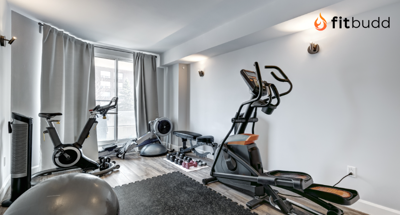

There was a time when a home gym meant a treadmill in the basement, a set of dumbbells in the corner, and a promise to use it. That era is over.
The private home gym has become one of the most coveted and carefully considered spaces in the luxury home. Home wellness spaces now rank as a top-three priority among high-net-worth homeowners, and properties with dedicated gyms and recovery suites routinely see a 5-12% increase in resale value.
More meaningfully, searches for home gym spaces are up 46% as homeowners embrace a broader, more holistic approach to wellness at home.
For those who have the opportunity to design or redesign this space with genuine intention, the result is not simply a functional room. It is an expression of how you live.
Why the Private Wellness Space Has Become Non-Negotiable
The shift toward home-based fitness is not a pandemic-era relic. It reflects something more permanent: a growing preference among affluent homeowners for experiences that are private, personalized, and entirely on their own terms.
A commercial gym, however well-equipped, requires scheduling, travel, and a shared environment that offers little control over the experience. A thoughtfully designed home gym offers something categorically different.
The music, lighting, temperature, equipment, and training structure are all curated to support one person's specific goals. That level of personalization is genuinely difficult to replicate anywhere else.
Today, luxury homes are incorporating wellness through natural light, calming materials, spa-inspired design elements, and dedicated fitness spaces that feel as beautiful as the rest of the home. In this context, the home gym is no longer separate from the house's design sensibility. It is an extension of it.
Designing a Space That Performs and Looks the Part
The most common mistake in home gym design is prioritizing equipment over environment. A room filled with expensive machines but no attention to flooring, lighting, acoustics, or air quality will never feel like the kind of space that makes you want to use it every day.
The reverse is rarely true. A beautifully designed room with an excellent selection of equipment is almost always in use.
Layout and Spatial Planning
Before selecting a single piece of equipment, the layout deserves serious thought. The most functional home gyms clearly separate zones: a strength area, a cardio zone, a stretching or mobility space, and, in larger installations, a recovery area for a cold plunge, sauna, or massage.
Ceiling height matters more than floor area. A room with 12-ft ceilings and 600 square feet is a better gym than one with 8-ft ceilings and 1,000 square feet.
Overhead movements, cable machines, and any rack work require genuine vertical clearance. This is a constraint worth identifying before allocating the space.
Natural light, where possible, transforms the feel of a training space. A gym with windows or a skylight is fundamentally more energizing than one that relies entirely on artificial lighting.
Where natural light is not available, layered artificial lighting with warm tones at lower intensities for morning sessions and brighter, cooler light for high-intensity work makes the space more versatile.
Equipment Selection for the Discerning Buyer
The principle that applies to every other room in a luxury home applies here: invest in quality rather than volume. A curated selection of exceptional equipment outperforms a room crowded with mid-range machines in every measurable way, including longevity, performance, and aesthetic coherence.
Brands like Eleiko, NOHrD, Concept2, and Woodway produce equipment that functions as heirloom tools: built to last for decades, designed with genuine craft, and capable of outperforming machines at three times the price.
A solid rack, an adjustable bench, a quality set of dumbbells, and one well-chosen cardio machine will cover the full spectrum of training needs for most people, without the visual clutter that undermines an otherwise considered space.
Materials and Finish
The materials used in a home gym should meet the same standards as those in any other room in the house. Rubber flooring has evolved considerably: premium interlocking tiles and poured rubber surfaces are now available in textures and finishes that sit comfortably alongside high-end interior design rather than undermining it.
Wall treatment is worth particular attention. Mirror coverage, acoustic panels in fabric finishes that complement the room's palette, and feature walls in stone or specialist paint all contribute to an environment that feels designed rather than assembled.
Naming Your Gym: The Detail That Makes It Feel Like Yours
This may seem like a minor point, but the spaces within a home that carry names develop a distinct identity. The naming of a private gym, however informally, creates a psychological anchor that makes the space feel intentional and owned rather than incidental.
Many homeowners choose names that reflect a personal philosophy, a family name, a location, or simply a tone. The Foundry. The Ridge. Eleven. Something private that carries meaning without needing explanation.
For those designing a new space who want to explore options before committing, an AI gym name generator can surface name directions based on the tone and identity you want the space to carry, from understated and architectural to bold and performance-driven.
It is a useful early step in the design process, sitting alongside decisions about color palette and equipment, that helps define the character of the room before it is built.
Bringing Professional Coaching Into the Private Space
A beautifully designed gym is only as valuable as the training that happens inside it. For homeowners who want to make genuine use of the space beyond the first few enthusiastic weeks, professional guidance makes the difference between a room that is used daily and one that gradually becomes a very expensive storage solution.
Private personal training has long been the standard for those who want expert programming, accountability, and results. The shift toward digital coaching delivery has made this experience significantly more flexible.
Coaches working through dedicated platforms can deliver fully personalized programs, track progress, conduct regular check-ins, and adjust programming in real time without requiring fixed appointment schedules.
FitBudd is personal trainer software that gives coaches their own branded platform to manage clients, deliver programs, and handle the operational infrastructure of professional coaching.
For clients, this means receiving a structured, expert-designed training experience in the comfort of their own gym, accessible on demand, and calibrated to their specific goals and equipment.
The combination of a well-designed private space and a properly delivered coaching program is, in practice, a superior fitness environment to almost any commercial alternative.
The Finishing Details That Define the Experience
Once the structure and equipment are in place, it is the finishing details that move a home gym from functional to exceptional.
Climate Control
Climate control deserves the same attention here as in any other room. A gym that is too warm to train in during summer or too cold to warm up in during winter will simply not be used at certain times of year. A dedicated HVAC zone with independent control solves this entirely.
Audio Experience
Sound shapes the training experience more than most people appreciate before they have it right. A built-in audio system with speakers positioned for even coverage, rather than simply placed in corners, transforms a session in a way that Bluetooth speakers never quite manage.
Recovery and Hydration
Hydration and recovery stations are increasingly common in premium installations. A chilled water point, a small refrigerator for cold towels and recovery drinks, and a dedicated area for foam rolling and stretching all enhance the space's functionality without requiring significant square footage.
Technology Integration
Technology integration is best planned at the build stage rather than retrofitted. Screen mounting points, discreet cable management, charging stations, and smart lighting control all become considerably more expensive and visually intrusive when added after completion.
The home gym, at its best, is one of the most personal rooms in a house. It reflects how you move, what you value, and the standard you hold for your own wellbeing.
Designed with the same care and intention as the rest of the home, it becomes not just a space to exercise in, but a space that makes exercising feel like a privilege rather than an obligation.
That shift, from reluctant habit to anticipated ritual, is ultimately what the best home gym design achieves. And it is, without question, worth investing in.


(0) comments
We welcome your comments
Log In
Post a comment as Guest
Keep it Clean. Please avoid obscene, vulgar, lewd, racist or sexually-oriented language.
PLEASE TURN OFF YOUR CAPS LOCK.
Don't Threaten. Threats of harming another person will not be tolerated.
Be Truthful. Don't knowingly lie about anyone or anything.
Be Nice. No racism, sexism or any sort of -ism that is degrading to another person.
Be Proactive. Use the 'Report' link on each comment to let us know of abusive posts.
Share with Us. We'd love to hear eyewitness accounts, the history behind an article.