

For a while, the most photographed kitchens seemed determined to remove every trace of visual irregularity. Cabinet fronts were flat, pale and nearly anonymous, with appliances hidden and hardware reduced to the smallest possible detail.
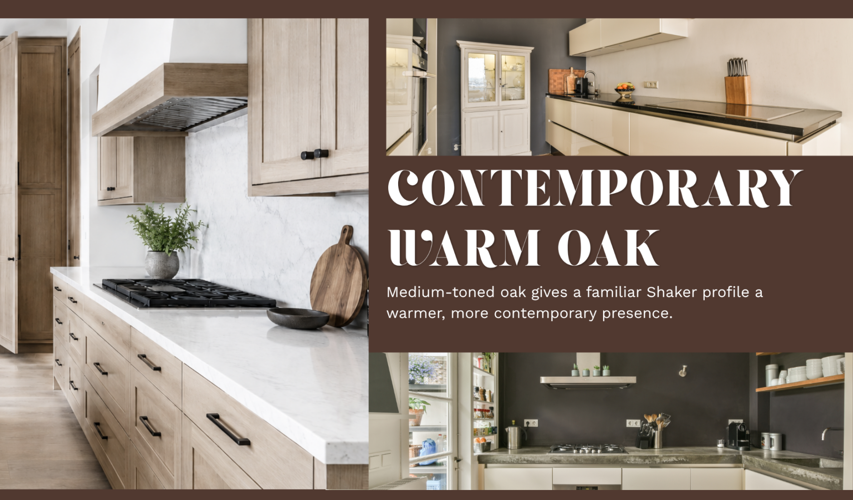
Wood is changing the mood. Oak, walnut, maple and richly stained finishes are bringing grain, tonal variation and a sense of permanence back into the kitchen. Even streamlined cabinetry now has room for knots, figuring, tactile handles and furniture-like details.
Before choosing a door profile or timber, it helps to think through kitchen remodeling ideas that make everyday living feel easier. Drawer placement, appliance clearances, pantry access and working zones have a greater effect on daily use than the finish alone. Once the layout works, wood becomes a powerful way to give the room identity.
These six brands approach the material from very different directions.
1. RTA Wood Cabinets for approachable natural character
For homeowners who like the substance of wood cabinetry but want to keep the ordering and installation process relatively straightforward, RTA Wood Cabinets occupy a practical middle ground.
Its Highland Oak collection, for example, uses a medium stained oak Shaker front with solid rift-oak stiles, plywood cabinet boxes, dovetail drawers and soft-close hardware. The mix is useful because each material is doing a specific job rather than forcing solid timber into every component.
The wider selection of wood kitchen cabinets for modern homes also includes natural, stained, painted and contemporary options, allowing wood tones to be used across a full kitchen or selectively on an island.
With RTA cabinetry, installation planning deserves as much attention as the door finish. Boxes should be assembled square before they are fixed in position, while fillers, end panels and appliance openings need to be established from the final measured layout.
Those small tolerances have a major effect on how continuous runs of cabinetry read once the countertops arrive.
2. Reform for Scandinavian oak with a graphic edge
Reform treats wood less like a rustic accent and more like an architectural surface.
Its BASIS collection is available in natural and smoked oak veneer, with a circular carpenter-milled handle cut directly into the front. The detail is simple, but it interrupts the grain just enough to give an otherwise minimal kitchen a recognizable identity.
For an even quieter expression, the PROFILE collection uses natural or dark oak with a slim integrated aluminum handle. These combinations work particularly well in open-plan homes where kitchen cabinetry has to sit comfortably beside living-room furniture.
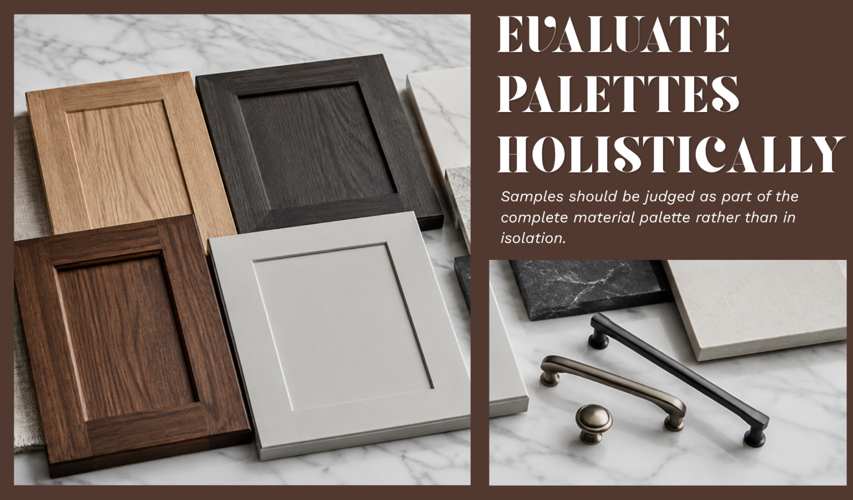
Oak can change significantly as daylight moves across a room, so samples are worth viewing beside the actual flooring, countertop and wall color. Reform itself recommends judging samples in the home before making the final material decision.
3. Semihandmade for changing the face of an IKEA kitchen
Semihandmade takes a different route. Instead of supplying the entire cabinet system, it produces fronts designed around IKEA cabinet boxes.
The appeal is flexibility. Its current kitchen range includes doors, drawer fronts, panels, trim and toe kicks for IKEA Sektion and older Akurum systems, with walnut available among its finishes. The walnut fronts use real wood veneer over an MDF core rather than solid timber, which provides the visual depth of grain while keeping the panel comparatively stable.
This approach makes planning especially important. The IKEA box layout should be settled before decorative panels and fronts are ordered. Finished side panels, fillers and toe kicks also need to be included in the elevation rather than treated as accessories at the end. In a slab-front wood kitchen, those perimeter details are what make modular cabinetry appear intentional.
4. deVOL for cabinetry with visible craft

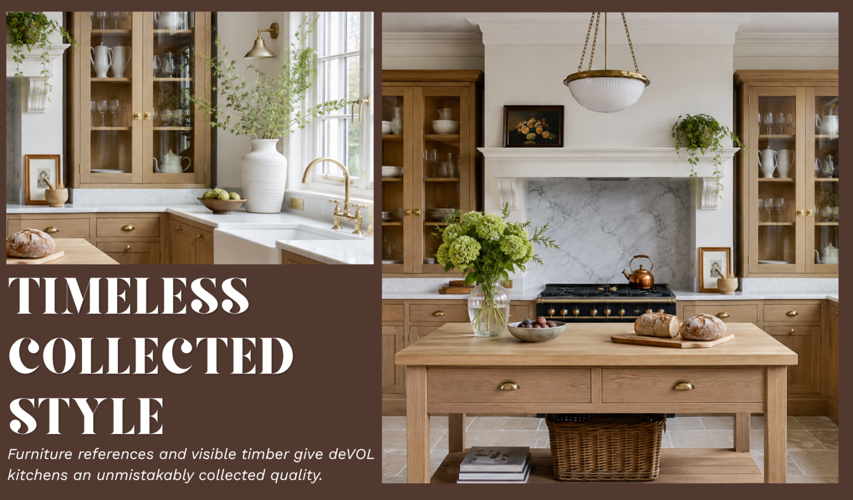
Few brands embrace the furniture side of kitchen cabinetry as enthusiastically as deVOL.
Its Haberdasher’s Kitchen uses solid oak on door frames and tambour-style elements, while other ranges combine maple, beech, birch plywood and oak according to the component. The Real Shaker Kitchen, for example, uses rock maple for doors and fascias, birch plywood carcasses and solid oak drawer boxes.
The effect is more layered than an uninterrupted wall of matching cabinetry. Glazing, timber grain, brass fittings and freestanding pieces help a kitchen feel assembled over time.
This is also where fine cabinetry design becomes more than a discussion about door style. Reveals, drawer proportions, cornices and transitions between fitted and freestanding pieces control whether a traditional kitchen feels graceful or crowded.
5. Plain English for architectural, made-to-fit cabinetry
Plain English approaches a kitchen almost as a room of fitted furniture.
Its bespoke service develops plans and elevations around appliances, services and worktops before the cupboards are delivered, installed and hand-painted on site. Natural materials and traditional joinery are central to the brand’s approach.
While many Plain English kitchens are known for color, oak regularly appears on worktops, drawers, shelving and interior details. In its projects, those timber elements sit beside painted cabinetry rather than competing with it, creating a useful lesson for anyone nervous about an all-wood kitchen.
Wood does not need to cover every elevation to establish warmth. A substantial oak worktable, exposed drawer interiors or one run of natural cabinetry can be enough.
6. Henrybuilt for wood as an architectural system
Henrybuilt is the most system-oriented brand in this group, but its handling of wood is unusually expressive.
The company works with American black walnut and white oak, selecting for particular grain and color characteristics. Rather than eliminating natural variation, panels are composed to preserve enough movement for the wood to feel individual.
Behind those fronts, Henrybuilt combines veneer-core panels, CNC milling and detailed interior components, which allows the visible cabinetry to remain restrained while storage becomes highly specific.
For this type of kitchen, grain sequencing should be reviewed alongside appliance elevations and panel joints. A beautifully figured walnut front loses some of its impact if neighboring doors interrupt the visual rhythm.
What to compare before choosing a wood cabinet brand

A warmer look is only the beginning. Cabinet construction, finish, sizing system and installation method all influence how the kitchen performs.
Look closely at what each component is made from. Solid wood, plywood, MDF and veneer have different properties, and a well-designed cabinet may use several of them strategically. Veneered or MDF center panels, for example, can provide greater dimensional stability than broad solid-wood panels while retaining a refined surface.
Then consider the installation sequence. Final appliance specifications should be established before cabinetry is released for production. Walls and floors also need checking for out-of-square or out-of-level conditions, especially when full-height panels, integrated refrigerators or tightly controlled reveals are involved.
Finally, view samples in the room itself. The current shift toward warmer, smarter and more personal kitchen design makes natural timber especially appealing, but oak that looks pale in a showroom can become noticeably warmer beside cream stone or under 2700K lighting.
Wood cabinetry is most convincing when its character comes from the material and the way the kitchen is put together. The strongest brands are not simply offering a fashionable brown finish. They are giving homeowners different ways to use grain, construction, proportion and craft to make the kitchen feel more personal.


(0) comments
We welcome your comments
Log In
Post a comment as Guest
Keep it Clean. Please avoid obscene, vulgar, lewd, racist or sexually-oriented language.
PLEASE TURN OFF YOUR CAPS LOCK.
Don't Threaten. Threats of harming another person will not be tolerated.
Be Truthful. Don't knowingly lie about anyone or anything.
Be Nice. No racism, sexism or any sort of -ism that is degrading to another person.
Be Proactive. Use the 'Report' link on each comment to let us know of abusive posts.
Share with Us. We'd love to hear eyewitness accounts, the history behind an article.