
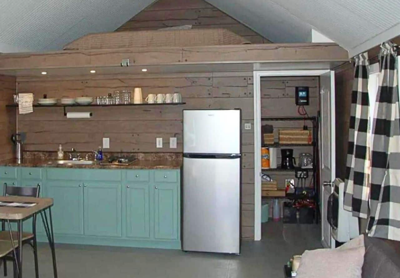

Living off-grid does not mean giving up comfort or living like a pioneer. However, it does require choosing your off-grid appliances differently than you would in a standard home connected to the municipal grid. In a cabin or tiny home, every single appliance affects your overall power system, water usage, heating setup, available space, and long-term maintenance needs.
The best off-grid appliances are not always the most expensive or technologically advanced models. Instead, the right choice depends heavily on how the property will be used, whether it is a seasonal retreat or a full-time residence, what power sources are available, and how much physical space the homeowner has.
To build a resilient and comfortable homestead, your appliance choices must align with the "heart" of your property. Planning your systems before making hardware purchases is the easiest way to prevent expensive energy upgrades.
What Makes an Appliance “Off-Grid”?
An off-grid appliance is engineered to operate independently of standard utility infrastructure or conventional home electrical setups. Some standard household AC appliances can work off-grid if the power system is sized correctly, but they may require a larger inverter, more battery capacity, and careful surge-load planning. Most cabins and tiny homes benefit from specialized appliances designed specifically for lower energy consumption, alternative fuel sources, and minimal remote maintenance.
Common off-grid appliance options include:
Solar-powered appliances: Devices that run directly on solar-fed battery banks.
Propane appliances: High-efficiency units for cooking, water heating, and refrigeration.
DC battery-powered appliances: Electronics utilizing direct current for optimal efficiency.
AC appliances used with inverters: Standard household items requiring careful conversion via an inverter to run on battery grids.
Wood-fired appliances: Hardware utilizing thermal energy for core heating.
Manual or non-electric options: Systems requiring human power to function.
These functional categories strip away reliance on public utilities, giving homeowners total autonomy over their daily energy loads.
Start With Your Power Source Before Choosing Appliances
Homeowners should never purchase appliances before conducting a load evaluation to understand their power setup. The power source definitely dictates which appliances are realistic, affordable, and reliable in remote locations.
Solar and Battery Systems
Solar arrays can power many daytime off-grid appliances, but components must align precisely. A device’s running watts, daily usage time, and surge watts must match the inverter’s capacity. Because refrigerators cycle on and off, their daily energy draw can be lower than their peak running wattage, but their startup surge still requires power margins.
Propane Appliances
Propane drastically reduces the overall electrical load, easily powering appliances like stoves, heaters, and water heaters. This tactic is especially valuable during winter, when shorter days, snow cover, and cloudy weather can sharply reduce solar production and make electric heating difficult to support from batteries alone.
DC vs. AC Appliances
DC appliances wire directly to battery banks, which eliminates conversion inefficiencies. Standard AC appliances may be easier to source, but they usually require an inverter, and many appliances perform best with a properly sized pure sine wave inverter.
Generator Backup
A generator provides reliable secondary power during heavily overcast periods or for brief, high-demand electrical appliance usage. However, running a generator should be a backup mechanism to reduce the base battery size—it should not serve as the primary strategy for quiet, long-term rural living.
Manual or Wood-Fired Options
Wood stoves, manual gear, thermal cookers, and outdoor clotheslines can reduce electrical demand and improve overall system reliability.
Consider How You’ll Use the Cabin or Tiny Home
Your appliance needs naturally fluctuate based on user capacity and frequency of visits. A setup that serves a weekender will quickly fail a full-time resident.
Weekend Use vs. Full-Time Living
A weekend cabin may only need basic refrigeration, heating, lighting, and a simple cooktop. A full-time tiny home usually needs more complete systems for laundry, hot water, food storage, sanitation, and year-round comfort.
Seasonal vs. Year-Round Use
Summer cabins rely on smaller refrigeration, ventilation fans, outdoor cooking setups, and direct water access. Conversely, a winter cabin must prioritize heavy-duty heating, structural freeze protection, and appliances capable of running without daily solar input.
One Person vs. Family Use
A single occupant may be able to get by with compact refrigeration and basic manual tools, while a family will usually need larger food storage, stronger sanitation systems, and more cooking capacity.
Choose the Essentials First
Homeowners must build a hierarchical ranking of appliances, prioritizing life-safety, heat, food storage, water transport, and sanitation before ever adding minor convenience devices.
Refrigeration and Freezers
Off-grid refrigeration requires balancing daylight exposure and fuel reserves. Propane refrigerators do not rely on solar production, which can make them useful for cabins with limited battery capacity, but they require proper ventilation, fuel supply, and maintenance. DC refrigerators can reduce inverter losses, but they still depend on a properly sized battery bank and reliable recharging from solar or backup power. Additionally, buyers thoroughly comparing spec details—like daily energy use, insulation quality, fuel types, and dimensions—will find that chest freezers are often more efficient than upright models because cold air tends to stay inside when the lid is opened.
Cooking Appliances
Electric cooking can draw significant sustained power, so propane stoves, efficient cooktops, thermal cookers, and wood-fired options are often practical choices for off-grid cooking. Propane provides a highly practical, consistent option that preserves your stored battery backup capacities.
Heating and Cooling
Heating unit choices fundamentally depend on local climate profiles, total dwelling size, and winterization limits. Wood stoves and propane heaters can be practical off-grid heating options, but they require proper installation, ventilation, clearances, and carbon monoxide protection.
Water Heating and Pumps
Continuous hot water demands immense energy. Instead of standard electric elements, install a tankless propane water heater to provide instant hot water on demand without sustaining long-term standby tank losses. Use a simple 12V or 24V DC water pump for regular cabin plumbing, ideally paired with manual hand pumps for backup. A portable 20V battery transfer pump can still be useful for temporary tasks such as moving water between containers, draining, or emergency use, but it should not be treated as the main permanent water-system pump.
Toilets and Hygiene
Sanitation deeply impacts room layout, drainage routing, and daily chores. Composting or dry toilets can reduce blackwater plumbing needs, but human waste and greywater handling must follow local health and building regulations.
Laundry and Cleaning
Laundry combines high continuous water usage with sudden power draws. Running a 20-minute express cycle in a highly compact washing machine carefully mitigates sudden energy consumption. For drying clothes, natural clotheslines are the simplest option. If using a fuel-powered dryer, choose a propane-rated model or have any approved conversion handled by a qualified professional.
Check Energy Use, Water Use, and Space Requirements
Choosing the right off-grid appliance means understanding how it affects daily energy use, water use, space, and maintenance.
Compare these essential baseline metrics before making any purchase:
Running watts
Surge watts
Daily energy use
Fuel type
Battery and inverter compatibility
Water use per cycle
Venting requirements
Drainage requirements
Appliance dimensions
Noise level
Maintenance needs
Winterization requirements
Replacement part availability
Tiny homes strictly require exceptionally careful measuring. An appliance might fit a floor plan physically, but still require a clearance for venting, hose routing, propane lines, or service access.
Avoid Oversizing Your Power System With the Wrong Appliances
Inefficient appliances force homeowners to buy much larger solar arrays, extra deep-cycle batteries, higher-capacity inverters, or excess generator fuel. Prioritizing operational efficiency is a highly critical cost-saving method for reducing total power system expenditure.
For example:
An electric stove demands far more total solar storage than a minimal propane cooktop.
A standard home refrigerator forces you to buy a larger inverter than a stable DC or propane model.
A conventional 4500W electric water heater creates an immense peak load compared to an efficient propane tankless option.
Standard washing machines require high sudden startup power and expensive bulk stored water.
Where to Buy Off-Grid Appliances and System Components
When planning a remote cabin or tiny home, it can help to buy from a supplier that understands off-grid living rather than choosing standard household equipment that may not match the system. Retailers such as The Cabin Depot make it easier to compare appliances and system components for refrigeration, cooking, sanitation, power storage, heating, and backup generation in one place.
Final Checklist Before You Buy
Run through these practical parameters:
What exact power sources are used?
Is the design seasonal or year-round?
Which items are truly essential?
What precisely runs every day?
What is the peak running wattage?
What is the startup surge wattage?
Is propane, forced ventilation, or drainage required?
Will the unit physically fit?
Can it easily be repaired remotely?
Does it fully work during low-sun winters?
Does this appliance reduce the required size of the power system?
Next Steps
Choosing the right off-grid appliances means matching comfort needs with available power, stored water, floor space, and local weather conditions.
List your essential appliances first.
Confirm your realistically available power and continuous fuel sources.
Compare total wattage and water cycle requirements.
Choose products that work together as one reliable system.
Effective planning helps prevent mismatched equipment and unnecessary battery-capacity upgrades.

(0) comments
We welcome your comments
Log In
Post a comment as Guest
Keep it Clean. Please avoid obscene, vulgar, lewd, racist or sexually-oriented language.
PLEASE TURN OFF YOUR CAPS LOCK.
Don't Threaten. Threats of harming another person will not be tolerated.
Be Truthful. Don't knowingly lie about anyone or anything.
Be Nice. No racism, sexism or any sort of -ism that is degrading to another person.
Be Proactive. Use the 'Report' link on each comment to let us know of abusive posts.
Share with Us. We'd love to hear eyewitness accounts, the history behind an article.