
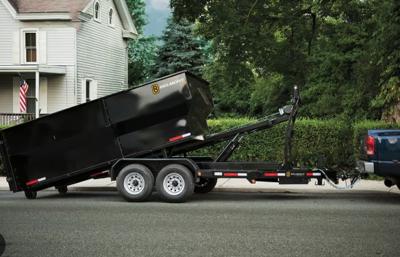

Every cleanup plan asks the same practical question. Is it smarter to place a container on-site and fill it over time, or hire a crew that carries everything away in one visit? The answer affects cost, safety, pace, and physical effort. Property managers, homeowners, and contractors usually benefit from comparing waste volume, loading ability, access conditions, and disposal rules before choosing a service. That early review often prevents rushed decisions and avoidable charges.
The basic difference
A roll-off dumpster stays at the property for several days, sometimes longer, so debris can be loaded as work progresses. For projects that create a steady stream of waste, such as roofing, remodeling, or full garage cleanouts, roll off dumpster rental often makes sense because the container remains available while materials accumulate. Junk haulers work differently. They arrive with labor, remove items, and then leave once the truck is full.
Cost often decides first.
Price usually shapes the first decision, yet quote styles differ enough to confuse people. Dumpster rentals often use one rate that includes drop-off, pickup, and a stated weight cap. Junk hauling bills may reflect truck space, carrying time, stairs, item type, and disposal surcharges. A few loose pieces can be cheaper with a hauling team. Several bulky loads often cost less in a container parked near the work area.
Labor changes the value
Physical effort changes the value equation more than many expect. A dumpster works best if someone on-site can carry, lift, and stack debris safely. That model suits contractors, relatives helping with a cleanout, or owners doing gradual work. Haulers bring muscle and speed, which matters for older adults, injured residents, or landlords facing a quick turnover. Saving money means little if the task creates strain, fatigue, or unnecessary injury risk.
Time frame matters
Project length matters because waste rarely appears at one steady pace. A kitchen remodel may produce cabinets first, drywall later, and then flooring at the end. Keeping a dumpster nearby supports that rhythm without repeated scheduling. Junk haulers fit a single decisive clearing, such as a move-out or office reset, where everything is ready at once. If the goal is same-day emptying, a crew usually matches that need better.
Volume tells the real story.
Debris volume often reveals the stronger option faster than the sticker price. One recliner, several boxes, and a cracked table may not justify renting a container. A bathroom renovation, by contrast, can create surprising bulk in tile, backer board, vanity parts, packaging, and fixtures. Hauling charges rise as truck space disappears. Dumpsters usually become more economical once material reaches a substantial portion of a standard pickup load.
Heavy debris needs planning.
Dense material needs special attention because weight affects disposal fees quickly. Concrete, dirt, brick, plaster, and shingles can push a load past the included limits before a container looks full. Haulers may quote those items as heavy debris from the start, while dumpster providers often list overage charges separately. Anyone comparing options should ask for exact weight terms in writing. That step reduces billing disputes after the waste has already left.
Access can rule out one option.
Site conditions sometimes settle the choice before price enters the picture. A dumpster needs enough room for delivery, pickup, and safe placement. Low wires, narrow driveways, soft ground, or permit rules can block that route. Haulers have an advantage in tight settings because crews can carry items through stairwells, side yards, or apartment corridors. A brief access review before booking helps avoid failed deliveries and last-minute rescheduling costs.
Certain items affect both choices.
Disposal rules can change a simple quote into a complicated one. Paint, solvents, batteries, tires, propane cylinders, and many electronics often need separate handling. Refrigerators, mattresses, and televisions may also bring added fees. Container users need a clear list of restricted materials before loading starts. Hauling crews need the same information before arrival. Accepted items vary by city and facility, so written confirmation protects both budget and timeline.
The cleaner fit by project type
Best cases for dumpsters
Dumpsters usually fit remodeling, roofing, yard work, and multi-day cleanouts where debris builds gradually. They also suit jobs needing a predictable container on-site for repeated loading.
Best cases for haulers
Haulers usually fit furniture removal, estate clearing, office cleanouts, and single-visit pickups. They are also useful when lifting, carrying heavy items, or for last-minute completion, or when indoor carrying service matters most.
Choosing well means looking past convenience alone. Roll off dumpsters usually offer stronger value for larger projects, slower timelines, and jobs where loading help is already available. Junk haulers often earn a higher price on smaller pickups, difficult access, or situations requiring immediate labor. The most cost-effective path depends on material type, total volume, property layout, and available manpower. A careful comparison at the start usually leads to cleaner work and fewer surprises later.
(0) comments
We welcome your comments
Log In
Post a comment as Guest
Keep it Clean. Please avoid obscene, vulgar, lewd, racist or sexually-oriented language.
PLEASE TURN OFF YOUR CAPS LOCK.
Don't Threaten. Threats of harming another person will not be tolerated.
Be Truthful. Don't knowingly lie about anyone or anything.
Be Nice. No racism, sexism or any sort of -ism that is degrading to another person.
Be Proactive. Use the 'Report' link on each comment to let us know of abusive posts.
Share with Us. We'd love to hear eyewitness accounts, the history behind an article.