
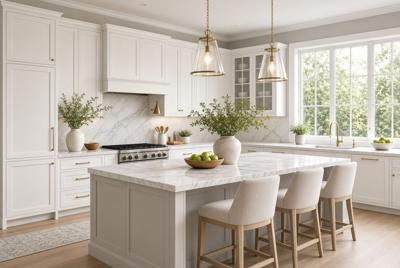

Choosing cabinets is one of the biggest decisions in a kitchen or bathroom remodel. They set the style of the room, determine how much storage you actually have, and can account for 30–40% of the total project budget. Get them right and the space feels better every day. Get them wrong and you deal with sticky drawers, peeling finishes, or not enough room for your stuff for the next 15–20 years.
Here’s a practical guide to choosing cabinets that balance looks, function, and cost.
1. Start With Your Real Budget (Not Just the Sticker Price)
Cabinet pricing usually falls into three tiers:
- Stock cabinets — Lowest cost, limited sizes and finishes. Fast to get but may force compromises on layout.
- Semi-custom cabinets — More size, style, and finish options. A strong middle ground for most remodels.
- Custom cabinets — Built to your exact measurements and preferences. Highest cost, maximum flexibility.
A useful rule of thumb: many homeowners land in the semi-custom range because it offers better fit and finish without full custom pricing. Factor in more than the cabinets themselves. Add costs for soft-close hardware upgrades, interior organizers, installation, and any necessary modifications to existing walls or plumbing. Getting a detailed written quote that breaks these out helps you compare options accurately.
2. Prioritize Storage and Daily Use Over Looks Alone
Pretty cabinets that don’t work for how you cook or get ready in the morning become frustrating quickly. Walk through a typical day in the space and note what you need to store and access most often.
Common high-value upgrades include:
- Deep drawers for pots, pans, and cookware instead of fixed shelves
- Pull-out trays or pantry systems for easier access
- Corner solutions (lazy Susans, pull-out corner drawers, or diagonal cabinets) so dead space isn’t wasted
- Built-in trash and recycling pull-outs
- Bathroom vanity storage that keeps everyday items within reach without cluttering the counter
Measure your largest items (sheet pans, Dutch ovens, tall bottles) before finalizing drawer and shelf heights. Many people discover too late that their preferred cabinet style doesn’t accommodate real-life storage needs. Industry guidelines from the National Kitchen & Bath Association (NKBA) also emphasize functional storage access and clearances so cabinets work for a range of users.
3. Match Style to Your Home and Preferences
Door style has the biggest visual impact:
- Shaker — Clean frames with a flat center panel. Works in traditional, transitional, and many modern homes.
- Slab (flat-panel) — Smooth, minimal look popular in contemporary kitchens and bathrooms.
- Raised-panel — More traditional detailing that suits classic or formal spaces.
Also consider how the cabinets relate to the rest of the room—countertops, flooring, hardware, and lighting. A consistent style language usually feels more intentional than mixing too many different profiles.
4. Choose Materials and Finishes That Match the Environment
Kitchens and bathrooms see moisture, heat, and daily wear. Material choice affects longevity and maintenance:
- Solid wood — Classic and repairable. Common species include maple, oak, and cherry. Grain and color can vary.
- Plywood boxes — Strong, stable, and more resistant to moisture than particleboard. A frequent recommendation for cabinet frames and shelves.
- MDF — Smooth surface that paints well and is more affordable. Better suited to painted finishes than high-humidity areas unless properly sealed.
- Thermofoil or laminate — Budget-friendly and easy to clean, but can delaminate over time with heat or moisture.
Finishes matter too. Painted cabinets look crisp but show wear more readily in high-traffic zones. Stained wood shows natural character and can hide minor scratches better. In bathrooms or near sinks and dishwashers, moisture-resistant construction and quality hardware make a noticeable difference over time. Organizations such as the Kitchen Cabinet Manufacturers Association (KCMA) set performance standards that many manufacturers use to test cabinets for durability.
5. Don’t Overlook Hardware and Construction Details
These details are easy to skip but affect daily use:
- Soft-close hinges and drawer slides reduce slamming and wear.
- Full-extension drawers let you reach everything in the back.
- Solid wood or plywood drawer boxes last longer than thin particleboard versions.
- Adjustable shelves give flexibility as needs change.
- Proper ventilation and moisture barriers in bathrooms help prevent warping or mold.
Ask to see a sample cabinet or visit a showroom so you can open doors, pull drawers, and check joinery and finish quality in person.
6. Plan the Layout Before You Fall in Love With a Style
Cabinet layout should support how you use the space, not just look good in a rendering. In kitchens, consider the work triangle (sink, stove, refrigerator) and traffic flow. In bathrooms, think about clearance around the toilet, shower, and vanity, plus storage for towels and toiletries. The NKBA’s planning guidelines (linked above) are a useful reference for recommended clearances and storage amounts.
If you’re working with an existing layout, measure carefully (including ceiling height, window locations, and appliance clearances). Small adjustments—such as adding a pantry cabinet or changing a door swing—can improve function more than upgrading the door style alone.
Common Mistakes to Avoid
- Buying based only on price or appearance without testing storage fit
- Skipping moisture-resistant construction in bathrooms or near sinks
- Underestimating installation and hardware costs
- Choosing a trendy color or style you may tire of quickly in a high-visibility room
- Not getting everything in writing (materials, finishes, hardware, timeline, and warranty)
Questions Worth Asking Before You Order
- What materials are used for the boxes, doors, and drawer boxes?
- What is the warranty on the cabinets and finish?
- How long is the lead time, and what happens if there are delays?
- Can I see installed examples or speak with recent customers?
- What is included in the quote versus what will be extra?
Good cabinets should make the room more functional and pleasant for years. Focusing on real storage needs, durable materials, solid construction details, and a realistic budget usually leads to better long-term satisfaction than chasing the lowest price or the most photographed style.
Related Articles You May Enjoy From FINE Magazine
- Small Remodeling Projects That Deliver A Big Difference At Home
- Lighting & Layout: How Smart Fixtures Elevate Home Interiors

(0) comments
We welcome your comments
Log In
Post a comment as Guest
Keep it Clean. Please avoid obscene, vulgar, lewd, racist or sexually-oriented language.
PLEASE TURN OFF YOUR CAPS LOCK.
Don't Threaten. Threats of harming another person will not be tolerated.
Be Truthful. Don't knowingly lie about anyone or anything.
Be Nice. No racism, sexism or any sort of -ism that is degrading to another person.
Be Proactive. Use the 'Report' link on each comment to let us know of abusive posts.
Share with Us. We'd love to hear eyewitness accounts, the history behind an article.