
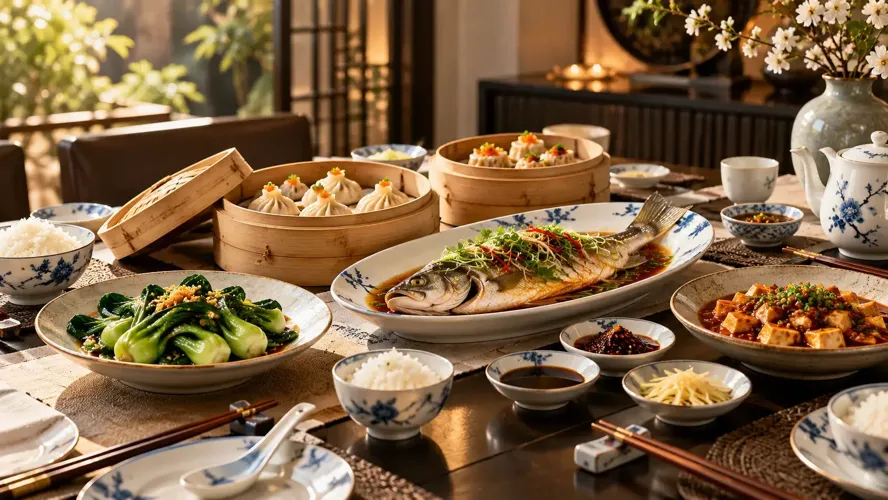

A beautifully prepared Chinese meal has a way of making the dinner table feel like the center of everything. Fragrant stir-fries arrive sizzling from the wok, delicate dumplings emerge from bamboo steamers, and an assortment of colorful dishes invites everyone to share.
What makes this style of cooking so rewarding is not an elaborate kitchen filled with expensive appliances. It's the combination of good ingredients, time-honored techniques, and a handful of thoughtfully chosen tools.
Chinese cuisine is extraordinarily diverse, encompassing the fiery complexity of Sichuan cooking, the delicate flavors of Cantonese seafood, the noodle traditions of northern China, and countless regional specialties. No single set of utensils defines every kitchen, but certain pieces make preparing these dishes considerably easier.
For home cooks who appreciate both excellent food and beautiful entertaining, these eight essentials offer a practical introduction, followed by a few thoughtful ways to bring the finished meal to the table with style.
1. A Carbon-Steel Wok Worth Keeping for Years
If one piece of cookware deserves pride of place in a Chinese-inspired kitchen, it's a good carbon-steel wok.
Its curved sides and responsive cooking surface make it remarkably versatile. A wok can handle quick stir-fries, fried rice, shallow frying, braised dishes, and even steaming when fitted with the appropriate accessories.
Carbon steel is particularly well suited to high-temperature cooking because it heats quickly and responds readily to changes in burner temperature. With proper seasoning and maintenance, its cooking surface becomes increasingly easy to use.
For most contemporary home kitchens, a flat-bottomed wok measuring approximately 12 to 14 inches is a practical choice. It sits securely on a conventional burner, while round-bottomed models generally require a compatible stove or properly fitted wok support.
Our recommendation: The ZWILLING Dragon 12-Inch Carbon Steel Wok is worth considering for its manageable size and included lid. The traditional hand-hammered Oxenforge Flat-Bottom Wok offers a more artisanal alternative.
Neither will magically produce restaurant-level results without good technique, but quality cookware makes a noticeable difference.
2. A Chinese Cleaver That Does More Than Chop
At first glance, a Chinese vegetable cleaver resembles a miniature butcher's tool. In experienced hands, however, it's an exceptionally precise kitchen instrument.
Often called a caidao, this broad-bladed knife can finely mince ginger and garlic, slice vegetables into delicate ribbons, and cut boneless meats into uniform pieces.
The wide blade also doubles as a convenient surface for transferring chopped ingredients from the cutting board to the wok.
Choose a well-balanced vegetable cleaver with a comfortable grip rather than assuming a heavier blade is automatically better.
One important distinction: a thin Chinese vegetable cleaver is not designed for chopping through bones. That requires a different, substantially heavier knife.
Serving suggestion: Use the cleaver to create consistent julienne vegetables for colorful stir-fries and finely sliced scallions for garnishing steamed fish or noodles.
3. A Bamboo Steamer for Delicate Cooking and Beautiful Presentation
Few cooking tools move from kitchen to dining table as gracefully as the traditional bamboo steamer.
Stackable baskets allow steam to circulate around dumplings, buns, vegetables, and other delicate foods. Bamboo also provides a distinctive presentation that feels particularly appropriate for dim sum.
Choose a steamer that fits securely over your wok or steaming pot. Line the baskets with perforated parchment or suitable vegetable leaves to help prevent sticking, and make sure boiling water stays below the bottom basket.
A quality two-tier steamer is a useful starting point for smaller households.
Our recommendation: The Joyce Chen 10-Inch Bamboo Steamer is a practical option for preparing dumplings, buns, and vegetables.
Serving suggestion: Bring dumplings to the table directly in the bamboo basket, placed on a heat-resistant plate or trivet. Arrange small dipping bowls nearby and remove the lid just before serving for a simple, memorable presentation.
4. A Rice Cooker That Gets the Details Right
An excellent rice cooker may be one of the most frequently used appliances in a kitchen where rice appears regularly.
Unlike stovetop cooking, an automatic rice cooker manages much of the process, reducing the need for constant attention while other dishes are prepared.
More sophisticated models offer settings for different rice varieties, congee, and delayed preparation. Fuzzy-logic models can adjust cooking parameters as the rice cooks.
For households that prepare rice frequently, a well-made model from Zojirushi or Tiger is worth exploring. Capacity matters more than an impressive number of settings: a smaller cooker often makes more sense for two people than a large appliance designed for a family.
Serving suggestion: Transfer freshly cooked rice to a covered ceramic serving bowl or individual porcelain rice bowls. Keep it warm and covered until the other dishes are ready.
5. A Wok Spatula and Spider Strainer for Better Control
Two inexpensive utensils can make Chinese cooking noticeably easier.
A long-handled wok spatula, sometimes called a chuan, follows the curvature of the wok and helps move ingredients efficiently through the heat.
A spider strainer, meanwhile, is invaluable for lifting blanched vegetables, fried foods, noodles, and dumplings from hot water or oil.
Look for sturdy stainless-steel construction and comfortable handles long enough to keep hands away from hot surfaces.
For carbon-steel woks, a traditional metal wok spatula is especially useful. For coated cookware, choose utensils compatible with the manufacturer's instructions.
Serving suggestion: Use the spider to drain noodles thoroughly before arranging them in warmed bowls. A small amount of reserved cooking liquid or sauce can then be added without leaving the dish watery.
6. A Proper Cutting Board That Protects Your Knives

A good cutting board may not be glamorous, but it matters enormously when preparing dishes with numerous ingredients.
Chinese cooking often involves substantial advance preparation. Vegetables, aromatics, meats, and sauces are generally organized before the wok reaches cooking temperature.
A large, stable wooden cutting board creates enough space to work comfortably and helps protect knife edges. Choose a well-made hardwood board that can be cleaned and maintained appropriately.
Keep a separate food-safe board for raw poultry or other raw meats to reduce cross-contamination.
Serving suggestion: Prepare all garnishes before cooking begins. Finely sliced scallions, cilantro, chili, or toasted sesame seeds can provide a beautiful finishing touch without delaying service.
7. A Clay Pot for Comforting, Slow-Cooked Dishes
For braises, rice dishes, and warming stews, a Chinese clay pot offers a completely different cooking experience from the rapid heat of a wok.
Clay-pot preparations are particularly associated with comforting meals that arrive at the table fragrant and steaming.
Traditional clay pots can retain heat well, but not every ceramic vessel is designed for stovetop cooking. Select one specifically rated for your heat source and follow its instructions for heating and cooling.
A well-made pot can be used for dishes such as Cantonese clay-pot rice, mushroom preparations, and slow-simmered meats.
Serving suggestion: Place the finished clay pot on a substantial heat-resistant trivet and serve directly from it. The vessel becomes part of the presentation, keeping the meal warm while contributing an inviting, rustic elegance.
8. Chopsticks, Rice Bowls, and Chinese Soup Spoons
Some of the most important tools in a Chinese-inspired kitchen belong on the dining table.
A set of comfortable chopsticks, porcelain rice bowls, and broad Chinese-style soup spoons makes serving everything from noodles to wonton soup easier.
Cooking chopsticks are typically longer than dining chopsticks, providing added reach when handling food over a hot pan or pot.
For everyday dining, choose chopsticks with a comfortable shape and a surface that provides reasonable grip.
Individual rice bowls should feel pleasant to hold, while soup spoons need sufficient depth for broths, wontons, and small bites.
For shared meals, keep dedicated serving chopsticks and spoons separate from personal eating utensils.
These simple details help make the experience practical, welcoming, and respectful of Chinese dining traditions.
The Art of Serving Chinese Food Beautifully
The utensils may prepare the meal, but thoughtful presentation makes it memorable.
In many Chinese dining traditions, dishes are served communally, allowing diners to share an assortment of flavors and textures. Rather than plating every course individually, the table itself becomes the focal point.
For an elegant gathering, consider a curated collection of serving pieces rather than a crowded arrangement of mismatched dishes.
Porcelain platters for stir-fries and seafood. Large oval platters are ideal for whole steamed fish, glazed proteins, and vibrant vegetable dishes. White porcelain offers a particularly attractive contrast to glossy sauces, fresh herbs, and richly colored ingredients. Allow enough space around the food to make serving easy.
Deep ceramic bowls for noodles and rice dishes. Generously sized bowls help contain broths and sauces without sacrificing presentation. For shared noodles, place a larger serving bowl in the center of the table and provide individual bowls nearby.
Bamboo baskets for dumplings and buns. Steamed dumplings often look their best presented simply, with neat spacing, fresh garnishes where appropriate, and a trio of dipping sauces.
Small dishes for condiments. Soy sauce, chili crisp, black vinegar, and finely sliced ginger deserve their own little bowls. A matching set keeps the table organized while encouraging guests to customize their food.
A rotating serving tray for larger gatherings. A well-made lazy Susan can make communal dining more comfortable, especially around a round table. Choose one with a stable base and enough clearance to rotate serving dishes without disturbing place settings.
What to Serve for an Elegant Chinese-Inspired Dinner Party
An impressive menu doesn't need to be complicated. The strongest combinations offer variety in flavor, texture, and cooking technique.
For a gathering of four to six, consider starting with steamed shrimp or vegetable dumplings, presented in bamboo baskets with black vinegar and ginger.
Follow with a fragrant ginger-scallion steamed fish or a carefully prepared stir-fried beef dish. Add a seasonal green vegetable, such as Chinese broccoli with garlic, alongside jasmine rice.
A mushroom and tofu dish can provide an additional savory option, while fresh fruit or a lightly sweet dessert offers a refreshing finish.
For drinks, jasmine tea or oolong tea complements a broad range of dishes. Sparkling water with citrus is another easy choice.
Serve foods when they are ready and at their appropriate temperatures rather than leaving a collection of hot dishes sitting out for an extended period.
The most successful dinners are those in which guests can enjoy the food at its best—and the host actually has time to join them.
For more ideas on making a gathering feel considered without becoming overly formal, explore FINE Magazine's guide to small luxuries that make a dinner party feel expensive.
A Beautiful Table Begins With the Right Essentials
A sophisticated kitchen isn't defined by how many specialized tools it contains. It's defined by how well the tools serve the cook.
A properly seasoned wok, a dependable knife, a good rice cooker, and a few carefully selected utensils can open the door to an extraordinary range of Chinese dishes.
Add elegant serving bowls, porcelain platters, and the simple pleasure of sharing food around the table, and the experience becomes about much more than cooking.
It's about hospitality, craftsmanship, and creating the kind of meal people remember long after the last dumpling disappears.

(0) comments
We welcome your comments
Log In
Post a comment as Guest
Keep it Clean. Please avoid obscene, vulgar, lewd, racist or sexually-oriented language.
PLEASE TURN OFF YOUR CAPS LOCK.
Don't Threaten. Threats of harming another person will not be tolerated.
Be Truthful. Don't knowingly lie about anyone or anything.
Be Nice. No racism, sexism or any sort of -ism that is degrading to another person.
Be Proactive. Use the 'Report' link on each comment to let us know of abusive posts.
Share with Us. We'd love to hear eyewitness accounts, the history behind an article.