

Imagine your home always feeling just right, no matter the weather outside. Our heating, ventilation, and air conditioning (HVAC) systems work hard every day to provide that comfort. But when they falter, we quickly feel the impact through uncomfortable temperatures, unexpected breakdowns, and higher energy bills. This is why understanding HVAC maintenance and repair is so important for every homeowner. Regular care keeps your system running smoothly, extends its life, and prevents those stressful, costly surprises. This guide will walk you through essential tips and insights to ensure your home remains a haven of comfort all year long.
In this comprehensive guide, we will explore crucial preventative maintenance tips you can do yourself, common signs that signal a need for professional repair, and how to decide between fixing or replacing your system. We’ll also cover energy-saving strategies and how to choose a reliable service provider for your HVAC and plumbing services to keep your entire home operating efficiently. By following these steps, we can ensure our homes stay comfortable and our energy bills stay manageable throughout the year.

Core Preventative Maintenance Practices for Homeowners
Proactive maintenance is the cornerstone of a healthy HVAC system. Neglecting routine tasks can lead to decreased efficiency, premature component wear, and ultimately, expensive repairs. By consistently addressing a few key areas, we can significantly extend our system's lifespan and ensure optimal performance. These practices focus on maintaining proper airflow dynamics, keeping crucial components clean, and ensuring the system operates without undue stress.
One critical aspect of preventative care involves keeping the outdoor unit clear. Debris, leaves, and vegetation can obstruct airflow around the condenser coils, forcing the unit to work harder and consume more energy. Regularly clearing a two-foot perimeter around the outdoor unit helps maintain efficient operation. Similarly, the condensate drain line, which removes moisture from the system, can become clogged with algae or mold. A simple flush with a vinegar solution a few times a year can prevent blockages that might lead to water damage or system shutdowns. Furthermore, sealing any leaks in our home's ductwork can prevent significant energy loss, ensuring that conditioned air reaches its intended destination rather than escaping into unconditioned spaces. These seemingly small tasks contribute significantly to the overall health and efficiency of our HVAC system.
Air Filter Care and Airflow Management
Perhaps the simplest yet most impactful maintenance task we can perform is regular air filter replacement. The air filter is our HVAC system's first line of defense, trapping dust, pollen, pet dander, and other airborne particles before they can accumulate on internal components. A dirty filter restricts airflow, forcing the blower motor to work harder, which increases energy consumption and can lead to premature wear. This restricted airflow can also cause issues like reduced heating or cooling capacity and even system overheating.
When selecting filters, we should pay attention to their MERV (Minimum Efficiency Reporting Value) rating. Higher MERV ratings indicate better filtration, but it's important to choose a filter compatible with our system, as overly restrictive filters can increase static pressure and strain the blower. For most homes, a MERV rating between 8 and 11 strikes a good balance between filtration and airflow. We recommend inspecting filters monthly and replacing them every 1 to 3 months, especially if we have pets, allergies, or live in a dusty environment. This simple habit protects our indoor air quality and keeps our HVAC system running efficiently.
Integrating HVAC Maintenance and Repair into Seasonal Schedules
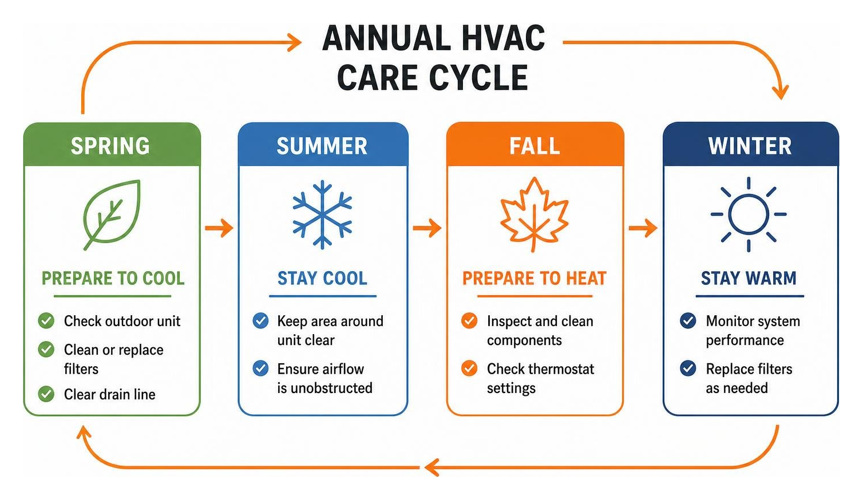
Just as we prepare our homes for changing seasons, our HVAC system also benefits from seasonal attention. Scheduling professional maintenance twice a year, typically in the spring before the cooling season and in the fall before the heating season, is a best practice that pays dividends. These biannual tune-ups allow technicians to inspect and clean critical components, identify potential issues before they escalate, and ensure our system is ready for peak demand.
During a spring tune-up, a technician will often check the refrigerant charge, clean the condenser coils, and inspect the electrical connections, ensuring the air conditioning unit is prepared for the summer heat. For a fall inspection, the focus shifts to the heating components. This includes checking the heat exchanger for cracks (which could pose a carbon monoxide risk), testing safety limits, and calibrating the thermostat. These comprehensive checks are vital for preventing unexpected breakdowns, improving energy efficiency, and ensuring our system operates safely and reliably throughout the year. Given the fluctuating temperatures many regions experience, like the significant swings seen in areas such as Hampton Roads, these biannual checks are crucial to ensure our HVAC system can adapt and perform efficiently.
Common Warning Signs and System Diagnostics
Even with diligent preventative maintenance, HVAC systems can develop issues. Recognizing the early warning signs of a problem can help us address them promptly, potentially preventing minor glitches from turning into major repairs. Paying attention to our system's performance, sounds, and even our energy bills can provide valuable clues that something is amiss. When we notice these red flags, it's often time to seek expert HVAC repair to diagnose and resolve the underlying problem.

One common indicator is "short-cycling," where the system turns on and off frequently without completing a full heating or cooling cycle. This can be a sign of an oversized unit, a dirty filter, or even a refrigerant leak. Uneven temperatures across different rooms suggest issues with airflow, ductwork, or zoning. Unusual noises, such as grinding, squealing, or banging, often point to mechanical problems with motors or bearings. A burning odor could indicate electrical issues or excessive dust accumulation on heating elements. Lastly, a sudden, unexplained spike in energy bills, despite consistent usage, is a strong signal that our HVAC system is working harder than it should, often due to inefficiency caused by a developing problem. Addressing these signs quickly can save us discomfort, money, and extend the life of our system.
Performance Red Flags and Operating Failures
Beyond the general warning signs, certain specific performance issues can pinpoint common HVAC problems. For instance, weak airflow from vents might indicate a clogged filter, a failing blower motor, or obstructions within the ductwork. If our air conditioner is running but not cooling the house, it could be due to low refrigerant levels, a frozen evaporator coil, or a faulty compressor. A frozen evaporator coil, often characterized by ice buildup on the outdoor unit or refrigerant lines, typically results from restricted airflow (dirty filter) or low refrigerant.
Electrical problems are also frequent culprits. Tripped circuit breakers, especially if they occur repeatedly, suggest an electrical overload or a short circuit within the unit. A failing capacitor, which helps start the compressor and blower motors, can lead to the unit struggling to start or producing only a humming sound. Issues with thermostat calibration can lead to inaccurate temperature readings and inefficient operation. Even subtle ductwork breaches can significantly compromise performance and energy efficiency by allowing conditioned air to escape. Recognizing these specific red flags can help us communicate more effectively with technicians and understand the nature of the repair needed.
DIY Troubleshooting vs. Professional HVAC Maintenance and Repair
While many HVAC issues require professional expertise, there are several DIY troubleshooting steps we can take before calling a technician. These simple checks can often resolve minor problems or help us provide valuable information to a service professional.
First, always check the thermostat. Ensure it's set to the correct mode (heat/cool) and desired temperature. If it's battery-powered, replace the batteries. Next, inspect the air filter; a dirty filter is a common cause of performance issues. Then, check the circuit breaker panel for any tripped breakers related to the HVAC system. Resetting a tripped breaker might restore power. For outdoor units, ensure the power switch near the unit is in the "on" position and that the area around it is clear of debris. Inside, verify that all supply and return registers are open and unobstructed by furniture or drapes.
However, it's crucial to know when to call in the professionals. Any issue involving refrigerant leaks, electrical components, or gas lines should always be handled by a licensed technician due to safety hazards. Attempting to repair high-voltage components or complex internal mechanisms without proper training can be dangerous and may void warranties. Our role as homeowners is to perform basic, safe checks, but for anything beyond that, professional HVAC maintenance and repair is essential for our safety and the longevity of our system.
The Financial Calculus of HVAC Maintenance and Repair
Deciding whether to repair or replace an HVAC system involves more than just the immediate cost of the fix. It's a financial calculus that considers the equipment lifespan, operating costs, and the potential for future breakdowns. As our systems age, component degradation becomes more prevalent, leading to increased repair frequency and diminishing energy efficiency. Understanding these factors helps us make informed decisions that align with our long-term financial planning and home comfort goals.
When evaluating a repair, we must consider the system's age and its expected remaining life. A system nearing the end of its typical lifespan may not be worth a significant investment in repairs. We also need to factor in the escalating operating costs of an older, less efficient unit. Modern HVAC systems often boast significantly higher energy efficiency ratings, meaning a new installation could lead to substantial utility savings over time. This capital planning perspective helps us view HVAC decisions not just as expenses, but as investments in our home's comfort and value. Depreciation of older equipment also plays a role; the older the system, the less value it retains, making replacement a more attractive option when major repairs arise.
The 50 Percent Rule and Equipment Lifespan Benchmarks
A common guideline for deciding between repair and replacement is the "50 percent rule." This rule suggests that if the cost of a repair approaches 50% or more of the cost of a brand-new unit, replacement is generally the more financially sensible option. This is especially true for older systems, as a significant repair often signals that other components may soon fail.
To apply this rule effectively, it's helpful to know the typical lifespan benchmarks for various HVAC components:
HVAC Equipment Type Average Lifespan (Years) Repair vs. Replace Criteria Furnaces 15–20 Replace if over 12-15 years old and major repair needed, or if repair cost > 50% of new unit. Boilers 15–25 Replace if over 15-20 years old and major repair needed, or if repair cost > 50% of new unit. Heat Pumps 10–15 Replace if over 10 years old and major repair needed, or if repair cost > 50% of new unit. Central AC Units 12–18 Replace if over 15 years old and major repair needed, or if repair cost > 50% of new unit. Note: These are general guidelines. Actual lifespan can vary based on maintenance, usage, and climate.
For example, if our central AC unit is 16 years old in September 2026 and needs a compressor replacement that costs half the price of a new unit, investing in a replacement would likely be more prudent. This new unit would offer improved energy efficiency, a new warranty, and peace of mind for years to come. Conversely, a system under 10 years old with an isolated problem is almost always worth repairing. We should always consider the frequency and cost of past repairs when making this decision.
Maximizing Energy Efficiency and Utility Savings
Beyond repair-or-replace decisions, we can actively work to maximize our HVAC system's energy efficiency and significantly lower our utility bills. One of the most effective strategies involves smart thermostat usage. Setting our thermostat to 78°F in the summer and 68°F in the winter when we are not home, or when we are asleep, can lead to considerable savings. Modern programmable or smart thermostats allow us to create automated schedules, adjusting temperatures based on our daily routines without constant manual input. These devices can even learn our preferences and optimize settings for maximum efficiency.
Furthermore, improving our home's thermal envelope is crucial. This includes sealing air leaks around windows and doors with weatherstripping and caulk, adding insulation to attics and walls, and ensuring proper ventilation. These measures prevent conditioned air from escaping and unconditioned air from entering, reducing the workload on our HVAC system. When considering new equipment, looking for units with high SEER2 (Seasonal Energy Efficiency Ratio 2) ratings is essential. SEER2 is a newer efficiency standard that reflects real-world performance more accurately, and higher ratings translate directly into lower energy consumption and utility bills. By combining smart thermostat programming with a well-sealed home and efficient equipment, we can achieve optimal comfort with minimal energy waste.
Selecting Professional Services and Maintenance Agreements
When our HVAC system requires attention beyond basic DIY troubleshooting, choosing a reliable and qualified professional is paramount. The right contractor ensures that repairs are done correctly, efficiently, and safely, safeguarding our investment and our home's comfort. This decision should not be taken lightly, as improper service can lead to further issues or even safety hazards. We need to look for specific qualifications, transparent practices, and consider the benefits of long-term service agreements.
A reputable HVAC contractor will possess the necessary licensing requirements for our area and employ technicians with relevant certifications. These credentials signify that they have met industry standards for knowledge and skill. Furthermore, transparency in pricing, often through upfront estimates, is a hallmark of a trustworthy company. They should provide a clear explanation of the diagnosis and proposed solutions before any work begins. Finally, understanding the warranty protection offered on parts and labor gives us peace of mind. For comprehensive home care, many homeowners also seek integrated HVAC and plumbing services, ensuring a coordinated approach to maintaining essential home systems.
Key Qualifications of a Reputable Contractor
Identifying a reputable HVAC contractor involves looking beyond just their advertisements. We should seek out companies that demonstrate professionalism, expertise, and a commitment to customer satisfaction.
Here are key qualifications to consider:
- Licensing and Insurance: Verify that the contractor holds all necessary state and local licenses and is fully insured. This protects us from liability in case of accidents or property damage during service.
- Technician Certification: Look for technicians certified by organizations like NATE (North American Technician Excellence). NATE certification indicates that technicians have proven knowledge in specific HVAC areas.
- Diagnostic Transparency: A good contractor will perform thorough diagnostics and clearly explain the problem, the proposed solution, and the associated costs before starting any work. They should be willing to answer all our questions.
- Load Calculations: For new installations or replacements, a reputable contractor will perform a detailed load calculation (Manual J) to ensure the system is properly sized for our home, preventing issues like short-cycling or inadequate heating/cooling.
- Brand Certifications: While not mandatory, contractors certified by specific HVAC brands (e.g., Trane Comfort Specialist) often have specialized training and access to proprietary parts, which can be beneficial if we have equipment from those brands.
- Customer Satisfaction: Check online reviews, testimonials, and ask for references. A strong track record of positive customer experiences is a reliable indicator of quality service.
Service Agreements and Emergency Protection
Enrolling in an HVAC maintenance plan or service agreement is one of the smartest investments we can make for our home comfort system. These plans offer a range of benefits that go beyond simple repairs, providing proactive care and peace of mind.
Typically, service agreements include semi-annual preventative inspections, usually one in the spring for our AC and one in the fall for our heating system. During these visits, technicians perform thorough cleanings, inspect components, and identify potential issues before they lead to breakdowns. This proactive approach significantly reduces the likelihood of unexpected emergency repairs.
Other common benefits of maintenance plans include:
- Priority Dispatch: Plan members often receive priority scheduling for service calls, especially during peak seasons or emergency situations. This means quicker response times when we need it most.
- Discounted Parts and Labor: Many agreements offer discounts on parts and labor for any necessary repairs, saving us money over time.
- Emergency Breakdown Prevention: By catching small issues early, these plans help prevent major system failures, particularly during extreme weather when our HVAC system is working its hardest.
- Equipment History: Technicians maintain detailed records of our system's service history, which can be invaluable for future diagnostics and repair-or-replace decisions.
A service agreement helps extend our HVAC system's lifespan, maintain its efficiency, and ensures we have reliable support when problems arise.
Frequently Asked Questions About HVAC Maintenance
We often have many questions about how to best care for our HVAC systems. Here, we address some of the most common inquiries to provide clarity and empower us to make informed decisions about our home comfort.
How often should HVAC air filters be replaced?
The frequency of HVAC air filter replacement depends on several factors, but as a general rule, we should plan to change them every 1 to 3 months. Thicker filters (e.g., 4-inch or 5-inch) might last longer than standard 1-inch filters, but regular inspection is still key.
Factors that necessitate more frequent changes include:
- Pets: Homes with pets tend to accumulate more pet dander and hair, clogging filters faster.
- Allergies/Asthma: If anyone in our household suffers from allergies or respiratory conditions, more frequent changes improve indoor air quality.
- Dusty Environments: Living near construction, unpaved roads, or in naturally dusty areas will require more frequent filter changes.
- Occupancy: More people living in the home generally means more airborne particles.
- System Usage: Filters will get dirty faster during peak heating and cooling seasons when the HVAC system runs continuously.
A dirty filter restricts airflow, forcing our system to work harder, which increases energy consumption and can lead to premature wear on the blower motor. Regularly checking our filter for visible dirt and debris will help us determine the optimal replacement schedule for our specific home environment.
What are the ideal thermostat settings for seasonal energy savings?
Optimizing our thermostat settings is one of the simplest ways to achieve significant energy savings without sacrificing comfort. The general recommendations for maximum efficiency when we are not home are:
- Summer: Set the thermostat to 78°F (25.5°C). While this might feel slightly warmer than what some are used to, it's a comfortable temperature for most and significantly reduces the workload on our air conditioner.
- Winter: Set the thermostat to 68°F (20°C). This temperature provides adequate warmth while keeping heating costs in check.
The key to these recommendations is adjusting the thermostat when we are away or asleep. Using a programmable or smart thermostat allows us to automate these setback temperatures, so our home is comfortable when we are there but saves energy when we are not. For example, we can program the temperature to rise in summer or drop in winter a few hours before we leave for work and return to our preferred comfort setting shortly before we arrive home. This strategy prevents the compressor from working overtime to rapidly cool or heat a drastically different temperature, thus protecting the unit and extending its lifespan.
When does it make more financial sense to replace rather than repair an HVAC unit?
Deciding between repairing and replacing an HVAC unit is a common dilemma, especially as systems age. Several factors weigh into this financial decision:
- System Age: As a general rule, if our system is approaching or has exceeded its average lifespan (e.g., AC unit over 15 years old, furnace over 12-15 years), replacement often makes more sense, especially if a major repair is needed. Older systems are inherently less efficient and more prone to future breakdowns.
- Major Component Failure: If a critical and expensive component, such as the compressor in an AC unit or the heat exchanger in a furnace, fails, the repair cost can be substantial. In such cases, the "50 percent rule" (where repair cost exceeds 50% of a new unit's price) often points towards replacement.
- Cumulative Repair Costs: If we've been facing frequent, costly repairs over the past few years, the cumulative investment might already justify a new system. Constantly patching up an old unit becomes a financial drain.
- Energy Efficiency Gains: Modern HVAC systems are significantly more energy-efficient than units from 10-15 years ago. A new, high-efficiency system can lead to substantial reductions in monthly utility bills, offsetting the initial replacement cost over time. For instance, upgrading an older AC unit to one with a higher SEER2 rating can result in considerable savings.
We must weigh the immediate repair cost against the long-term benefits of a new, more reliable, and energy-efficient system.
Maintaining our HVAC system is not merely about preventing breakdowns; it's about ensuring consistent comfort, optimizing energy efficiency, and extending the lifespan of a significant home investment. By embracing proactive maintenance, understanding common warning signs, and making informed decisions about repairs versus replacement, we can enjoy a comfortable home environment year-round.
We've covered essential DIY tips like regular air filter changes and clearing outdoor units, highlighted the importance of biannual professional tune-ups, and discussed how to interpret performance red flags. We've also explored the financial considerations of repair versus replacement, emphasizing the "50 percent rule" and the benefits of modern, energy-efficient equipment. Finally, we've outlined the key qualifications to look for in a reputable HVAC contractor and the advantages of maintenance plans. By applying these insights, we empower ourselves to keep our HVAC systems running smoothly, ensuring long-term reliability and a consistently comfortable home.

(0) comments
We welcome your comments
Log In
Post a comment as Guest
Keep it Clean. Please avoid obscene, vulgar, lewd, racist or sexually-oriented language.
PLEASE TURN OFF YOUR CAPS LOCK.
Don't Threaten. Threats of harming another person will not be tolerated.
Be Truthful. Don't knowingly lie about anyone or anything.
Be Nice. No racism, sexism or any sort of -ism that is degrading to another person.
Be Proactive. Use the 'Report' link on each comment to let us know of abusive posts.
Share with Us. We'd love to hear eyewitness accounts, the history behind an article.