
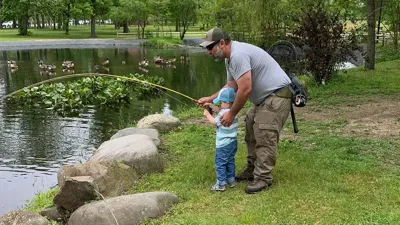

A family fishing trip does not have to be about catching a large number of fish. For a child, the memorable part may be sitting beside the water, learning how to cast, spotting birds, eating a snack outdoors, or simply spending several uninterrupted hours with their parents. A first fishing experience can also become the beginning of a family tradition, provided the day is planned around the child's needs rather than the expectations of an experienced angler.
Keeping the outing simple is usually the best approach. Choose an accessible and safe location, use equipment that a child can handle comfortably, plan a few activities for periods when the fish are not biting, and make sure there is enough food, shade, and dry clothing. Most importantly, treat the fishing itself as one part of the day rather than the only measure of whether the trip was successful.
Choosing a Suitable Fishing Spot
The choice of location is particularly important when children are involved. A place that seems convenient to an experienced adult may present unnecessary hazards for a young child. Look for a relatively shallow body of water with a gently sloping shoreline and plenty of stable ground where children can move around safely.
Small lakes, quiet ponds, and slow-moving sections of rivers can be suitable examples, depending on local conditions and regulations. The immediate surroundings are just as important as the water itself. Ideally, the area should be free of broken glass, discarded fishing line, sharp rocks, and other objects that could cause injury.
Strong currents and steep or slippery banks should be avoided. So should isolated locations where there is no reliable mobile phone reception or where getting help would be difficult. A family fishing spot does not need to be remote to feel like an outdoor adventure. In fact, an accessible location with parking, a clear path and basic facilities can make a first trip considerably easier.
Before leaving home, check the weather forecast and any local fishing regulations. Find out whether fishing is permitted at the chosen location, whether a license is required, and whether there are restrictions on particular species or fishing methods. Rules can vary between countries and individual bodies of water, so they should be checked in advance rather than assumed.
The First Rod and Fishing Reel
Children generally need equipment that is easy to control rather than a smaller version of whatever an adult happens to use. A lightweight rod with a relatively short length is easier for small hands to hold, transport, and maneuver. Brightly colored equipment can also make it easier for a child to identify their own gear, although appearance should remain secondary to weight and usability.
The reel is equally important. Simple fishing reels designed for beginners can make casting and retrieving line easier to understand. Depending on the type of fishing, children can use different kinds of reels, including simple spinning reels and other beginner-friendly designs. The important point is to choose a model that is easy for the child to operate and appropriate for the rod rather than selecting equipment based only on its appearance.
A common mistake is giving a child a full-size adult rod because it is already available at home. A long, heavy rod can be difficult to balance and may turn casting into a frustrating exercise. Similarly, a large or heavy reel can create a problem, particularly when a child has to hold the rod for a long time.
The tackle should also be kept relatively simple. There is little benefit in giving a young beginner a large selection of complicated rigs. One straightforward setup allows the child to concentrate on learning how to hold the rod, make a basic cast, watch the line, and retrieve it.
For younger children, an adult can initially demonstrate the technique and then allow the child to perform individual steps. Older children may be able to manage more of the process themselves. The goal is not to teach every aspect of fishing on the first outing but to give the child a manageable sense of participation.
Water Safety Comes First
Children should never be expected to assess water hazards for themselves. An adult should remain close enough to intervene immediately, particularly near deeper water, slippery banks, or moving water.
Basic rules should be established before fishing begins:
- Do not approach the water without an adult.
- Do not enter the water, even to retrieve equipment or a dropped object.
- Stay away from steep, unstable, or slippery banks.
- Keep fishing hooks, knives, and other sharp equipment under adult supervision.
- Do not run along the shoreline.
- Keep a safe distance from other anglers and their fishing lines.
- Follow local signs and restrictions around the water.
- Stop fishing if weather or water conditions become unsafe.
Children who cannot swim confidently should be supervised particularly closely. Where appropriate, a properly fitted life jacket should be used, especially around boats, docks, or deeper water. A life jacket is not a substitute for supervision.
Footwear should provide good grip and be appropriate for wet or uneven ground. A hat can provide protection from direct sunlight, while sunscreen should be applied before the activity and reapplied as appropriate. Sunglasses can also help reduce glare and protect the eyes from sunlight, but children should still be supervised around fishing hooks and casting areas.
A small first-aid kit is worth carrying. It should include adhesive bandages for minor cuts and blisters, antiseptic wipes or another suitable means of cleaning minor wounds, sterile gauze for larger superficial injuries, and any personally required medications. Tweezers can be useful for removing small splinters. If a hook becomes deeply embedded, however, it should not be forcibly removed at the water's edge; seek appropriate medical assistance.
What to Do When the Fish Are Not Biting
Even experienced anglers know that fishing involves periods of waiting. For a child, several hours of inactivity can quickly become boring, so it is useful to have a few simple alternatives ready.
One option is a nature scavenger hunt. Ask the child to find five smooth stones, identify three different types of leaves, or look for something that is red, yellow or blue. The activity can be adapted to the surroundings without disturbing wildlife.
Bird spotting is another easy activity. Rather than turning it into a formal lesson, simply challenge children to see how many different birds they can notice. They can also listen for different sounds and try to work out where they are coming from.
Photography can give children a separate reason to explore their surroundings. A phone or child-friendly camera can be used to photograph interesting rocks, insects, plants, clouds, or landscapes. If there is no bite for half an hour, taking a short walk to look for subjects to photograph can break up the waiting without ending the fishing trip.
A simple casting challenge can also work when conditions permit. For example, children can practice casting toward a clearly defined safe target on land, away from other people and without hooks attached. The emphasis should be on control and technique rather than competition.
These activities are not distractions from a successful fishing trip. They help children understand that being outdoors is itself part of the experience.
Food, Drinks and Comfort
Hunger and discomfort can turn an otherwise pleasant outing into a difficult one, particularly for younger children. Pack food that can be eaten easily without cutlery, such as sandwiches, sliced vegetables, fruit, crackers or other simple snacks appropriate for the child.
Food should be packed in small individual portions where practical. This reduces the need to open the main food container repeatedly and makes it easier for children to choose what they want to eat. Keep perishable foods appropriately chilled and use an insulated container with cooling elements when necessary.
A thermos containing tea, cocoa or another suitable warm drink can be useful in cooler weather. In warm conditions, bring sufficient water and encourage children to drink regularly, even if they do not say they are thirsty.
Comfort also matters. A lightweight folding chair can give a child somewhere to sit between activities, while a blanket can provide a clean, dry place for a snack or break. Pack at least one complete change of dry clothes, particularly if the outing is near water. Even if children are told not to enter the water, wet grass, splashes and unexpected spills can leave them cold and uncomfortable.
Keep the packing system simple. Put food and drinks in a separate accessible container, keep fishing equipment organized, and store spare clothing in a waterproof bag. This prevents a wet jacket or muddy footwear from coming into contact with food and makes it easier to find what is needed without unpacking everything.
Make the Day About Participation
One of the easiest ways to make fishing enjoyable for a child is to give them genuine responsibilities. They might carry their own lightweight tackle box, help prepare the bait, check whether the rod is ready, count the fish that are caught or help pack up at the end.
The tasks should be appropriate for the child's age and always supervised where equipment could cause an injury. The objective is to make the child feel involved rather than simply present while the adults fish.
It is also worth allowing children to set the pace. If a child wants to spend ten minutes fishing and then explore the shoreline, that does not necessarily mean the trip has failed. A first experience should leave room for curiosity.
Parents may also need to adjust their own expectations. An adult might be prepared to sit quietly for several hours waiting for a particular species, while a child may need more frequent changes of activity. Shorter sessions can be more productive from a family perspective than trying to recreate an adult fishing routine.
If a fish is caught, involve the child in the process at a level that is comfortable for them. Some children will want to examine the fish closely, while others may prefer to watch from a distance. There is no need to force participation.
Turning a First Trip Into a Family Tradition
The success of a family fishing trip is difficult to measure by the number of fish caught. A child may remember a single small fish, a funny photograph, a favorite snack or an unusual bird long after the details of the fishing have been forgotten.
Parents can help turn the experience into a tradition by returning to familiar locations, taking photographs and allowing children to become gradually more involved. The equipment and fishing methods can become more sophisticated as their confidence and skills develop.
There is also value in keeping expectations realistic. The first outing might last only a few hours. Later trips can be longer, introduce new types of fishing, or involve more responsibility for the child. Progress does not have to happen all at once.
Most importantly, family fishing should provide time away from the usual routine. Phones can be put aside when practical, conversations can happen without the usual distractions, and children can learn to observe their surroundings at their own pace.
A good family fishing trip is therefore less about producing an impressive catch than creating a comfortable and safe outdoor experience. With a suitable location, manageable equipment, appropriate fishing reels, clear water-safety rules, simple activities, and enough food and dry clothing, even a first outing can give a child positive memories of fishing. Those memories are a better foundation for a lasting family tradition than the size of the day's catch.
A family fishing trip can be about much more than catching fish. This guide covers how to plan a safe and enjoyable first fishing experience for children, from choosing a suitable location and simple equipment, including fishing reels, to water safety, outdoor games, snacks, and comfort. Practical tips can help parents keep children engaged while creating positive memories and the foundation for a lasting family tradition.



(0) comments
We welcome your comments
Log In
Post a comment as Guest
Keep it Clean. Please avoid obscene, vulgar, lewd, racist or sexually-oriented language.
PLEASE TURN OFF YOUR CAPS LOCK.
Don't Threaten. Threats of harming another person will not be tolerated.
Be Truthful. Don't knowingly lie about anyone or anything.
Be Nice. No racism, sexism or any sort of -ism that is degrading to another person.
Be Proactive. Use the 'Report' link on each comment to let us know of abusive posts.
Share with Us. We'd love to hear eyewitness accounts, the history behind an article.