



Wedding preparation has always come with a calendar. Venues, dresses, photography, fittings, hair appointments and skincare routines are all planned well in advance.
For some brides and grooms, cosmetic treatments are increasingly becoming part of that timeline too.
What matters most, according to the physicians we spoke with, is not simply choosing a procedure. It is allowing enough time for the body to heal, swelling to resolve and results to settle naturally before the wedding day arrives.
That makes one piece of advice especially important.
Do not wait until the last minute.
Start the Conversation Months Before the Wedding
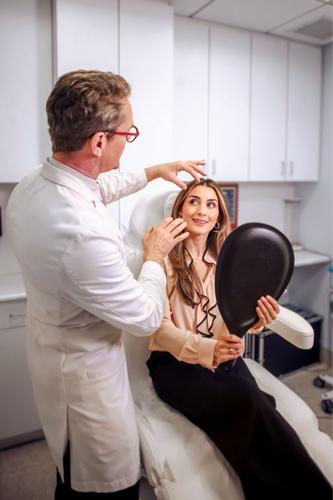
Dr. Konstantin Vasyukevich, a double board-certified facial plastic surgeon with New York Facial Plastic Surgery, recommends scheduling a consultation at least six months before the wedding when possible.
That does not mean every cosmetic treatment requires six months of recovery. It means beginning early gives patients more time to understand their options, plan appropriately and avoid rushing a medical decision because the wedding date is approaching.
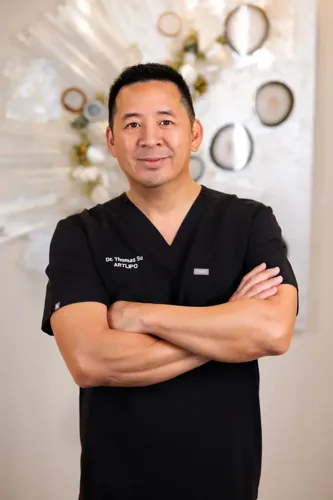
Dr. Thomas Su of ArtLipo takes a similar approach with body contouring.
“For a wedding, I would much rather have someone come to me too early than too late,” Su says.
For significant liposuction or 360-degree body sculpting, he prefers several months of lead time.
The reason is simple. Returning to ordinary activities is not the same thing as reaching a final cosmetic result.
Su says patients undergoing his awake liposuction procedures may be surprised by how quickly they can get back to normal activities, but swelling can continue as the tissues heal and the contour develops. The American Society of Plastic Surgeons similarly notes that final liposuction results may take one to three months to become apparent. American Society of Plastic Surgeons
That extra time matters when dress fittings, photographs and travel are already on the calendar.
Grooms Are Part of the Conversation Too

Wedding beauty is no longer solely about the bride.
Vasyukevich says he is seeing men pursue facial aesthetic treatments around significant life events, although many of his male patients are in their 40s, 50s and 60s.
Their motivation may be professional visibility, entering a new relationship or returning to dating. For men marrying later in life, wedding photographs can become another reason to consider treatment.
One particular area of interest is the jawline.
“The jawline strongly influences how youthful, fit and confident a man appears,” Vasyukevich says.
As men age, loose skin and fullness beneath the chin can soften that definition.
The appropriate treatment depends on what is actually causing the change.
Filler may improve chin projection or add structure along the jawline. Botox can address certain facial lines, while laser treatments may improve skin texture and appearance.
But nonsurgical treatments have limits.
When significant skin laxity is responsible for a softer lower face, Vasyukevich says repeatedly adding filler can sometimes make the area appear heavier rather than more defined. In those patients, a facelift or neck lift may be the more appropriate conversation.
Natural Does Not Have to Mean Barely Noticeable

One of the biggest concerns surrounding cosmetic procedures before a wedding is looking overdone.
For Vasyukevich, the goal with male patients is to preserve the characteristics that make the face look masculine and individual.
“My goal is to preserve what is natural and distinctive about each patient’s face,” he says. “For men, that means respecting masculine proportions and restoring subtle, age-appropriate definition, so he still looks like himself, never overfilled or obviously treated.”
He also points to a misconception some men have about facelift and neck-lift procedures.
Patients may worry that surgery will feminize the face. His approach instead focuses on restoring definition while maintaining masculine proportions and the patient’s natural character.
Su makes a similar distinction when discussing body contouring.
“I think people sometimes confuse ‘natural’ with ‘subtle,’ and they’re not necessarily the same thing,” he says.
A noticeable improvement can still look natural when the overall proportions remain balanced.
Brides and Grooms Often Focus on Different Areas

For brides considering body contouring, Su says the arms are one of the most commonly requested areas in his practice.
The reason is practical. Arms are exposed in many wedding-dress silhouettes and appear repeatedly in photographs throughout the day.
He also sees interest in the abdomen, waist, back and bra-line area.
For grooms, the abdomen, waist and chest are more common concerns.
But Su emphasizes that body contouring should not simply be about removing fat from an isolated area.
“Liposuction is not really about weight loss,” he says. “It’s about changing proportion and contour.”
A patient may initially focus on the stomach, for example, while the surrounding waist, flanks and back also influence the overall silhouette.
Expectations matter as well.
Liposuction cannot necessarily correct loose skin, cellulite or every other concern a patient may have. Skin quality, anatomy and starting shape all affect what can realistically be achieved.
Being Presentable Is Not the Same as Being Camera Ready
That may be the most important distinction in the entire wedding beauty timeline.
“Being presentable is not the same as being camera-ready,” Vasyukevich says.
Even relatively familiar treatments can involve swelling, bruising or other reactions.
The FDA notes that common dermal-filler risks include bruising, redness, swelling, pain and tenderness. Many reactions occur shortly after treatment and resolve within days or weeks, although more serious complications are also possible. U.S. Food and Drug Administration
Surgical procedures require even more planning.
The American Society of Plastic Surgeons says many facelift patients may be presentable in public after roughly 10 to 14 days, while it can take two to three months for the face to feel back to normal in terms of tightness, texture and sensation. American Society of Plastic Surgeons
Those numbers reinforce what both doctors told FINE.
The question should not be, “How soon can I leave the house?”
It should be, “How much time should I allow before I want to look and feel completely comfortable at my wedding?”
Recovery Has to Fit More Than One Date
The ceremony is rarely the only event on the schedule.
There may be engagement photographs, showers, bachelor and bachelorette trips, rehearsals, travel and final fittings.
Su says one of the biggest mistakes patients make is confusing downtime with healing time.
Someone might hear that another patient returned to work within days and assume that means scheduling a procedure two weeks before the wedding is reasonable.
“You may be back at work and feeling good while your body is still swollen and actively healing,” he says.
Recovery can also include compression garments, bruising and temporary restrictions on strenuous activity.
That may be manageable during an ordinary month.
It becomes much less appealing when every weekend contains a wedding-related event.
The Final Weeks Are Not the Time to Experiment
Both doctors are particularly cautious about procedures immediately before a wedding.
Vasyukevich discourages invasive cosmetic treatment shortly beforehand because even routine procedures can result in unexpected swelling or bruising.
Su is even more definitive when it comes to significant body contouring.
If someone came to him only a few weeks before the wedding requesting major liposuction or body sculpting, he says he would advise them to enjoy the wedding and return afterward.
There is also an emotional component.
“The weeks before a wedding are already busy enough,” Su says. “A significant cosmetic procedure shouldn’t be something you squeeze in because you suddenly feel pressure to change your body before a particular date.”
That may be the best guideline for the entire process.
Cosmetic treatment should be a considered medical and personal decision, not another item added to an already crowded wedding checklist.
Plan early. Understand the recovery. Leave room for the unexpected.
And when the final weeks arrive, the focus should no longer be on changing anything.
It should be on enjoying the wedding.
(0) comments
We welcome your comments
Log In
Post a comment as Guest
Keep it Clean. Please avoid obscene, vulgar, lewd, racist or sexually-oriented language.
PLEASE TURN OFF YOUR CAPS LOCK.
Don't Threaten. Threats of harming another person will not be tolerated.
Be Truthful. Don't knowingly lie about anyone or anything.
Be Nice. No racism, sexism or any sort of -ism that is degrading to another person.
Be Proactive. Use the 'Report' link on each comment to let us know of abusive posts.
Share with Us. We'd love to hear eyewitness accounts, the history behind an article.