

The Small Details Behind a Great Gymnastics Performance
In a sport where precision is everything, even the uniform matters. Here's why the right men's gymnastics leotard is about far more than looking competition-ready.
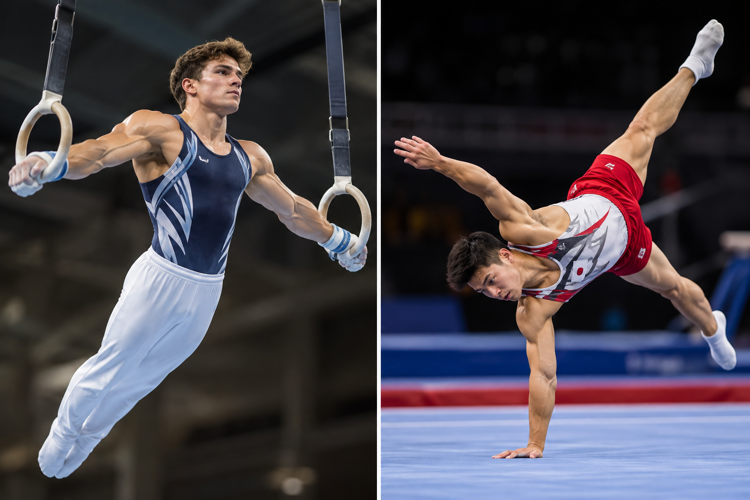
Watch a gymnast hold a perfect handstand on the parallel bars, and it's easy to forget how much work goes into making something so difficult look effortless. The strength, the balance, the almost impossible control of every movement—it all comes together in a matter of seconds.
What spectators don't see are the thousands of hours spent refining those movements. Or the small decisions made along the way, including one that rarely gets much attention: what the athlete wears.
A gymnastics uniform might seem like the least complicated part of the sport. After all, it's essentially a fitted piece of fabric. How much difference could it possibly make?
Quite a bit, actually.
Imagine preparing for a difficult routine only to discover that your singlet pulls across your shoulders every time you raise your arms. Or that the fabric keeps shifting when you're supposed to be concentrating on a landing.
Suddenly, the simplest piece of equipment becomes an unnecessary distraction.
The best men's gymnastics leotard isn't necessarily the one that looks most impressive. It's the one that allows an athlete to forget about it entirely.
When Clothing Becomes Part of the Performance
Gymnastics isn't particularly forgiving when it comes to movement.
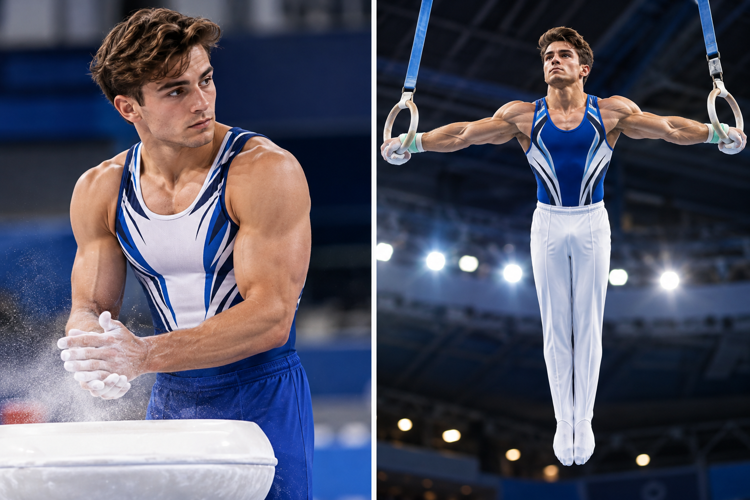
One moment, an athlete is holding a demanding strength position on the rings. The next, he's twisting through the air during a floor routine or extending his body over the high bar.
Ordinary athletic clothing wasn't designed for that kind of range.
A loose T-shirt can shift during inverted movements. A poorly fitted top can restrict shoulder extension. And fabric that bunches around the waist may become irritating during repetitive training.
That's why men's gymnastics singlets are designed to fit closely to the body while allowing freedom of movement.
But there's an important distinction between fitted and restrictive.
A singlet should feel secure without pulling against the shoulders, squeezing the torso, or creating uncomfortable tension around the hips.
And the easiest way to assess that isn't by standing in front of a mirror.
It's by moving.
Raise the arms overhead, bend forward, perform a controlled squat, and test a few familiar gymnastics positions in a safe training environment.
If the garment repeatedly needs adjusting, something isn't right.
Good gymnastics clothing should follow the athlete's movement—not demand attention from it.
The Fabric Has to Do More Than Stretch
Stretch is one of those features that sounds impressive until you realize almost every piece of modern athletic clothing promises it.
The more interesting question is what happens after the fabric stretches.
Does it return to its original shape? Does it remain comfortable during a long training session? Does it provide adequate coverage under bright lighting?
These are the details that matter.
Many men's gymnastics leotards use blends of nylon, polyester, and elastane. The combination can provide flexibility, moisture management, and durability, although performance varies depending on the fabric and construction.
Four-way stretch is particularly useful because it allows the material to move both horizontally and vertically.
But the fabric itself is only half the story.
Seams deserve just as much attention. Rough stitching or poorly positioned seams can become irritating when an athlete repeats the same movements throughout practice.
Smooth construction, secure stitching, and comfortable openings are often better indicators of a well-made singlet than an elaborate design.
It's the same principle behind choosing high-quality clothing: the details you don't immediately notice can determine how well a garment performs over time.
And while a dramatic metallic finish might photograph beautifully, it won't compensate for fabric that loses its shape after a few washes.
Why the Competition Uniform Should Never Be a Surprise
There is something appealing about saving a new outfit for a special occasion.
A perfectly tailored suit for an important dinner. A favorite dress for a celebration. A brand-new gymnastics singlet for competition day.
The first two make sense.
The third deserves reconsideration.
Gymnastics apparel needs to be tested in motion, not simply admired in a changing room.
A singlet that feels comfortable while standing may pull during an overhead extension. Leg openings that initially seem fine might become irritating after repeated movement. A particular fabric may also feel different once the athlete has warmed up.
These aren't discoveries anyone wants to make minutes before a routine.
Wearing competition attire during several practice sessions is a sensible way to identify problems early.
Training clothing, meanwhile, has a different job.
It needs to tolerate regular washing, repeated stretching, and the everyday wear associated with gymnastics practice. Durability and comfort are usually more important than decorative details.
Competition uniforms bring another consideration into the picture: presentation.
Coordinated team colors, clean lines, and thoughtfully chosen designs create a polished appearance. But the most elaborate uniform isn't automatically the best one.
Specialist retailers such as Gymnastics Express offer options intended for different gymnastics needs. Whether shopping for everyday practice or an important meet, the priority should remain the same: a secure fit, dependable construction, and fabric suited to the activity.
A competition uniform should feel familiar long before the athlete steps onto the floor.
The Sizing Mistake That Can Ruin a Perfectly Good Singlet
Here's something parents and first-time buyers often discover the hard way: gymnastics sizing doesn't always correspond neatly with ordinary clothing sizes.
An athlete who wears a medium T-shirt might not fit comfortably into a medium singlet.
The reason is simple.
Unlike a conventional shirt, a gymnastics leotard extends through the torso. Body length becomes just as important as chest or waist measurements.
One measurement worth knowing is the girth.
It follows the body from the shoulder, down the front, through the crotch, and back to the starting point.
If the torso measurement is too short, the singlet may pull downward at the shoulders or feel uncomfortably tight through the hips. Choosing a larger size might relieve that pressure but introduce excess fabric elsewhere.
This is why manufacturers' sizing charts matter.
And for younger gymnasts, there's another temptation: buying something slightly oversized in the hope that it will last through a growth spurt.
While that approach works for certain everyday clothes, excessive fabric isn't ideal for a sport involving inversions, rotations, and precise movement.
A secure fit now is generally more valuable than a uniform the athlete might eventually grow into.
The broader lesson is familiar to anyone who has invested in performance clothing. As FINE has previously explored in its look at activewear and the importance of movement, comfort and functionality are central to clothing designed for physical activity.
Gymnastics simply makes those priorities impossible to ignore.
Even Gymnastics Has a Dress Code
For all its extraordinary athletic expression, gymnastics has some surprisingly specific clothing rules.
International competition requirements go beyond whether a uniform looks professional.
Under the World Gymnastics Men's Artistic Gymnastics Code of Points for 2025–2028, male gymnasts must wear a singlet on all six apparatus.
For pommel horse, still rings, parallel bars, and horizontal bar, long gymnastics pants and socks are required.
Floor exercise and vault allow approved shorts or long-pants options.
The rules also address aspects of uniform color, national identification, and team presentation.
For an athlete preparing for a first competition, those details are worth confirming with a coach before purchasing anything.
Different domestic programs and competitive levels may have additional requirements.
And there's another misconception worth clearing up.
A beautifully designed uniform doesn't earn additional execution points simply because it looks impressive.
A coordinated appearance may be part of presenting a professional image, but gymnastics scores reflect performance under the applicable judging criteria.
The clothing should support the athlete, comply with the rules, and remain comfortably in place.
The artistry belongs to the routine.
A Little Care Goes a Long Way

Gymnastics clothing has a demanding life.
It gets stretched, worn through lengthy practices, washed repeatedly, and occasionally forgotten at the bottom of a gym bag.
Even good-quality materials can deteriorate with improper care.
Always begin with the manufacturer's instructions, particularly for garments featuring metallic fabrics or decorative finishes.
Many synthetic performance materials benefit from gentle washing and air-drying when their care labels permit it. Excessive heat can damage elastic fibers, while harsh laundering may affect delicate finishes.
It's also sensible to remove damp clothing from a closed gym bag promptly and allow it to dry.
Over time, check for loose stitching, weakened elastic, or fabric that no longer returns to its original shape.
For athletes who train regularly, rotating practice clothing can help distribute wear across several garments.
None of this is especially glamorous. But neither is discovering that a favorite competition singlet has lost its shape just before an important event.
A little attention to maintenance protects the quality of the garment—and the investment made in choosing it.
The FINE Take
There's a fascinating contradiction at the heart of gymnastics.
The performances that appear most effortless are often the result of the greatest preparation.
Every controlled landing, perfectly extended position, and seemingly weightless movement represents hours of repetition and refinement.
The uniform is a small part of that preparation, but it deserves the same thoughtful attention as the other details.
Choosing the right men's gymnastics leotard isn't about finding the most expensive design or the boldest pattern. It's about understanding how the garment fits, how the fabric moves, and whether it remains comfortable when the athlete needs to concentrate.
Because the greatest compliment you can give a piece of performance clothing isn't that it looks spectacular.
It's that once the routine begins, nobody—including the gymnast—has any reason to think about it.

(0) comments
We welcome your comments
Log In
Post a comment as Guest
Keep it Clean. Please avoid obscene, vulgar, lewd, racist or sexually-oriented language.
PLEASE TURN OFF YOUR CAPS LOCK.
Don't Threaten. Threats of harming another person will not be tolerated.
Be Truthful. Don't knowingly lie about anyone or anything.
Be Nice. No racism, sexism or any sort of -ism that is degrading to another person.
Be Proactive. Use the 'Report' link on each comment to let us know of abusive posts.
Share with Us. We'd love to hear eyewitness accounts, the history behind an article.