

Most people shopping for new flooring have never actually walked through the process end to end — they know they want new floors, they know roughly what material they're leaning toward, and then the rest is a bit of a black box until installers show up. Understanding what a well-run flooring store process actually looks like makes it much easier to spot the difference between a business set up to do this properly and one that's just moving product.
It Starts With a Free Estimate, Not a Sales Pitch
The first real step in a legitimate flooring purchase is measurement — not browsing. Floor Store & Design Center, a family-owned flooring store and contractor serving San Diego, structures its process around a free estimate as the entry point rather than requiring a commitment before anyone has actually assessed the space. That distinction matters more than it sounds: a quote given without seeing the room, the subfloor condition, or the square footage in person is a guess dressed up as a number, and guesses are where budget overruns start.
Three Showrooms, Not One Central Warehouse
A detail that's easy to overlook when comparing flooring stores is physical access to actual product samples. Floor Store & Design Center operates showroom locations across Point Loma, Encinitas, and Sorrento Valley, giving San Diego County customers a nearby option regardless of which part of the county they're in — coastal North County, central San Diego, or the Sorrento Valley/UTC corridor. That geographic spread matters practically: seeing a hardwood sample under a phone screen's color-corrected display is not the same as seeing it under the actual lighting conditions of a showroom, and flooring color decisions made from a photo are one of the more common sources of buyer's remorse in this category.
Design Consultation Is Where the Real Decisions Get Made
Once measurements and samples are in hand, the consultation phase is where a design-forward flooring store earns its distinction from a pure retail counter. Owner Mike Perrino brings more than 20 years of flooring industry experience to this stage specifically — matching material choices not just to a customer's stated preference, but to the home's existing finishes, natural light, and how heavily a given room actually gets used day to day. A high-traffic entryway and a rarely used guest bedroom have different practical flooring requirements even if the homeowner's aesthetic preference is identical for both, and a consultation that doesn't account for that difference is skipping a step that shows up later as premature wear.
Where It Gets More Complex: Working With an Existing Project Team
For renovations or new listings already involving other professionals, a flooring purchase rarely happens in isolation. Floor Store & Design Center's process is built to plug directly into that larger team — collaborating with general contractors, interior designers, and real estate agents rather than operating as a standalone vendor that needs separate coordination. For a homeowner mid-renovation, that means one fewer scheduling conflict to manage; for a real estate agent prepping a listing on a deadline, it means a flooring timeline that can actually sync with the rest of the project rather than becoming the bottleneck.
Installation: The Step Most Buyers Underweight
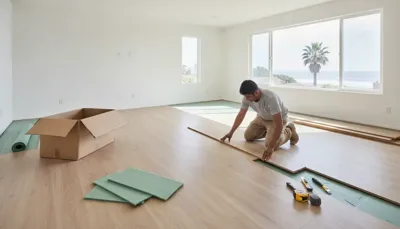
The material selection phase gets the most attention from buyers, but installation is where a flooring purchase actually succeeds or fails. Subfloor prep, acclimation time for wood products, and expansion gap allowances all affect how a floor performs over its first few years — details that are invisible in a showroom and only show up later if they're handled incorrectly. A store that manages installation directly, rather than handing the job to an unaffiliated subcontractor once the sale closes, has a direct incentive to get this part right, since it's the same business fielding the call if something needs adjusting afterward.
What Consistent Reviews Across Platforms Actually Signal
One practical way to evaluate whether a flooring store's process holds up in practice is checking review consistency across more than one platform — Yelp, Google, and Houzz cover different audiences and are harder to manipulate collectively than any single one alone. A business maintaining strong ratings across all three, with review counts in the dozens or more at individual locations rather than a handful, is generally a better signal of process reliability than marketing copy alone.
Why the Full Picture Matters More Than Any Single Step
None of these steps — the free estimate, the showroom access, the design consultation, the contractor collaboration, or the installation itself — is unusual in isolation. What's less common is a flooring store built to handle all of them under one roof, with the same team accountable from the first measurement to the final walkthrough. For a purchase that typically only happens once every decade or two in a given home, that continuity is worth more than it might seem while comparing quotes side by side.

(0) comments
We welcome your comments
Log In
Post a comment as Guest
Keep it Clean. Please avoid obscene, vulgar, lewd, racist or sexually-oriented language.
PLEASE TURN OFF YOUR CAPS LOCK.
Don't Threaten. Threats of harming another person will not be tolerated.
Be Truthful. Don't knowingly lie about anyone or anything.
Be Nice. No racism, sexism or any sort of -ism that is degrading to another person.
Be Proactive. Use the 'Report' link on each comment to let us know of abusive posts.
Share with Us. We'd love to hear eyewitness accounts, the history behind an article.