

Achieving optimal thermal comfort within our homes, while simultaneously reducing our environmental footprint and operating costs, hinges on a strategic approach to energy and climate control upgrades. This involves understanding building science principles to enhance indoor air quality and minimize energy waste. By focusing on key areas, we can make significant strides toward a more efficient and comfortable living space.
Advanced Heat Pumps and Precision Temperature Management
Modern heating, ventilation, and air conditioning (HVAC) systems are at the forefront of home energy efficiency. Gone are the days of inefficient furnaces and air conditioners that merely heat or cool. Today, advanced heat pumps offer a approach to climate control, providing both heating and cooling from a single, highly efficient unit. These systems leverage variable-capacity compressors, allowing them to precisely match heating and cooling output to the home's needs, rather than cycling on and off at full power. This not only enhances comfort but also dramatically reduces energy consumption.
Cold-climate heat pumps, in particular, have evolved to perform exceptionally well even in freezing temperatures, making them a viable and superior alternative to traditional fossil fuel systems across a wider range of climates. With efficiencies often reaching 300% to 400%, they deliver three to four times more energy than they consume, a stark contrast to older systems. Given that heating and cooling can account for nearly half of a home's total energy emissions, upgrading to a high-efficiency heat pump represents one of the most impactful changes a homeowner can make.
Beyond the core equipment, precision temperature management involves optimizing the distribution of conditioned air. Professional duct sealing is crucial, as leaky ducts can waste 20% or more of conditioned air before it even reaches living spaces. Implementing zone control systems further refines comfort, allowing different areas of the home to be heated or cooled independently, preventing energy waste in unoccupied rooms. For those seeking to modernize their home's climate control with cutting-edge technology and ensure optimal installation, consulting with providers of expert HVAC services is a critical first step.
Building Envelope Enhancements: Insulation and High-Performance Windows
The "building envelope" — your home's roof, walls, foundation, windows, and doors — acts as its protective shell. A well-optimized envelope is fundamental to maintaining thermal comfort and energy efficiency. Without it, even the most advanced HVAC system will struggle, leading to wasted energy.
One of the most effective upgrades involves R-value optimization through enhanced insulation. Upgrading insulation in attics, walls, and crawl spaces can reduce heating and cooling costs by 15-20%. Attic air sealing, which addresses hidden gaps and cracks, is particularly impactful, as heat often escapes or enters through the attic. Insufficient insulation can account for a significant portion of a home's heat loss, making this a priority.
High-performance windows and doors also play a vital role. Replacing older, single-pane windows with modern double-pane or even triple-pane units featuring low-emissivity (low-e) coatings can drastically reduce heat transfer. ENERGY STAR certified windows, for instance, can lower household energy bills by an average of 12 percent. Beyond full replacements, simple measures like adding weatherstripping around doors and windows, and eliminating drafts, offer cost-effective improvements that prevent energy leaks. These enhancements create a more stable indoor temperature, reducing the workload on your heating and cooling systems.
Smart Thermostats and Automated Climate Management
Once the building envelope is optimized and efficient HVAC systems are in place, smart thermostats provide the intelligence to manage climate control with unparalleled precision. These devices go far beyond simple programmable thermostats, offering features like adaptive learning, which allows them to understand your household's routines and preferences, automatically adjusting temperatures for maximum comfort and efficiency.
Occupancy detection, often paired with geofencing technology, ensures that energy isn't wasted heating or cooling an empty home. Smart thermostats can also be programmed for time-of-use scheduling, aligning with utility company peak and off-peak rates to reduce energy costs. This "peak shaving" capability can significantly lower monthly bills. The data confirms their value: smart thermostats can save homeowners 10-23% on heating and cooling costs annually by learning habits, adjusting temperatures automatically, and providing remote control and energy reports. Their ability to integrate with other smart home devices further enhances convenience and control, making them an indispensable component of modern climate management.
Whole-Home Electrification and Clean Power Integration
The concept of whole-home electrification is gaining significant traction as we move towards a decarbonized future. This comprehensive approach involves replacing all fossil fuel-burning appliances and systems in a home with electric alternatives, powered increasingly by clean, renewable energy. This shift not only reduces a home's carbon footprint but also enhances energy resilience and can lead to substantial long-term savings by displacing volatile fossil fuel costs.
Planning Electrical Infrastructure for Home Energy and Climate Control Upgrades
A crucial, often overlooked, aspect of whole-home electrification is the underlying electrical infrastructure. Many older homes were built with electrical panels designed for lower power demands, and they may not be sufficient to support modern electric appliances, heat pumps, and electric vehicle (EV) charging. Upgrading to a 200-amp electrical panel is frequently a necessary first step, providing the capacity for new electric systems.
Beyond capacity, smart breaker systems offer enhanced control and monitoring, allowing homeowners to track energy usage at the circuit level and even manage loads remotely. Preparing for EV circuit readiness is also vital for many, as the adoption of electric vehicles continues to accelerate. This means ensuring dedicated wiring and sufficient power for Level 2 chargers. Similarly, installing dedicated wiring for high-demand electric appliances like induction cooktops and heat pump dryers is important. Proactive planning for these electrical upgrades ensures a smooth transition to an all-electric home and can be supported by companies specializing in energy-efficient electrical solutions.
Rooftop Solar Arrays and Battery Storage Systems
The ultimate goal of whole-home electrification is often to power these new electric systems with clean, self-generated energy. Rooftop solar arrays, utilizing photovoltaic (PV) generation, are the cornerstone of this vision. By converting sunlight directly into electricity, solar panels can significantly offset or even eliminate a home's reliance on grid power.

Pairing solar with battery storage systems, often utilizing advanced lithium iron phosphate technology, provides energy resilience and optimizes self-consumption. Batteries store excess solar energy generated during the day for use at night or during grid outages, offering reliable backup power. Net metering policies, where available, allow homeowners to sell surplus electricity back to the grid, further enhancing the economic benefits. A fully electrified home powered by rooftop solar can achieve combined savings that are substantial, making it a powerful investment in long-term financial and environmental well-being.
Super-Efficient Water Heating and Clean Appliances
Beyond heating and cooling, water heating and major appliances represent significant energy consumers in the home. Traditional electric resistance water heaters are notoriously inefficient. Heat pump water heaters, however, offer a dramatically more efficient solution, typically using approximately 50% less energy than their conventional counterparts. They work by extracting heat from the surrounding air and transferring it to the water, making them a smart and sustainable upgrade.
The kitchen and laundry room also offer opportunities for electrification. Induction cooking, which uses electromagnetic fields to directly heat cookware, is far more energy-efficient and precise than traditional electric or gas stoves. Heat pump dryers, another innovative appliance, recirculate air to dry clothes at lower temperatures, consuming significantly less energy than conventional electric dryers. Finally, addressing phantom load, or "vampire power," is a simple yet effective way to save energy. Unplugging electronics or using smart power strips can eliminate up to 10% of home energy use that is silently wasted by devices in standby mode. Upgrading to ENERGY STAR certified appliances across the board, from clothes washers (which use about 30% less water and 20% less energy) to refrigerators (which can save homeowners money annually compared to older models), contributes to a holistic reduction in energy consumption.
Strategic Sequencing for Maximum Efficiency and Cost Savings
Embarking on home energy and climate control upgrades can feel overwhelming, but a strategic sequencing approach ensures maximum efficiency and avoids costly mistakes. Think of it as a retrofit roadmap, designed to optimize capital efficiency and maximize long-term return on investment (ROI). The key is to address foundational issues first, ensuring that subsequent investments deliver their full potential. This also helps in equipment right-sizing, preventing the common pitfall of installing oversized HVAC systems that are less efficient and more expensive to operate.
The Step-by-Step Roadmap for Home Energy and Climate Control Upgrades
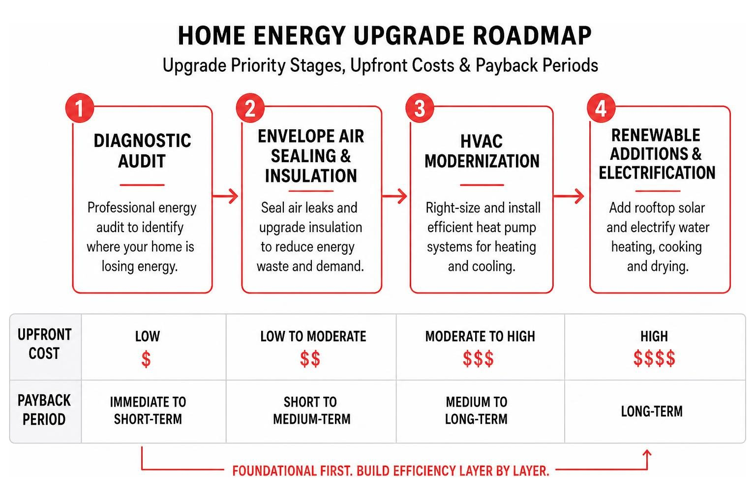
Our recommended roadmap begins with diagnostics and ends with renewable energy integration, building efficiency layer by layer:
- Diagnostic Audit: The absolute first step should be a professional energy audit. This comprehensive assessment uses tools like blower door testing and thermal imaging to identify exactly where your home is losing energy. This diagnostic phase provides a data-driven plan, ensuring that subsequent investments are targeted and effective. A home energy audit is even eligible for a federal tax credit, making it an affordable and essential starting point.
- Envelope Air Sealing and Insulation: Once the audit pinpoints problem areas, prioritize air sealing and insulation. Sealing air leaks in the attic, around windows, and through walls is the most cost-effective way to reduce energy waste. After sealing, upgrading insulation to recommended R-values creates a robust thermal barrier. These measures reduce the demand on your heating and cooling systems significantly.
- HVAC Modernization: With a tightened building envelope, you can now right-size and modernize your heating and cooling systems. This is the ideal time to consider a high-efficiency heat pump, which will now operate far more effectively due to reduced air leakage and improved insulation.
- Renewable Additions and Electrification: After optimizing demand, consider adding renewable energy sources like rooftop solar and electrifying remaining fossil fuel appliances (water heater, stove, dryer). This order ensures that your solar array is sized to meet a reduced energy demand, maximizing its impact and ROI.
Implementing these upgrades in a logical sequence ensures that each step builds upon the last, maximizing overall savings and comfort.

Accessible Solutions for Renters and Budget-Conscious Households
Energy efficiency isn't just for homeowners undertaking major renovations. Renters and those on a tighter budget also have numerous options to improve their home's energy performance and reduce utility bills. Many of these solutions are portable, low-cost, and don't require landlord approval for implementation.
Simple changes like switching to LED lighting retrofits throughout the home can significantly cut electricity use, as LED bulbs use 75% less energy and last up to 25 times longer than incandescent bulbs. Installing smart power strips can combat phantom loads by automatically cutting power to electronics when not in use, eliminating up to 10% of wasted energy. Low-flow aerators on faucets and low-flow showerheads reduce hot water consumption, saving both water and the energy used to heat it. Temporary window insulating film and heavy curtains can provide additional thermal barriers, especially in older homes with inefficient windows. For heating and cooling, portable heat pump units offer a more efficient alternative to traditional space heaters or window AC units, providing targeted comfort where needed. Many utility companies also offer rebates or free upgrades for renters, and programs like California's Green Tariff discount provide access to clean energy without requiring home ownership.
Leveraging Federal Rebates, Tax Credits, and Financing in 2026
The year 2026 presents an unprecedented opportunity for homeowners to invest in energy-efficient upgrades, thanks to a robust landscape of federal rebates, tax credits, and financing options. These incentives are designed to make upfront capital costs more manageable, encouraging a widespread transition to cleaner, more efficient homes. Understanding how to stack these financial benefits is key to maximizing savings.
Inflation Reduction Act Rebates and HEEHRA Point-of-Sale Discounts
The Inflation Reduction Act (IRA) of 2022 introduced significant programs to support home energy upgrades. One of the most impactful is the High-Efficiency Electric Home Rebate Act (HEEHRA), which provides point-of-sale discounts for low-to-moderate-income households. This means eligible homeowners and renters can receive instant savings directly at the time of purchase and installation, rather than waiting for tax credits.
The HEEHRA program offers substantial rebates, with a maximum of $14,000 per household. This can include up to $8,000 for an electric heat pump, $1,750 for a heat pump water heater, $840 for an induction stove, $4,000 for a main electrical panel upgrade, $2,500 for electrical wiring upgrades, and $1,600 for weatherization projects. Eligibility is based on Area Median Income (AMI), with households earning less than 80% of AMI receiving 100% coverage, and those between 80-150% of AMI receiving 50% coverage.
In addition to HEEHRA, the IRA also includes the HOMES (Home Owner Managing Energy Savings) performance rebate program. This offers rebates based on the measured energy savings of a home after upgrades. Homeowners can receive $2,000 for achieving at least a 20% energy reduction and up to $4,000 for a 35% or greater reduction, with no income caps for this program. These rebates, particularly the point-of-sale discounts, significantly reduce the upfront financial barrier to electrification.
Maximizing Section 25C and Section 25D Annual Tax Credits
Beyond rebates, federal tax credits offer another powerful incentive. The Energy Efficient Home Improvement Credit (Section 25C) allows homeowners to claim 30% of the cost of eligible energy-efficient upgrades, up to an annual maximum of $1,200 for most improvements. This includes items like insulation, exterior windows and doors, and home energy audits. Crucially, there's a separate annual cap of $2,000 for specific high-efficiency residential energy property, including heat pumps, heat pump water heaters, and biomass stoves. This means a homeowner could potentially claim up to $3,200 in federal tax credits annually by strategically combining upgrades. The credit has no lifetime limit, allowing for multi-year stacking of improvements.
For renewable energy systems, the Residential Clean Energy Credit (Section 25D) provides an uncapped 30% tax credit for the cost of installing solar panels, battery storage, and geothermal systems. This credit can be carried forward to future tax years if your tax liability is less than the credit amount. To claim these credits, homeowners must file IRS Form 5695 with their tax return for the year the improvements were placed in service. Many states also offer their own clean energy programs and incentives, which can be stacked on top of federal benefits, further enhancing affordability.
Frequently Asked Questions About Home Climate Upgrades
As homeowners consider enhancing their home's energy efficiency and climate control, several common questions arise. Here, we address some of the most pressing concerns.
What is the most cost-effective first step in improving home climate efficiency?
The single most cost-effective first step is to conduct a professional energy audit. This diagnostic process, often involving blower door testing to measure air leakage and thermal imaging to identify insulation gaps, provides a clear, data-driven roadmap for your home's specific needs. It helps prioritize improvements, ensuring you invest in the upgrades that will yield the greatest return. Following an audit, low-cost weatherization measures, such as sealing air leaks in the attic and around windows and doors, are typically the next most impactful and affordable steps. A home energy audit itself is eligible for a federal tax credit, making it an even more attractive starting point.
How do modern heat pumps perform in freezing winter temperatures?
Modern cold-climate heat pumps are engineered to perform exceptionally well in freezing temperatures, a significant improvement over earlier models. Thanks to advancements like cold-climate vapor injection and sophisticated inverter technology, many contemporary heat pumps can maintain efficient heating capacity even when outdoor temperatures drop below -15°F. While they may still incorporate auxiliary electric heat strips for extreme cold snaps, their primary operation remains highly efficient, putting out three to four times more energy than they consume. This makes them a viable and often superior alternative to traditional furnaces in almost all U.S. climates, providing consistent comfort and substantial energy savings.
Can renters take advantage of federal energy efficiency incentives?
Yes, renters can absolutely benefit from energy efficiency improvements and some federal incentives, though the scope may differ from homeowners. Many portable efficiency measures, such as switching to LED lighting, using smart power strips, installing low-flow faucet aerators, and employing temporary window insulation, can be implemented without landlord approval and directly reduce utility bills. Furthermore, some federal programs, like specific utility rebates or state-level Green Tariff programs, are accessible to renters and can help lower energy costs. In some cases, renters may also qualify for GoGreen Home loans or Energy Savings Assistance programs, particularly those designed for low-income households. For larger upgrades, renters can explore co-investment opportunities with their landlords, especially if the improvements offer mutual benefits like reduced operating costs and increased property value.
Investing in home energy and climate control upgrades is a powerful strategy for modern homeowners. It's a holistic approach to home performance that extends beyond mere comfort, contributing to long-term wealth building through reduced utility bills and increased property value. Energy-efficient homes, for instance, have been shown to sell for 2-8% more than comparable, less efficient properties. Beyond the financial gains, these upgrades offer significant health benefits by improving indoor air quality and creating a more stable, comfortable living environment. Embracing these improvements is a commitment to sustainable living, reducing our collective carbon footprint and building a more resilient future. By leveraging the comprehensive suite of incentives available in September 2026, homeowners can transform their residences into efficient, comfortable, and environmentally responsible havens.


(0) comments
We welcome your comments
Log In
Post a comment as Guest
Keep it Clean. Please avoid obscene, vulgar, lewd, racist or sexually-oriented language.
PLEASE TURN OFF YOUR CAPS LOCK.
Don't Threaten. Threats of harming another person will not be tolerated.
Be Truthful. Don't knowingly lie about anyone or anything.
Be Nice. No racism, sexism or any sort of -ism that is degrading to another person.
Be Proactive. Use the 'Report' link on each comment to let us know of abusive posts.
Share with Us. We'd love to hear eyewitness accounts, the history behind an article.