
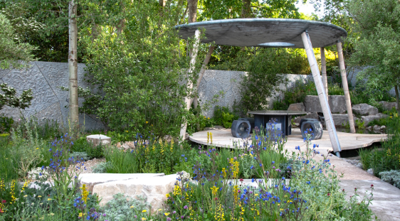

A beautiful landscape shouldn't require constant watering, endless maintenance, or an oversized utility bill. Today's most appealing outdoor spaces are proving that thoughtful planting, natural materials, and smart design can create gardens that look sophisticated without demanding excessive resources.
Water-wise landscaping has moved well beyond the familiar image of gravel beds and scattered succulents. From Mediterranean-inspired courtyards to contemporary gardens filled with sculptural greenery, homeowners are discovering that using less water can actually encourage better design.
The secret isn't removing everything that needs attention. It's choosing where to invest in greenery, where to introduce hardscaping, and how to make each element contribute to the overall experience of being outdoors.
Rethink the Traditional Lawn Without Giving It Up Entirely
A sweeping green lawn may be visually appealing, but it isn't always the most practical centerpiece of a residential landscape. In warmer or drier climates, maintaining that uninterrupted carpet of grass can require considerable irrigation, mowing, and seasonal attention.
That doesn't mean every lawn needs to disappear.
A smaller, thoughtfully positioned lawn can still provide a comfortable place for children, pets, or outdoor gatherings. The difference is treating grass as a functional feature rather than the default covering for every available square foot.
Consider a backyard where a modest lawn sits beside a shaded seating terrace, surrounded by flowering shrubs and textured planting beds. The grass serves a purpose, while the surrounding landscape provides visual interest and reduces the amount of turf requiring irrigation.
Homeowners considering a larger outdoor renovation can take inspiration from creating exceptional outdoor spaces that enhance luxury living, where the relationship between landscaping and outdoor living deserves as much attention as individual design features.
The better approach is to keep the lawn where you actually use it and redesign the areas where grass serves little purpose.
Choose Plants for Their Beauty and Their Climate
Drought-tolerant landscaping shouldn't mean settling for a garden that looks sparse or colorless.
Some of the most visually interesting plants offer beautiful foliage, architectural shapes, seasonal flowers, and relatively modest watering requirements once established.
In suitable Mediterranean-style climates, lavender, rosemary, salvias, and certain ornamental grasses can create a garden rich in movement, fragrance, and color. Succulents and agaves provide stronger architectural forms, particularly when paired with natural stone or contemporary outdoor furnishings.
In other regions, native grasses, flowering perennials, and locally adapted shrubs may be more appropriate.
The important distinction is that a plant labeled "drought tolerant" isn't necessarily suitable for every climate. Soil drainage, humidity, winter temperatures, and rainfall patterns all influence whether a plant will thrive.
The EPA WaterSense guide to choosing plants offers location-based resources for selecting varieties suited to different growing conditions.
For a sophisticated appearance, focus on combinations rather than collecting individual plants.
Repeating a few complementary varieties creates visual continuity. Taller ornamental grasses can soften walls and fences, while low-growing groundcovers provide contrast beneath sculptural shrubs. A restrained planting palette often feels more intentional than a crowded collection of unrelated species.
Use Stone and Hardscaping to Create Outdoor Rooms
One of the most effective ways to reduce irrigation demand is to introduce hardscaping where it genuinely improves how the property functions.
A stone terrace, gravel pathway, or carefully positioned courtyard can transform unused garden space into somewhere people want to spend time.
Natural limestone, decomposed granite, and permeable paving can complement both traditional and contemporary architecture. The key is selecting materials that relate to the home's exterior rather than treating the garden as a separate design project.
For example, a modern home with large glass doors might benefit from generously proportioned stone pavers extending the visual lines of the interior flooring. A Mediterranean-style property could incorporate gravel paths, terracotta planters, and climbing greenery around a shaded dining area.
However, replacing every planting bed with gravel isn't necessarily the smartest solution.
Stone surfaces can absorb and radiate heat, particularly in sunny climates. The EPA's landscaping guidance cautions that rock mulch may increase heat stress around plants that aren't adapted to arid conditions.
A better design balances hard surfaces with living greenery, trees, and shaded areas.
The goal is to use less water without creating an outdoor space that becomes uncomfortable on hot afternoons.
Make Shade Part of the Landscape Design
Shade is sometimes overlooked in conversations about water conservation, yet it plays an important role in how comfortable and resilient an outdoor space feels.
Well-positioned trees can protect seating areas from intense sunlight while contributing to the character of the garden. Pergolas and other overhead structures offer opportunities to establish distinct outdoor living zones.
A shaded dining terrace surrounded by climate-appropriate planting, for example, can feel more inviting than a large, exposed expanse of lawn.
When selecting trees, consider mature size, root behavior, placement near structures, and long-term watering requirements. A tree that looks perfectly proportioned at the nursery may eventually overwhelm a small courtyard.
For homeowners who enjoy entertaining, subtle additions such as backyard string lights can make these thoughtfully designed areas equally appealing after sunset.
Invest in Smarter Irrigation Instead of More Watering
A drought-tolerant garden still needs water, especially while newly installed plants establish healthy root systems.
The difference is how efficiently that water is delivered.
Drip irrigation can direct water into planted areas without spraying surrounding pavement or unnecessary sections of the landscape. Grouping plants according to similar watering requirements also helps prevent overwatering one variety while trying to keep another alive.
Smart irrigation controllers offer another practical improvement.
According to EPA WaterSense, replacing a conventional clock-based irrigation controller with a WaterSense-labeled model can save an average home up to 15,000 gallons annually, depending on the controller technology and proper use.
Weather-based controllers adjust irrigation schedules to reflect local conditions, while soil-moisture-based

(0) comments
We welcome your comments
Log In
Post a comment as Guest
Keep it Clean. Please avoid obscene, vulgar, lewd, racist or sexually-oriented language.
PLEASE TURN OFF YOUR CAPS LOCK.
Don't Threaten. Threats of harming another person will not be tolerated.
Be Truthful. Don't knowingly lie about anyone or anything.
Be Nice. No racism, sexism or any sort of -ism that is degrading to another person.
Be Proactive. Use the 'Report' link on each comment to let us know of abusive posts.
Share with Us. We'd love to hear eyewitness accounts, the history behind an article.