
ITALICUS marks its 10th anniversary with DECIMO, a limited-edition bottle inspired by Italian coastal design.
Ten years after ITALICUS helped revive the nearly forgotten Rosolio category, the Italian ritual of slowing down over a Spritz has found a decidedly modern audience.
Ten years ago, asking for a Rosolio outside Italy was likely to earn a blank look. Today, the historic Italian aperitivo has found its way onto cocktail menus, home bar carts and into a much broader conversation about the way we drink before dinner.
ITALICUS Rosolio di Bergamotto has played a notable role in that return.
Created in Italy in 2016, ITALICUS is celebrating its 10th anniversary after spending a decade introducing Rosolio to drinkers who may have understood the pleasures of aperitivo without knowing much about one of its historic traditions.
“Rosolio was almost completely forgotten when vermouth took over as the aperitif of choice in the Italian Royal Courts in the late 1700s,” says Francesco Ottaviano, VP Gins and Aperitifs at Pernod Ricard. “When ITALICUS launched a decade ago in 2016, our job was to reintroduce the category to the international landscape of aperitivo liqueurs.”
It is a reminder that what feels new at the bar is sometimes simply an old idea finding the right moment to return.
Bringing Rosolio Back to the Bar
Rosolio is an Italian style of liqueur historically made with aromatic ingredients such as citrus, flowers, herbs and botanicals. ITALICUS takes inspiration from that tradition while putting bergamot at the center of its modern interpretation.
The recipe includes bergamot essential oils from Calabria, Cedro from Sicily and Italian botanicals including Roman chamomile, lavender, yellow rose and gentian. Calabria is particularly important to the story. Italy’s official tourism portal describes Calabrian bergamot and the Reggio Calabria area as closely connected, with the citrus fruit long prized for its distinctive fragrance and essential oil.
For ITALICUS, provenance is more than an attractive label detail.
“The liquid’s regional provenance, craft and heritage is central to ITALICUS Rosolio di Bergamotto, defining its taste and character,” Ottaviano says.
The result moves between citrus, floral and gently bitter notes. It feels recognizable enough to belong comfortably in the aperitivo world while offering something different from the brighter orange and red bottles that have come to define the Spritz for many American drinkers.
Why Aperitivo Still Works
The return of Rosolio makes more sense when viewed alongside the broader appeal of aperitivo culture.
In Italy, aperitivo occupies that appealing stretch between the end of the working day and dinner. The official Italian tourism site describes aperitivo as a social moment of relaxation, generally beginning around 6 p.m. and often accompanied by small bites, a Spritz or a glass of Prosecco.
That may be part of why the ritual travels so well. It does not require an elaborate dinner party, a formal cocktail hour or even a particularly complicated drink.
“The aperitivo ritual resonates so strongly with consumers today because they increasingly want experiences that feel social, relaxed and rooted in quality rather than simply centered around drinking,” Ottaviano says.
There is a luxury in that simplicity. A chilled bottle, a few good olives, something salty to eat and an hour that does not need to accomplish anything can feel surprisingly indulgent.
For hosts, it also fits a broader shift toward entertaining that feels polished without becoming laborious. FINE has been seeing the same idea across at-home entertaining, where the most successful gatherings increasingly favor thoughtful details and ease over excess.
The Spritz Has Room to Evolve
The Spritz is no longer a niche Italian cocktail. It has become one of the most recognizable warm-weather drinks in the United States, and that familiarity has created room for experimentation.
Ottaviano says American drinkers have become more adventurous, while bartenders are increasingly using the familiar Spritz structure as a starting point rather than treating it as a single fixed recipe.
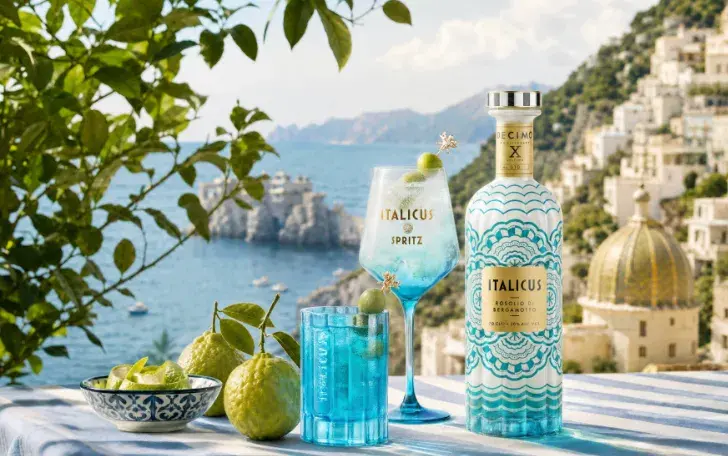
The signature ITALICUS Spritz remains deliberately simple: one part ITALICUS, two parts Prosecco, ice and three green olives. The bergamot and floral notes provide brightness while the olives bring a savory counterpoint that keeps the drink from leaning overly sweet.
It is also a cocktail that makes sense at home. There is no shaker, complicated syrup or six-bottle lineup required when guests arrive. FINE recently included the drink in our guide to five fall cocktails worth making, where its brightness worked as an early-evening counterpoint to the darker drinks that followed.
Ten Years Told Through Design

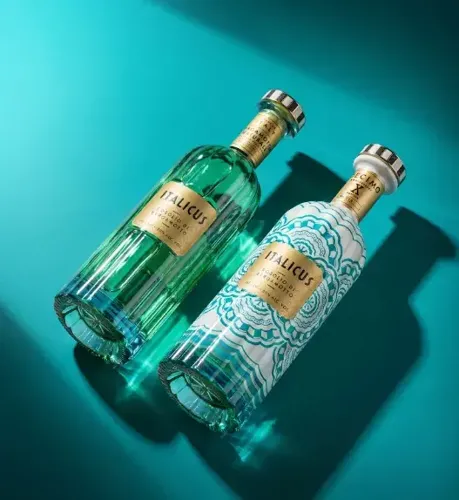
The original ITALICUS bottle alongside DECIMO, created to commemorate the brand’s first decade.
ITALICUS marked its first decade with DECIMO, a limited-edition anniversary bottle created with design agency Stranger & Stranger.
The bottle retains the aquamarine character of the original while adding details inspired by Amalfi Coast ceramics. Ten bergamot roundels represent each year of the brand’s first decade.
“Each detail is a tribute to ITALICUS’ origins and Italian craft,” Ottaviano says.
DECIMO was not released for general retail sale in the United States, instead appearing through select anniversary programming and media gifting. The brand also introduced a 375ml bottle, giving consumers a smaller format for trying Rosolio at home.
The two releases serve very different purposes. DECIMO celebrates the visual identity and Italian provenance that have been part of ITALICUS from the beginning. The smaller bottle is considerably more practical: it lowers the barrier for someone who is curious about Rosolio but not yet ready to give it permanent space on the bar cart.
What Comes After the Comeback
For Ottaviano, one of the clearest signs that Rosolio had moved beyond simple rediscovery came when he began seeing ITALICUS Spritzes being enjoyed outside Italy.
“It was no longer something only enjoyed in Italy, but a category that discerning drinkers were discovering and enjoying the world over,” he says.
The challenge for the next decade is less about resurrecting Rosolio than making the category familiar enough to stand alongside better-known aperitifs. ITALICUS continues to work with bartenders through programs including its Art of ITALICUS Aperitivo Challenge, while the smaller bottle gives home cocktail drinkers another entry point.
But perhaps the most interesting part of the story is not the bottle at all.
Aperitivo asks very little of us. Sit down before dinner. Pour something interesting. Put a few small bites on the table. Talk to the people who are there.
In a culture that has become very good at filling every available minute, a ritual built around doing less may be precisely why Rosolio suddenly feels relevant again.
ITALICUS provided product samples for editorial consideration. FINE Magazine maintains independent editorial control.

(0) comments
We welcome your comments
Log In
Post a comment as Guest
Keep it Clean. Please avoid obscene, vulgar, lewd, racist or sexually-oriented language.
PLEASE TURN OFF YOUR CAPS LOCK.
Don't Threaten. Threats of harming another person will not be tolerated.
Be Truthful. Don't knowingly lie about anyone or anything.
Be Nice. No racism, sexism or any sort of -ism that is degrading to another person.
Be Proactive. Use the 'Report' link on each comment to let us know of abusive posts.
Share with Us. We'd love to hear eyewitness accounts, the history behind an article.